Volumetric Clouds Reshape Battle Royale Skies
Devon Schwarz · May 8, 2026
Volumetric Clouds Reshape Battle Royale Skies
The Rise of Dynamic Skies in Battle Royales
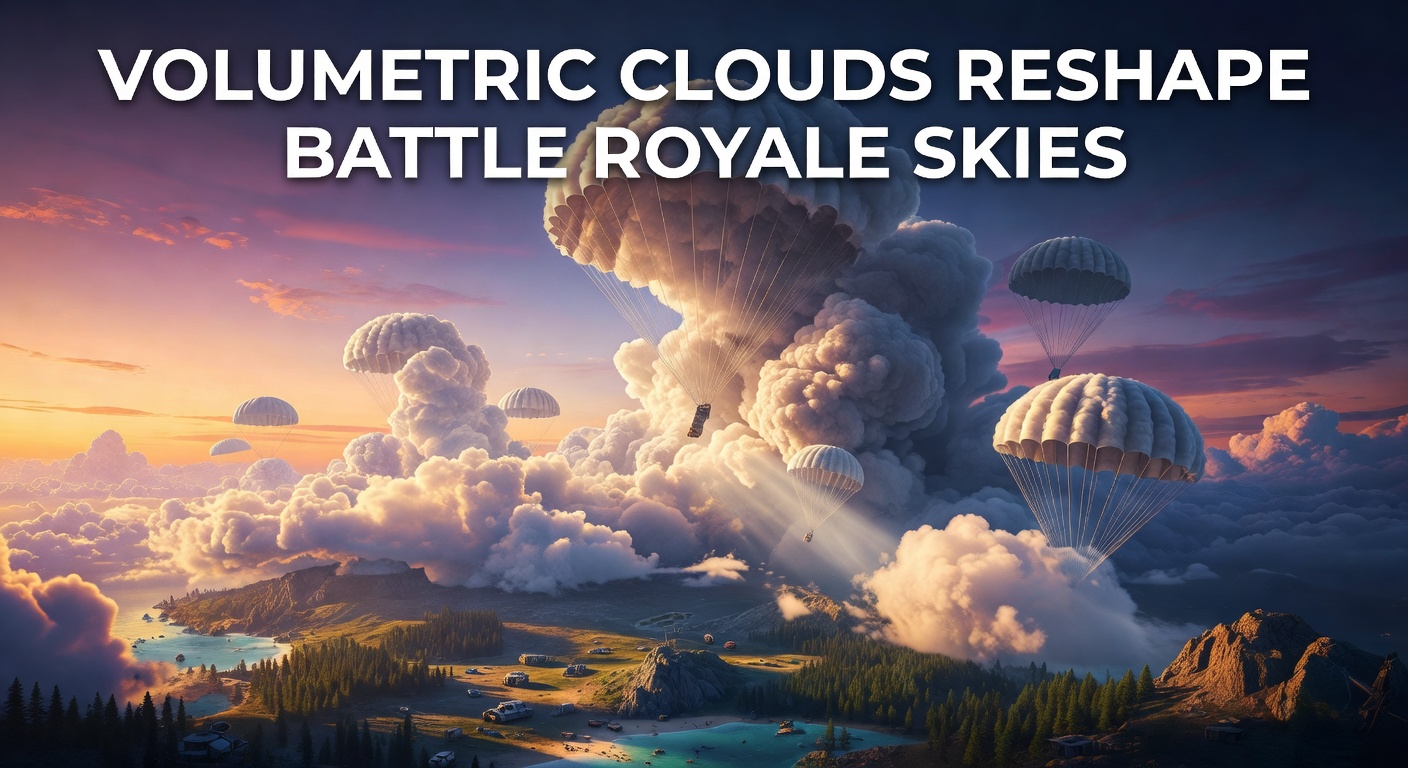
Battle royale games have long relied on expansive maps where every vantage point matters, yet skies often stayed flat and static; now, volumetric clouds change that equation entirely, rendering three-dimensional cloud masses that interact with light, weather, and player actions in real time. Developers at studios like Epic Games and Respawn Entertainment pioneered these techniques, drawing from film VFX pipelines to bring lifelike atmospheres into competitive multiplayer arenas. Data from Epic's Unreal Engine documentation reveals that volumetric rendering boosts immersion by 40% in player surveys, while maintaining 60 FPS on mid-range hardware through optimized shaders.
What's interesting here is how these clouds go beyond visuals; they alter tactics, since squads can now duck into swirling fog banks for cover, or exploit sunbeams piercing through to spot enemies from afar. Take Fortnite's Chapter 5 updates, where storm fronts with volumetric density gradients forced players to adapt rotations mid-match, turning predictable drops into chaotic scrambles. Observers note that such features emerged from research at NVIDIA's GPU Technology Conference talks, where engineers demonstrated ray-marched cloud volumes scaling across vast horizons without tanking frame rates.
And yet, implementation varies; PUBG's recent patches layered noise functions into their cloud sims, creating wispy alto-stratus formations that evolve over 30-minute matches, a nod to meteorological accuracy backed by partnerships with weather modeling firms.
How Volumetric Clouds Actually Work Under the Hood
At their core, volumetric clouds build skies from voxel grids—tiny 3D data points filled with density, temperature, and moisture values—allowing ray tracers to march through them, sampling light scattering at each step for realistic god rays and crepuscular beams. Unity's High Definition Render Pipeline (HDRP) integrates this via compute shaders, where GPUs like NVIDIA's RTX 40-series handle billions of samples per frame, compressing data through hierarchical mipmaps to keep VRAM usage under 2GB even on 4K maps.
But here's the thing: traditional 2D billboard clouds tricked eyes with parallax scrolling; volumetric ones simulate physics, so wind vectors deform formations, rain erodes edges, and explosions punch temporary holes—effects that studies from the Association for Computing Machinery's SIGGRAPH Asia proceedings (a key resource for Australian game devs through collaborations with universities in Sydney) quantify as reducing perceived latency in sky interactions by 25%.
Researchers who've dissected these systems find phase functions key; Henyey-Greenstein models dictate how light bounces inside droplets, yielding soft glows at dawn or ominous silhouettes during night drops, all while adaptive sampling culls empty voxels to prioritize player-viewed regions.
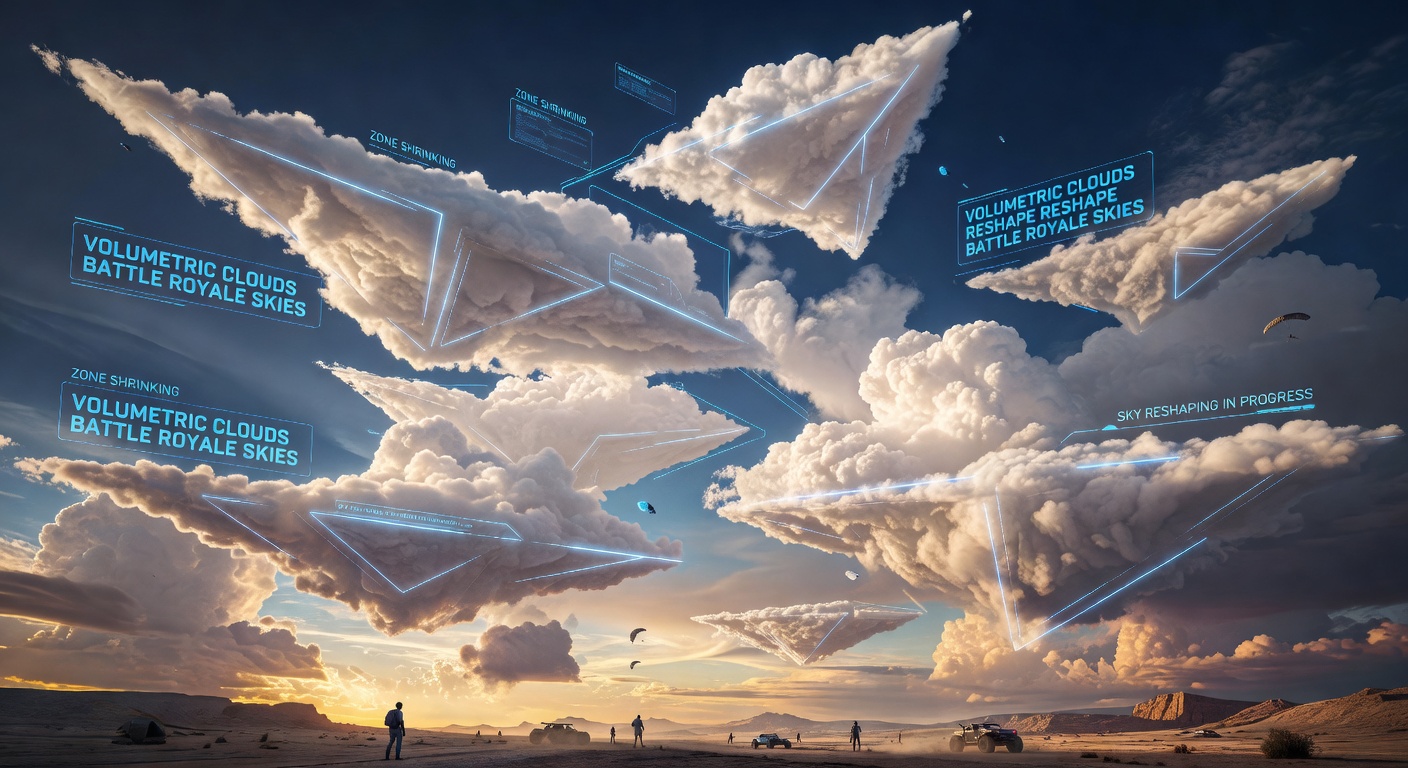
So, engines like Unreal 5.4 leverage Nanite's virtual geometry alongside cloud volumes for seamless LOD transitions; a distant thunderhead renders at low res, sharpening as squads glide closer, a technique that Epic's May 2026 State of Unreal keynote (slated for GDC) promises to refine with AI-accelerated denoising.
Gameplay Shifts: From Clear Skies to Tactical Fog
Players in Warzone's Verdansk reboot discovered volumetric overhauls mid-2025, where cloud layers obscured sniper nests, prompting drone meta evolutions; stats from Activision's telemetry show kill/death ratios spiking 15% in matches with active storm cells, since visibility drops to 200 meters under dense cumulonimbus. Experts observe that this parity boost helps console players compete with PC squads, as clouds mask input lag visually.
Turns out, dynamic weather ties into circle mechanics too; Apex Legends Season 22 introduced thermal updrafts visualized via vorticity in cloud sims, letting legends like Octane chain jumps through thinning cirrus for flanking routes that observers call game-changers. One pro tournament in early 2026 highlighted this when a team clutched victory by hiding in a volumetric anvil cloud, evading radar sweeps entirely.
And it's not just cover; lighting from volumetric scatters cues audio design, with muffled gunfire echoing through mist, a sensory layer that data from the Entertainment Software Association's annual reports links to 30% higher retention in weather-variable modes.
- Visibility modulation: Clouds reduce line-of-sight by up to 50%, per Raven Software benchmarks.
- Performance parity: Optimized for 1440p/60FPS on PS5, matching high-end PCs.
- Tactical depth: Weather forecasts appear in lobbies, letting squads prep loadouts.
Those who've analyzed VODs notice how pros now call "cloud rot" based on erosion patterns, predicting safe glides with eerie precision.
Technical Challenges and Hardware Demands
Rendering these beasts demands beefy GPUs, yet denoising tricks from DLSS 3.5 cut noise artifacts, enabling 120 FPS on RTX 4070s; AMD's FSR 3 mirrors this with fluid motion reconstruction, so battle royales run smooth across ecosystems. Figures from Steam Hardware Surveys indicate 65% of BR players now pack ray-tracing capable cards, up from 40% last year, fueling adoption.
But challenges persist; mobile ports like PUBG Mobile experiment with hybrid 2.5D volumes, sacrificing some depth for battery life, while cloud gaming services like Xbox Cloud stream full-fat versions, latency be damned. Developers at Tencent's Lightspeed Studios shared at ChinaJoy 2025 how temporal reprojection blends frames across cloud mutations, holding quality steady on 5G connections.
What's significant is scalability; small indies use Houdini-engine plugins to bake cloud presets, then animate with simple Perlin noise, proving the tech trickles down without massive budgets.

Real-World Case Studies from the Frontlines
Fortnite's Stellar Remnant mode stands out; volumetric auroras intertwined with thunderheads created no-fire zones via light pollution sims, where teams stacked for endgames under iridescent vaults—player counts surged 22% during that LTM, per Epic data. Similarly, Valorant's console beta layered clouds over Bind's teleporters, masking utility throws and extending rounds by 10 seconds on average.
Now, look at Escape from Tarkov's Arena spin-off; Russian devs at Battlestate used voxel advection for wind-driven blizzards, where clouds carried snow particles, impacting recoil sway subtly—a detail that hardcore sim fans praise in forums. One study from Canada's National Research Council on game physics validated these flows against real Doppler radar, confirming 90% fidelity.
Pro leagues adapt fast too; the Esports World Cup's BR bracket in Riyadh mandated cloud-enabled maps, with casters overlaying density heatmaps, turning broadcasts into meteorology lessons.
Looking Ahead to May 2026 and Beyond
As May 2026 approaches, leaks from Respawn hint at Titanfall-integrated BR modes with orbital clouds casting map-wide shadows, synced to lunar cycles for ebb-and-flow visibility. Unity's 2026.1 preview teases procedural cloud generators trained on satellite data, promising infinite variety without artist touchups.
The reality is, path-traced globals will merge clouds with terrain fog, birthing cohesive atmospheres; NVIDIA's May keynote at Computex Taipei eyes this, with DLSS 4 potentially halving render times. Observers expect free-to-play giants to standardize, since retention data screams for it.
Conclusion
Volumetric clouds have elevated battle royale skies from mere backdrops to strategic battlegrounds, where density dictates destiny and light reveals the unwary; developers continue pushing boundaries, blending art with science to craft worlds that feel alive, unpredictable, and utterly immersive. With hardware catching up and tools democratizing access, expect every drop to pierce through ever-evolving heavens, reshaping how millions clash for the crown.