Unmasking Hidden Stats: Visualization Platforms Reveal Key Metrics in VR Esports Leagues
Devon Schwarz · May 24, 2026
Unmasking Hidden Stats: Visualization Platforms Reveal Key Metrics in VR Esports Leagues
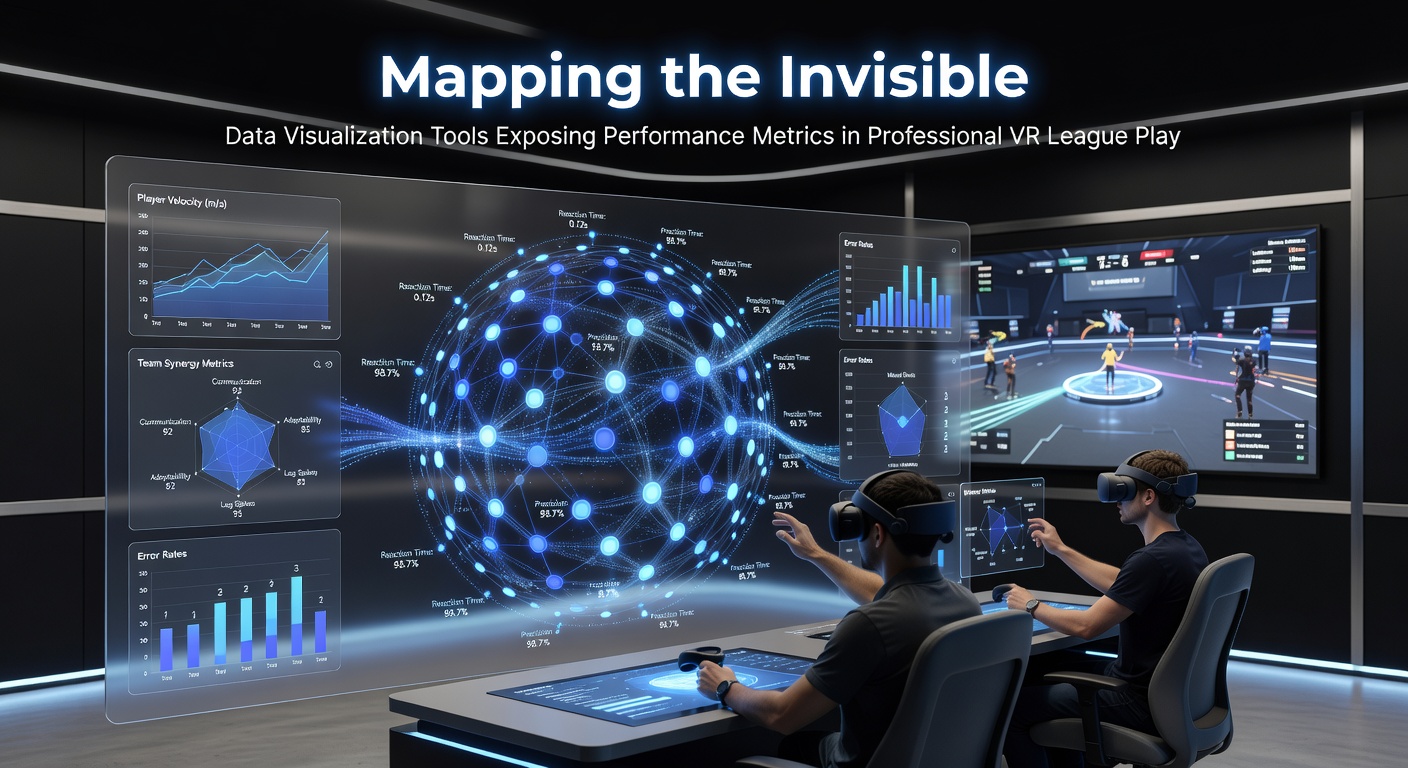
Professional VR league competitions have expanded rapidly since 2024, with data visualization platforms now playing a central role in breaking down player actions that remain invisible during live matches. These tools convert raw sensor outputs from headsets, hand controllers, and positional trackers into layered graphics that show movement efficiency, decision timing, and spatial awareness patterns across entire tournaments.
Core Metrics Captured by Visualization Systems
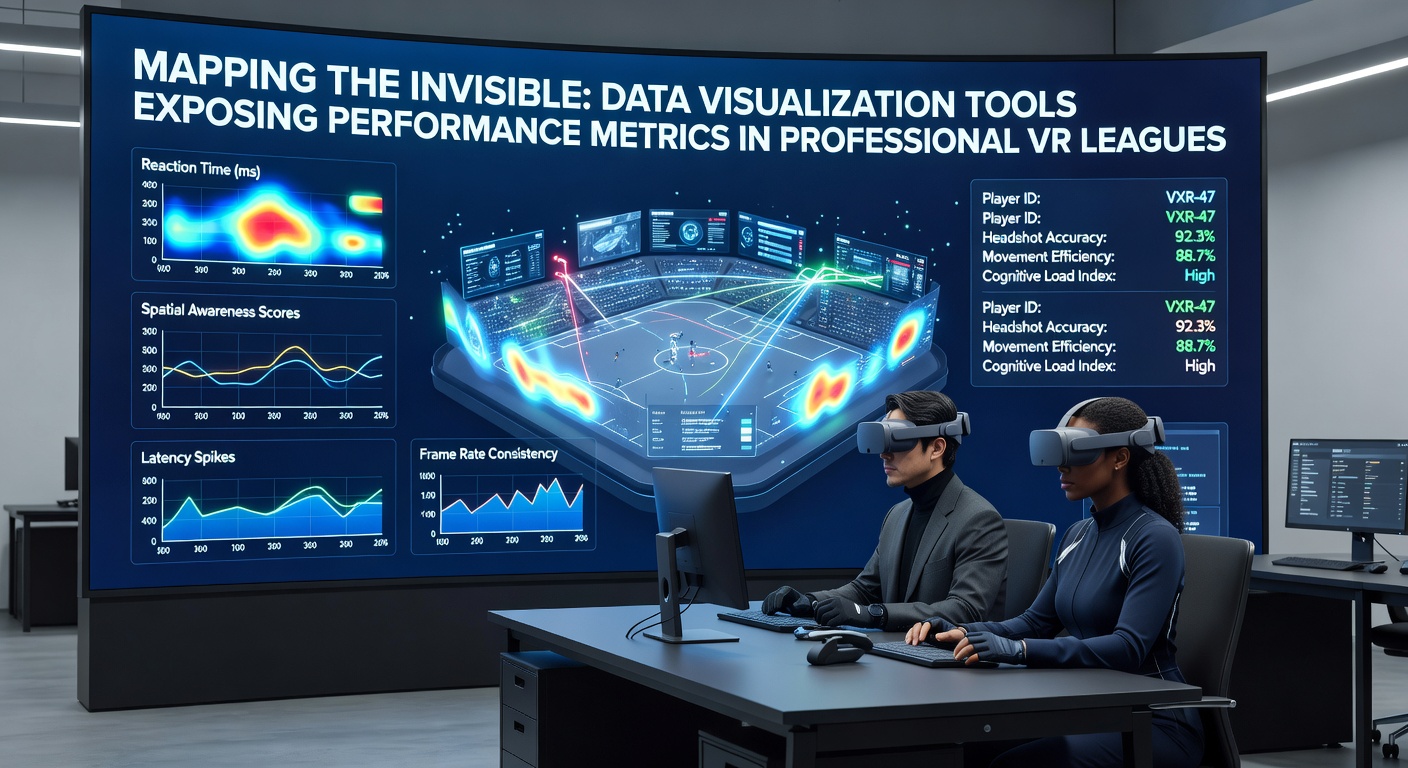
VR leagues track dozens of variables through integrated hardware, yet most stay buried until processed by specialized software. Heat maps display player positioning over time while velocity vectors highlight acceleration changes during engagements. Reaction latency graphs break down response intervals between stimulus presentation and controller input, often measured in milliseconds across thousands of events per match. Researchers at institutions like the University of Toronto have documented how these layered displays help analysts identify clusters of suboptimal movement that correlate with reduced win rates in competitive series.
Another set of metrics focuses on interaction density, counting how often players engage virtual objects or opponents within defined spatial zones. Data from the 2025 season showed average interaction rates rising by 18 percent in top-performing teams when compared against earlier periods, according to reports compiled by the Asia Esports Federation. Visualization layers also render gaze direction cones derived from eye-tracking modules built into newer headsets, revealing where attention concentrates during high-pressure moments.
Platform Adoption Across Major Leagues
By May 2026 several VR leagues had standardized on two primary visualization suites after evaluating multiple options during the prior winter circuit. One platform emphasizes real-time overlays that broadcast analysts use during matches while the second provides deeper post-match review environments with exportable datasets. Teams receive access to anonymized aggregate data from all participants, allowing comparison against league-wide baselines without exposing individual identities unless consent is granted.
League officials note that these tools reduce the time required to prepare scouting reports by roughly 40 percent compared with manual review methods used in 2023. The integration process involves mapping headset telemetry streams directly into the visualization engine through secure APIs, ensuring synchronization across multiple matches running simultaneously in different regions.
Case Examples From Recent Seasons
One European squad adjusted its defensive rotations after reviewing trajectory overlays that exposed repeated overextension patterns during mid-map skirmishes. The changes produced measurable improvements in survival times across subsequent events. In another instance, an Oceania-based organization used gaze-cone visualizations to refine target prioritization training modules, resulting in higher accuracy percentages during elimination rounds.
Academic partners have begun incorporating league datasets into broader studies on spatial cognition under competitive stress. A collaborative project between Australian researchers and the International Esports Federation examined how visualization feedback loops influence training regimens, with preliminary findings presented at industry conferences in early 2026.
Technical Infrastructure Supporting the Tools
Rendering these visualizations demands substantial compute resources because each match generates gigabytes of positional and orientation data. Cloud pipelines handle initial aggregation before feeding processed outputs to on-premise analyst workstations. Latency remains under 200 milliseconds for live overlays thanks to edge processing nodes positioned near tournament venues. Security protocols encrypt all streams to prevent unauthorized access to proprietary team tactics.
Interoperability standards developed by hardware manufacturers ensure that data from different headset models can feed into the same visualization framework without custom adapters. This compatibility has expanded participation to include emerging leagues in South America and Africa that rely on mixed hardware inventories.
Conclusion
Visualization platforms continue to reshape how performance data informs preparation and review cycles within professional VR leagues. As sensor resolution increases and processing pipelines grow more efficient, the granularity of exposed metrics is expected to rise accordingly. Leagues maintain ongoing evaluations of new display techniques while preserving competitive balance through controlled data access policies.