Synchronization Protocols Bridge Game Engines and Wearables in AR Competitions Worldwide
Drew Jenkins · Aug 16, 2026
Synchronization Protocols Bridge Game Engines and Wearables in AR Competitions Worldwide
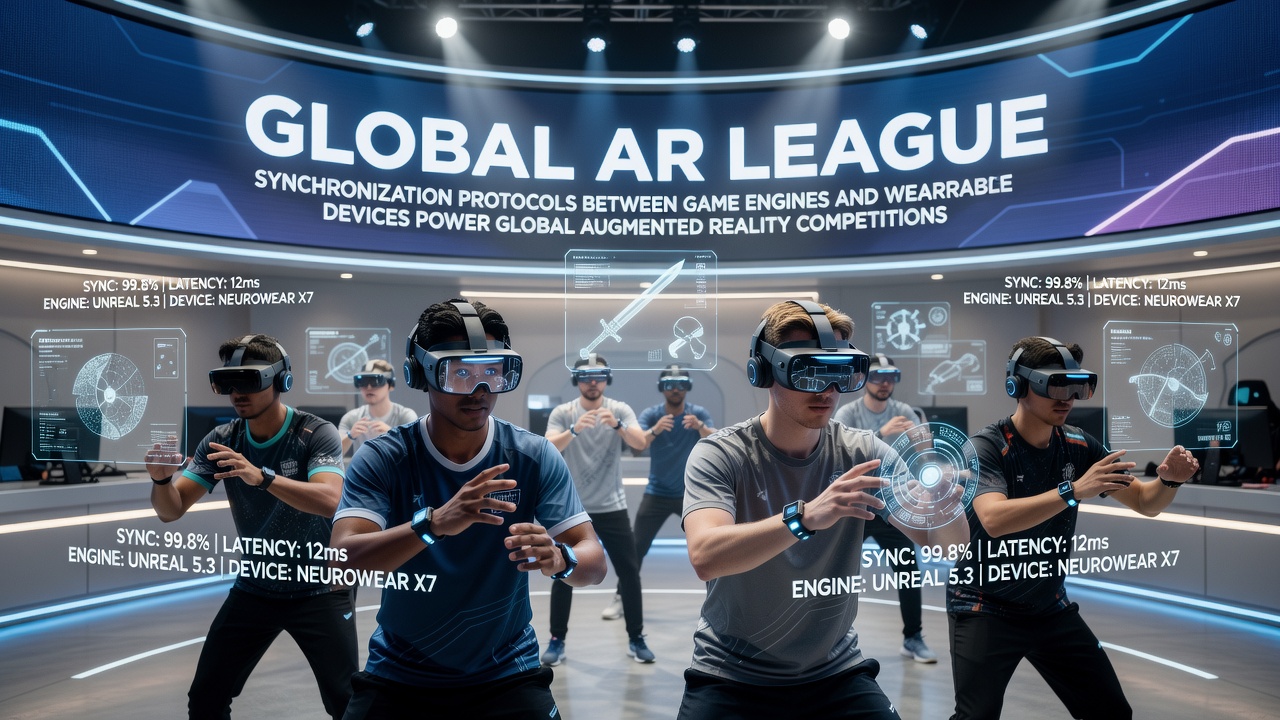
Augmented reality competitions have grown into structured global events where precise timing between digital overlays and physical player movements determines outcomes, and synchronization protocols form the technical foundation that aligns game engines with data streams from wearable devices such as headsets, haptic vests, and motion trackers. These protocols manage latency thresholds below 10 milliseconds in many tournament settings, allowing real-time updates to virtual elements that respond to biometric signals and spatial positioning data collected from competitors.
Core Components of Engine-to-Wearable Synchronization
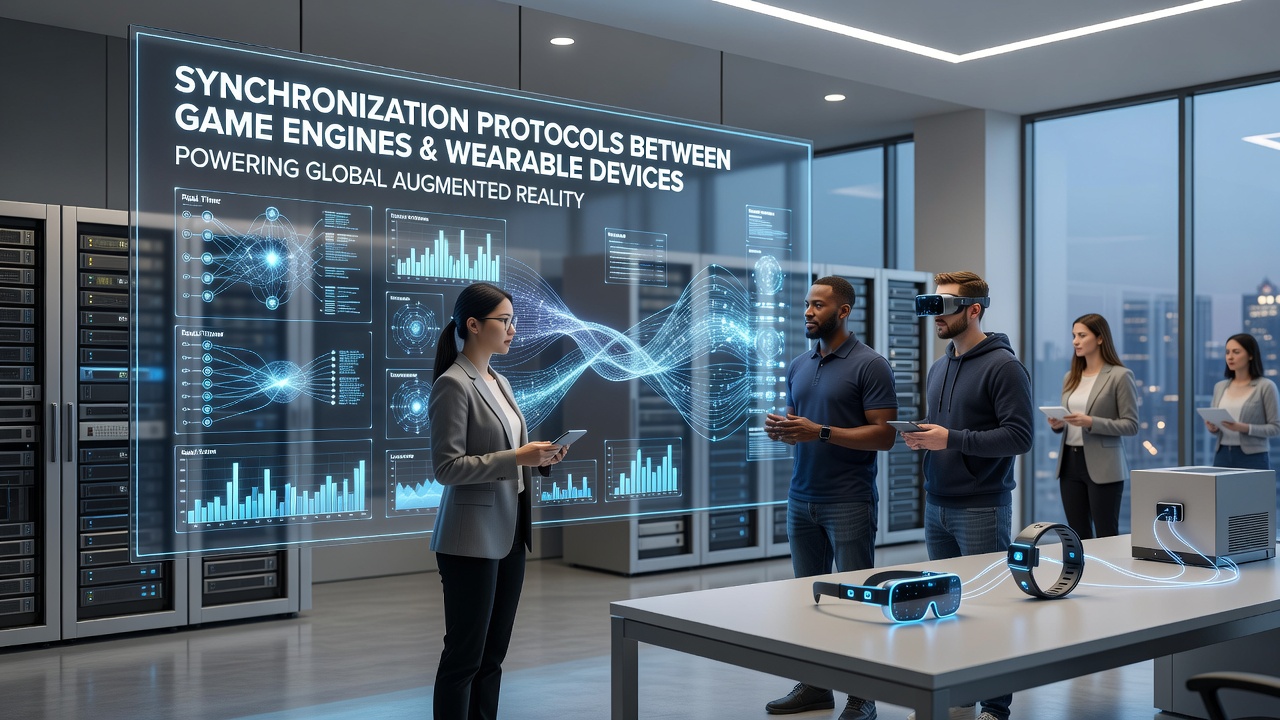
Game engines like Unity and Unreal maintain dedicated modules that handle incoming sensor packets from wearables through standardized interfaces such as OpenXR extensions and custom Bluetooth Low Energy profiles, while protocols like PTP (Precision Time Protocol) and custom variants of NTP ensure clock alignment across distributed systems. Data packets carrying acceleration, orientation, heart rate, and eye-tracking metrics travel through these channels, and engine-side interpolation routines smooth discrepancies that arise from network jitter or device sampling rates that vary between 60 Hz and 120 Hz depending on hardware models.
Researchers at institutions across North America and Europe have documented how these synchronization layers reduce desync events during high-mobility scenarios, where players navigate physical arenas mapped to virtual battlefields. One study conducted by teams affiliated with the University of Toronto tracked synchronization accuracy across 500 competition matches and reported median alignment errors dropping from 18 milliseconds to under 4 milliseconds after protocol optimizations were applied.
Deployment in International Tournament Circuits
Global AR competition circuits scheduled for August 2026 incorporate these protocols at every venue, from preliminary qualifiers in Singapore to finals hosted in Berlin, and organizers rely on them to maintain consistent performance across mixed hardware ecosystems supplied by multiple manufacturers. Tournament software stacks integrate engine plugins that poll wearable APIs at fixed intervals, apply Kalman filtering to incoming streams, and broadcast corrected state updates to all connected clients within the same match instance.
Industry reports from teh Interactive Software Federation of Europe indicate that adoption rates for unified synchronization frameworks reached 87 percent among sanctioned AR leagues by early 2025, driven by requirements for cross-device compatibility during multi-regional events. And yet variations persist when legacy wearables from earlier generations join newer engine builds, prompting organizers to enforce firmware validation checkpoints before each match begins.
Technical Challenges and Protocol Refinements
Packet loss during crowded wireless environments remains a recurring issue at large venues, prompting developers to implement redundant transmission paths and forward error correction schemes that preserve critical timing data even when individual frames drop. Observers note that protocols now incorporate adaptive bitrate adjustments based on real-time channel quality metrics, which helps maintain synchronization when player density increases electromagnetic interference around the competition floor.
Engine developers have introduced timestamped event queues that buffer incoming wearable data until verification confirms sequence integrity, and this approach has proven effective in reducing visual artifacts that previously appeared when head orientation data arrived out of order. Figures released by the Australian Centre for Digital Innovation show that refined buffering reduced reported desync incidents by 62 percent across monitored events held between March and July 2025.
Future Integration Pathways Through 2026
Upcoming updates scheduled for release ahead of August 2026 events aim to extend synchronization support to emerging 5G sidelink channels and Wi-Fi 7 mesh configurations, allowing wearables to maintain direct engine connections without relying solely on centralized access points. Protocol working groups continue to standardize additional fields for galvanic skin response and muscle activation data, expanding the range of biometric inputs that can influence in-game mechanics during endurance-based AR formats.
Those who have examined early test deployments report that hybrid synchronization stacks combining PTP with application-layer acknowledgments deliver the most stable results across heterogeneous device fleets, and league operators plan to mandate these combined approaches for all official matches starting in the second half of 2026.
Conclusion
Synchronization protocols continue to underpin the operational integrity of global augmented reality competitions by ensuring that engine-rendered content remains temporally aligned with physical inputs captured from wearable hardware. As tournament infrastructure expands and hardware diversity increases, these protocols evolve through iterative refinements that address latency, packet integrity, and cross-platform consistency, supporting the scale required for international events planned through 2026 and beyond. Data from multiple research and industry sources confirms measurable improvements in alignment accuracy, which in turn sustains competitive fairness across regions and device ecosystems.