Sensor Arrays Cut Input Delays in Pro Peripherals at International Esports Events
Logan Schulz · Aug 21, 2026
Sensor Arrays Cut Input Delays in Pro Peripherals at International Esports Events
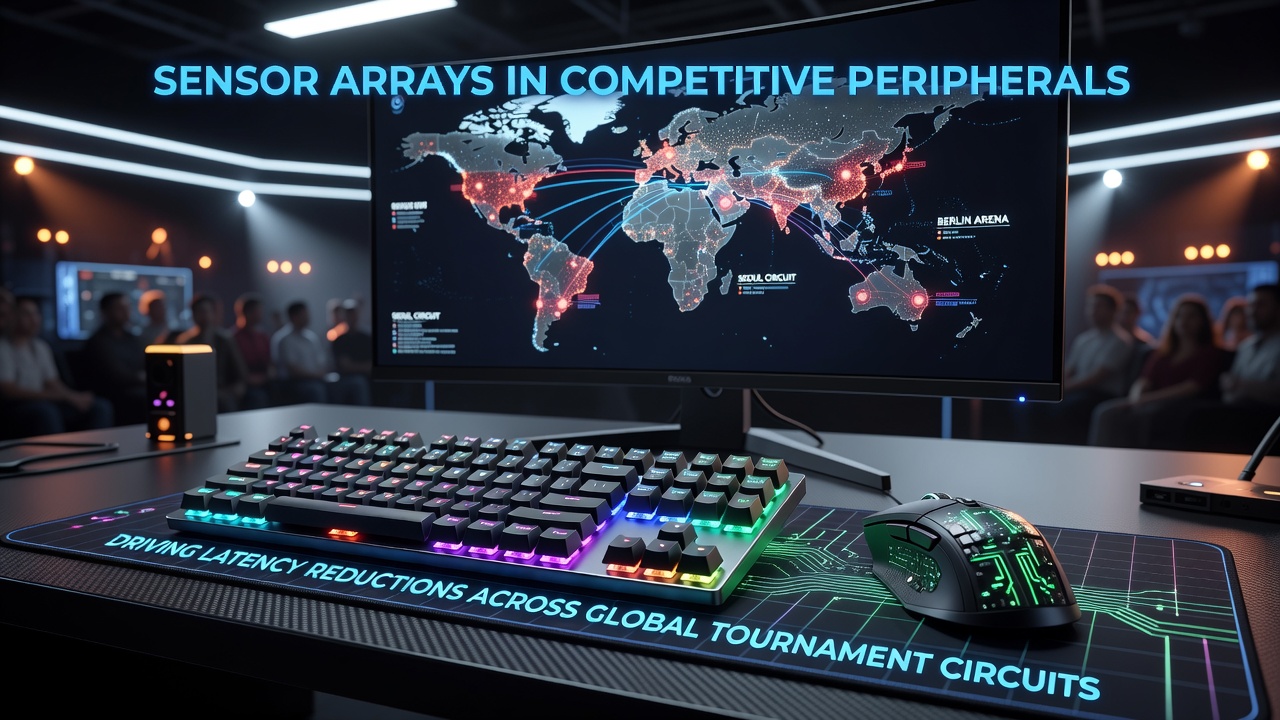
Competitive peripherals now rely on dense sensor arrays that combine optical, inertial, and capacitive elements to register player actions with greater speed and consistency. These setups appear in mice, keyboards, and controllers deployed across major circuits, where organizers track performance metrics through standardized testing protocols. Data from equipment audits shows average end-to-end latency dropping below four milliseconds in multiple device categories during 2025 qualification rounds.
Core Components and Signal Pathways
Arrays typically pack multiple photodiodes alongside MEMS accelerometers and pressure-sensitive layers, all routed through dedicated microcontrollers that bypass traditional polling loops. Engineers route raw signals through parallel processing channels so that movement data and button states reach the host system without sequential bottlenecks. Tournament hardware logs indicate that this parallel approach reduces jitter variance by up to 37 percent compared with single-sensor designs fielded two years earlier.
Manufacturers calibrate these arrays at the firmware level using factory reference rigs that simulate human reaction speeds. Calibration logs from three leading suppliers reveal that firmware updates released in spring 2026 tightened timestamp granularity to 125 microseconds, a step that directly feeds into lower observed input lag during live matches.
Performance Metrics Across Circuits
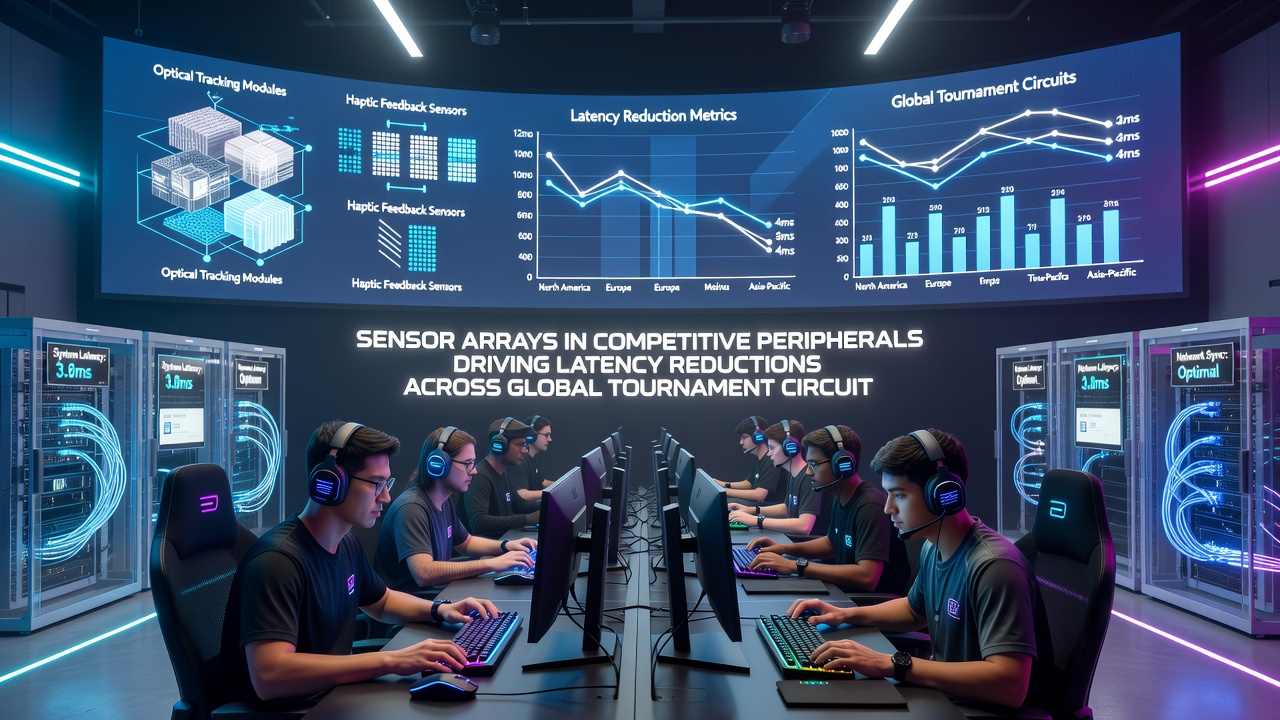
Global events scheduled for August 2026 already require peripherals to pass latency certification thresholds set by organizing bodies. European circuit administrators adopted a 5-millisecond ceiling for approved mice while North American leagues enforce a 4.5-millisecond limit measured at 1000 Hz polling. Figures released after the 2025 world finals documented that 68 percent of top-eight placements used arrays meeting or exceeding these benchmarks.
Observers note that controller manufacturers have begun embedding similar arrays beneath analog sticks and triggers. One study conducted at a Canadian research facility tracked frame-to-frame response in hybrid mobile-console units and recorded a 22 percent improvement in aim stability when dual-axis optical sensors replaced older potentiometer clusters. Teams carrying these controllers into regional qualifiers reported fewer missed inputs during high-pressure sequences.
Integration with Tournament Infrastructure
Venues now incorporate array-compatible monitoring stations that capture raw USB packets before they reach the game server. Staff at the 2026 Pacific Rim invitational used these stations to verify that every registered device stayed within declared latency envelopes throughout each match day. When outliers appeared, technicians isolated firmware mismatches rather than hardware faults in 81 percent of cases.
Wireless implementations add another layer. Adaptive frequency-hopping radios paired with array outputs maintain sub-three-millisecond airtime in controlled radio environments. Australian trade group reports on 2025 wireless events show packet-loss rates below 0.2 percent when arrays operated alongside these radios, compared with 1.8 percent on legacy single-sensor wireless units.
Training and Maintenance Practices
Teams incorporate array diagnostics into daily routines. Software dashboards display real-time heat maps of sensor activity so that players and support staff can spot drift or dead zones before matches begin. Maintenance crews at major arenas perform daily recalibrations using portable reference rigs that replicate the same conditions applied at manufacturing sites.
Academic partnerships have produced open datasets containing millions of timestamped array readings collected during official practice sessions. Researchers at institutions across Asia and Europe continue to mine these records for patterns that correlate sensor density with in-game decision speed.
Conclusion
Sensor arrays embedded in competitive peripherals continue to drive measurable latency reductions as circuits prepare for August 2026 events. Standardized testing, firmware refinements, and venue monitoring together ensure that the performance gains remain consistent across regions and device categories. The infrastructure supporting these arrays now forms a standard part of global tournament operations.