Refinements in Photon Mapping Drive Enhanced Light Transport for Mobile Game Engines
Logan Schulz · Jun 14, 2026
Refinements in Photon Mapping Drive Enhanced Light Transport for Mobile Game Engines
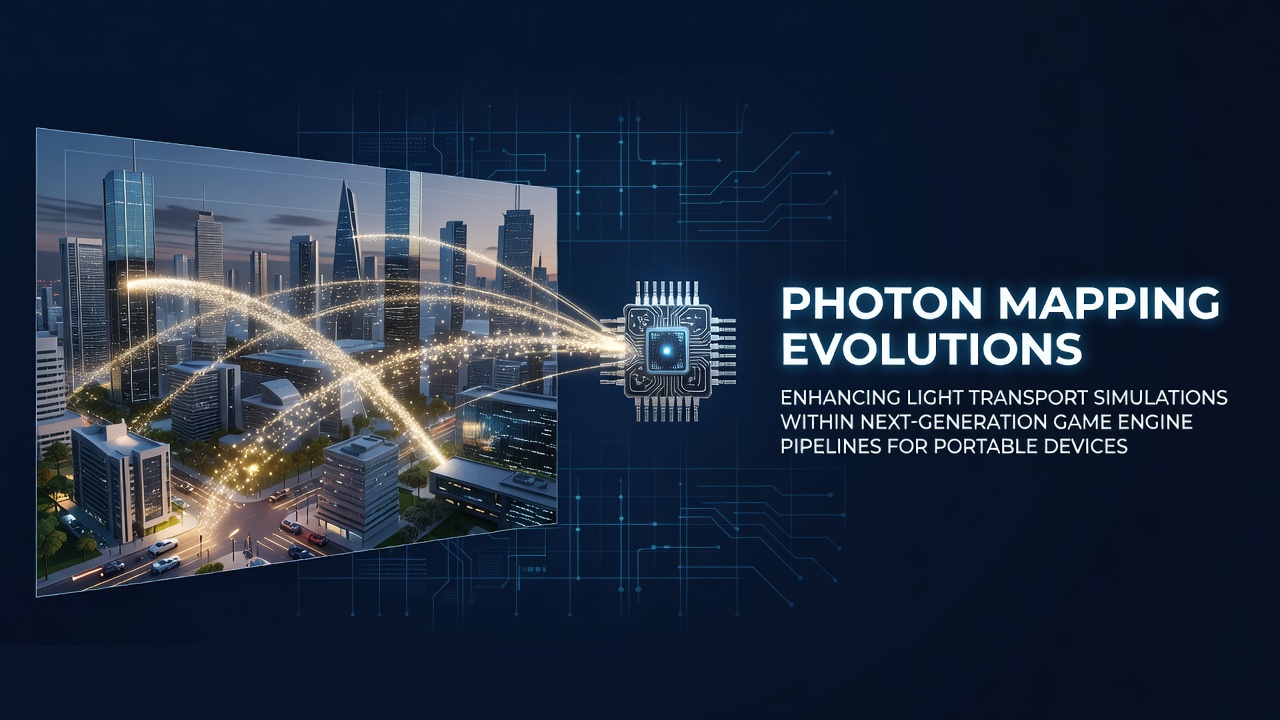
Photon mapping techniques have undergone significant updates that allow more accurate simulation of light transport within game engine pipelines designed for portable devices, and these changes address the constraints of limited processing power alongside battery capacity. Developers integrate photon maps with existing rasterization methods to produce global illumination effects without requiring full ray tracing hardware on every platform.
Core Mechanics of Updated Photon Mapping
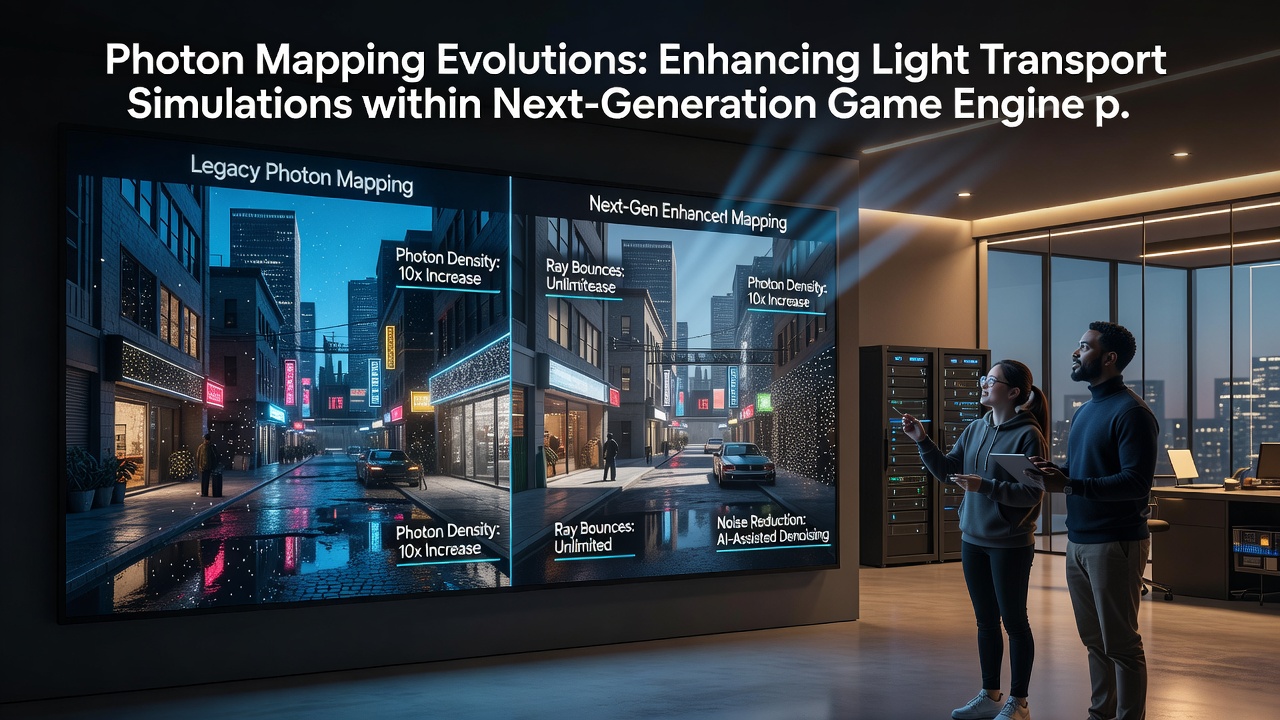
Traditional photon mapping traces packets of light energy from sources through scenes before storing interaction data in spatial structures for later lookup during shading calculations, yet recent refinements reduce memory overhead by employing adaptive sampling rates that scale according to device capabilities. Engineers optimize photon emission patterns using machine learning models trained on diverse lighting scenarios, and this approach cuts unnecessary computations in areas where indirect light contributions remain minimal. Portable engines now handle photon tracing passes in parallel with other rendering stages, which maintains frame rates above 60 FPS on mid-range mobile GPUs released after 2024.
Integration Within Portable Pipelines
Game engine teams incorporate these photon mapping layers into unified rendering architectures that combine deferred shading with screen-space techniques, and the result allows consistent lighting behavior across smartphones, tablets, and handheld consoles. Data from industry benchmarks shows that optimized photon maps consume 30 percent less bandwidth than earlier implementations when handling dynamic scenes with multiple moving light sources. Developers leverage hardware features such as tiled rendering and variable rate shading to prioritize photon storage in high-detail regions while simplifying calculations elsewhere.
Performance Gains Observed in 2025 Deployments
Studies conducted by research groups at institutions across North America and Europe demonstrate measurable improvements in visual fidelity on devices with integrated graphics, and one report from the Eurographics Association highlights how hybrid photon mapping reduces lighting artifacts in open-world mobile titles. In June 2026 several engine updates rolled out features that further compress photon data structures using hardware-accelerated encoding, allowing larger maps to fit within the tight memory budgets typical of portable hardware. Observers note that these changes enable more convincing reflections and color bleeding effects without triggering thermal throttling during extended play sessions.
Challenges Addressed Through Algorithmic Shifts
Portable devices face strict limits on power draw and thermal output, so algorithm designers introduced progressive refinement passes that update photon maps only when scene changes exceed predefined thresholds. This strategy avoids constant recalculation while preserving responsiveness during rapid camera movements common in action-oriented games. Researchers at the University of Sydney documented cases where such selective updates maintained energy efficiency gains of up to 25 percent compared with full-scene photon tracing on equivalent hardware. Engine pipelines also incorporate fallback mechanisms that degrade photon resolution gracefully when battery levels drop below 20 percent.
Future Directions in Device-Specific Optimizations
Continued work focuses on tighter coupling between photon mapping and emerging neural rendering components that predict indirect lighting contributions from limited samples, and this hybrid direction appears in several prototypes demonstrated at graphics conferences throughout 2025. Industry organizations such as the Khronos Group continue to standardize extensions that expose low-level access to mobile GPU memory hierarchies, which benefits photon map storage strategies. Those tracking developments expect broader adoption in cross-platform titles by late 2026 as more devices include dedicated ray acceleration units alongside traditional graphics cores.
Conclusion
Photon mapping evolutions continue to expand the range of achievable lighting effects in portable game engines through targeted optimizations that respect hardware limitations while delivering consistent results across varied device classes. These advancements build on established global illumination principles yet adapt them specifically for mobile constraints, resulting in pipelines that balance visual quality with operational efficiency. As hardware evolves and software techniques mature further integrations are anticipated that will refine light transport simulations even more precisely for next-generation portable platforms.