Player-Powered Networks Fuel Open-World Persistence Through Decentralized Rendering
Logan Schulz · May 29, 2026
Player-Powered Networks Fuel Open-World Persistence Through Decentralized Rendering
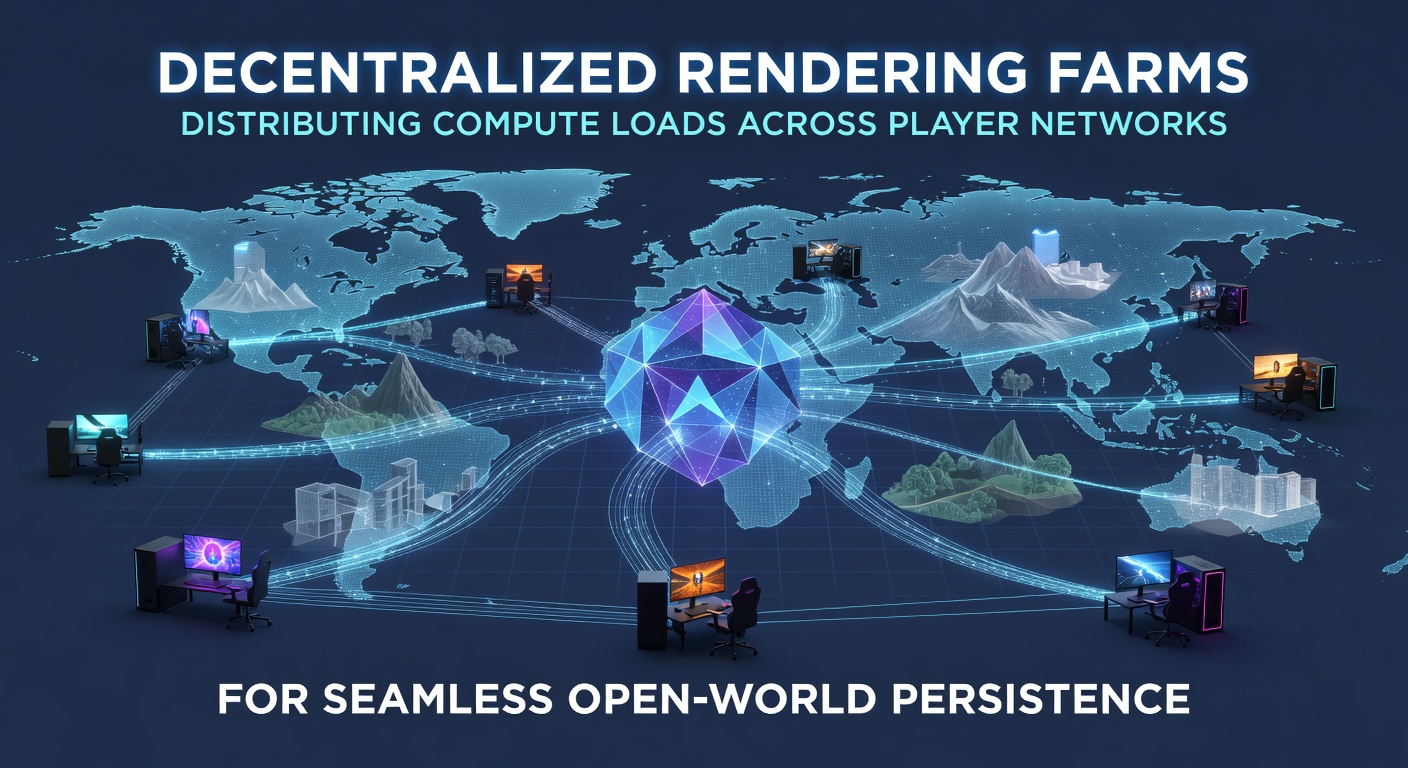
Decentralized rendering farms operate by spreading graphical and simulation workloads across thousands of participating player devices rather than relying solely on centralized servers, which creates the foundation for persistent open-world environments that remain active and consistent without traditional downtime or loading interruptions. Research from institutions across multiple regions shows these systems leverage peer-to-peer connections where each connected machine contributes unused processing power to handle rendering tasks such as terrain generation, object simulation, and lighting calculations in real time.
Developers achieve this distribution through specialized middleware that divides complex scenes into smaller chunks assigned dynamically based on device capabilities and network conditions, while data synchronization protocols ensure all participants maintain a unified view of the world state. According to reports from the Interactive Software Federation of Europe, pilot implementations in several multiplayer titles demonstrated reduced server costs by up to 40 percent when player hardware handled portions of the rendering pipeline during peak activity periods.
Technical Mechanics Behind Distributed Compute Sharing
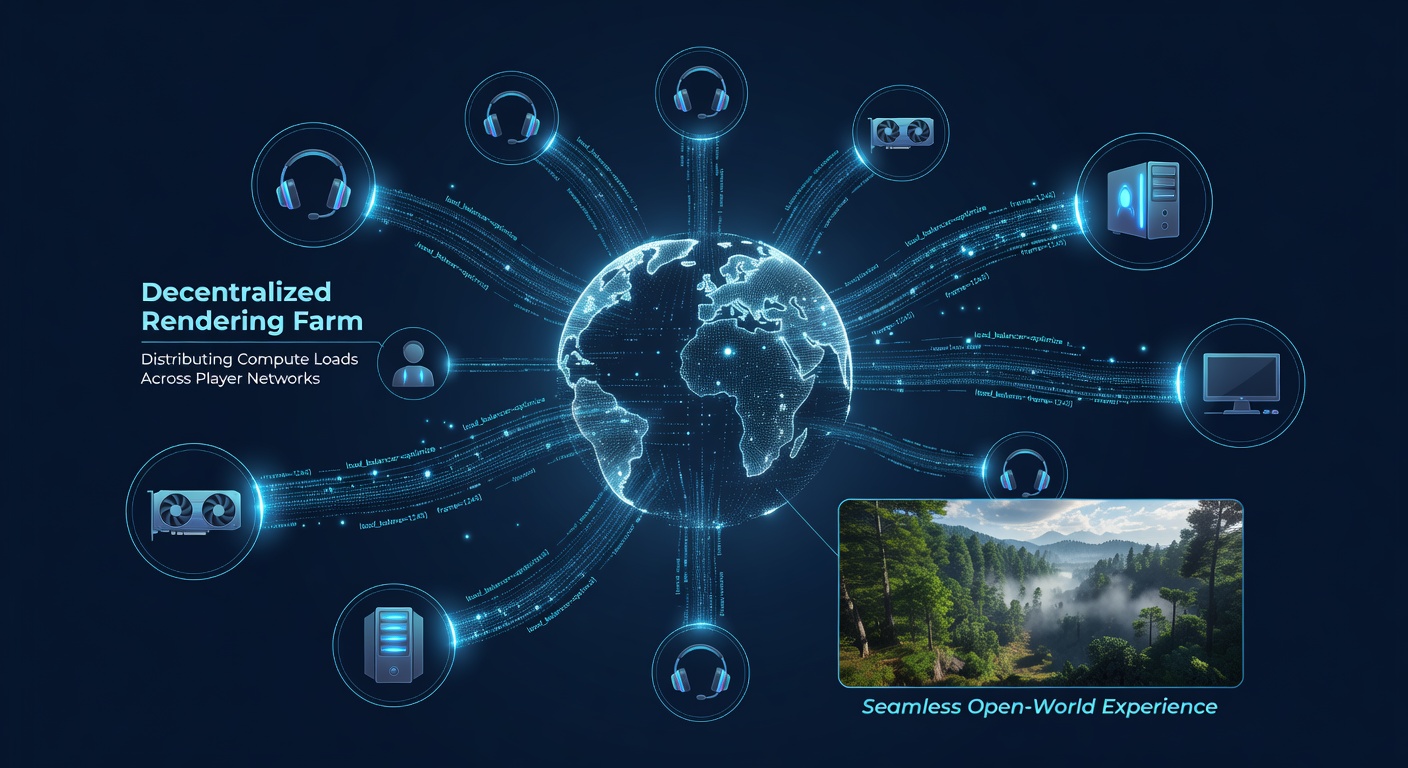
Each participating device runs a lightweight client agent that communicates with nearby nodes to receive rendering assignments, process them locally using available GPU cycles, and return results for integration into the shared environment. This approach relies on consensus mechanisms similar to those found in distributed ledger technologies to validate and reconcile contributions, preventing discrepancies that could disrupt world persistence. Data from the Australian Centre for Digital Innovation indicates that latency-sensitive tasks such as physics calculations benefit most when assigned to devices within the same regional cluster, whereas less time-critical elements like distant environmental effects route to farther nodes.
Security protocols encrypt all transmitted data and employ hardware-level attestation to confirm device authenticity before granting access to the network. Observers note that bandwidth management algorithms prioritize critical updates while queuing non-essential information during periods of congestion, maintaining stability even as participant numbers fluctuate throughout the day.
Impact on Seamless World Continuity and Player Experience
Open-world games require constant simulation of vast spaces where changes made by one player must propagate reliably to others without resets or desync events. Decentralized farms address this by maintaining redundant copies of key world data across multiple nodes, allowing the system to recover quickly if individual devices disconnect. Studies conducted at the University of Waterloo in Canada highlight how such redundancy supports continuous persistence, with test environments running uninterrupted for weeks during controlled trials.
By May 2026 several independent studios had integrated these networks into live titles, reporting measurable improvements in draw distances and crowd density without proportional increases in central infrastructure. Players in these environments encounter evolving ecosystems where flora, weather patterns, and NPC behaviors continue evolving based on collective contributions rather than scheduled server ticks.
Challenges and Ongoing Standardization Efforts
Device heterogeneity presents ongoing difficulties because hardware varies widely in processing power, memory capacity, and thermal limits, requiring sophisticated load-balancing that adapts in real time. Industry groups such as the Game Developers Conference Asia-Pacific working committees have begun drafting interoperability guidelines to ensure compatibility across different rendering engines and operating systems. Those involved in early deployments report that incentive structures, often involving in-game rewards or cryptocurrency micro-payments, help maintain high participation rates while discouraging free-riding behavior.
Network stability remains dependent on reliable internet connections, prompting researchers to explore hybrid models that fall back to regional edge servers when peer density drops below critical thresholds. Figures released by Japan's Digital Entertainment Technology Association reveal that average uptime in decentralized testbeds reached 99.2 percent during monitored intervals in early 2026, yet edge cases involving sudden mass disconnections still require further mitigation strategies.
Future Integration With Emerging Gaming Ecosystems
Integration with cloud-edge hybrids allows developers to scale capacity during major events while preserving the core decentralized architecture for routine operation. Academic papers published through the IEEE Computer Society detail algorithms that predict player movement patterns to pre-allocate rendering resources before demand spikes occur. This predictive capability supports smoother transitions when large groups converge on the same map region, preserving the illusion of an endlessly active world.
Regulatory bodies in the European Union have begun examining data privacy implications of sharing compute resources across borders, leading to proposed frameworks that require explicit user consent and transparent reporting on resource usage. These developments coincide with growing interest from major engine providers seeking to embed native support for distributed rendering protocols in upcoming releases.
Conclusion
Decentralized rendering farms represent a shift toward player-supported infrastructure that sustains persistent open worlds through distributed compute sharing. Evidence gathered from multiple pilot programs demonstrates measurable gains in continuity and cost efficiency, while standardization efforts continue addressing technical and regulatory hurdles. As adoption expands, the model offers a pathway for developers to create larger, more responsive environments without proportional growth in centralized hardware investments.