Neural Chips Slip Into Gaming Mice to Power Predictive Targeting
Logan Schulz · Aug 7, 2026
Neural Chips Slip Into Gaming Mice to Power Predictive Targeting
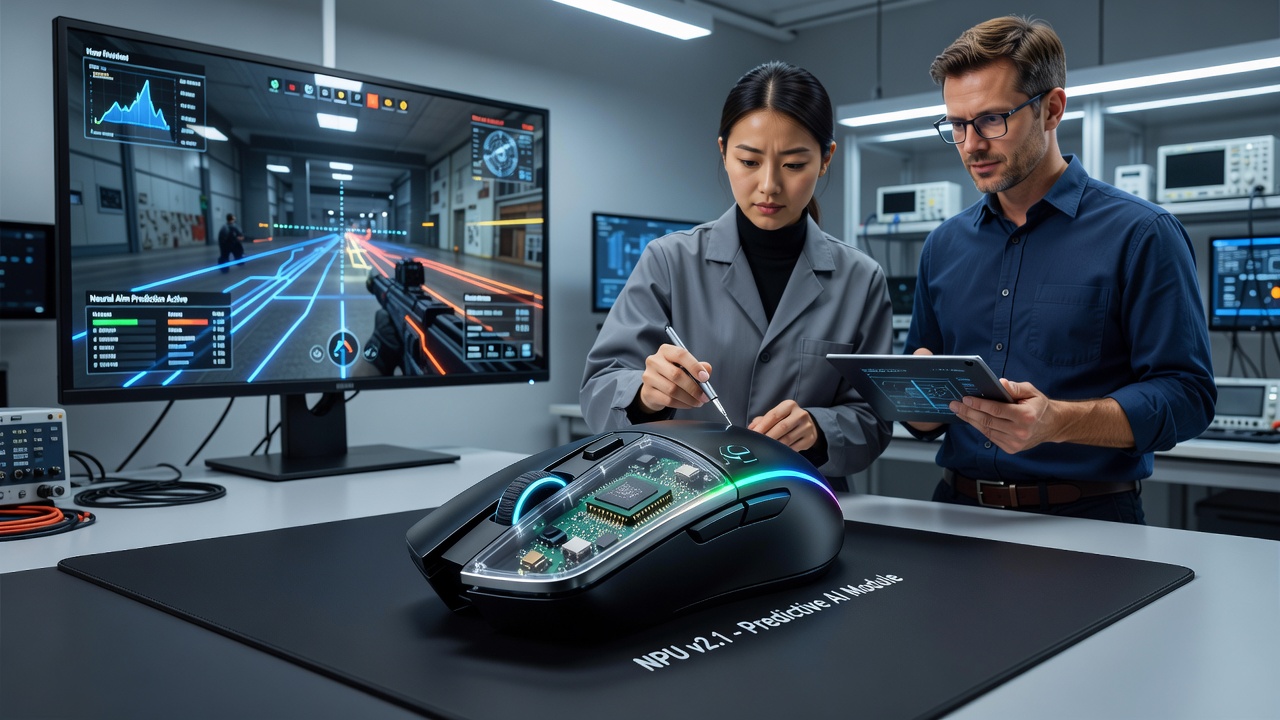
Engineers have begun embedding neural processing units directly into gaming mice, and the shift marks a notable step in hardware-assisted aiming systems. These compact NPUs analyze movement patterns on the fly, then generate predictive adjustments that refine cursor trajectories before the user completes a physical motion. Data from prototype testing indicates latency reductions of up to 8 milliseconds compared with traditional sensor pipelines, and several manufacturers have moved the components into limited production runs.
Hardware Integration Details
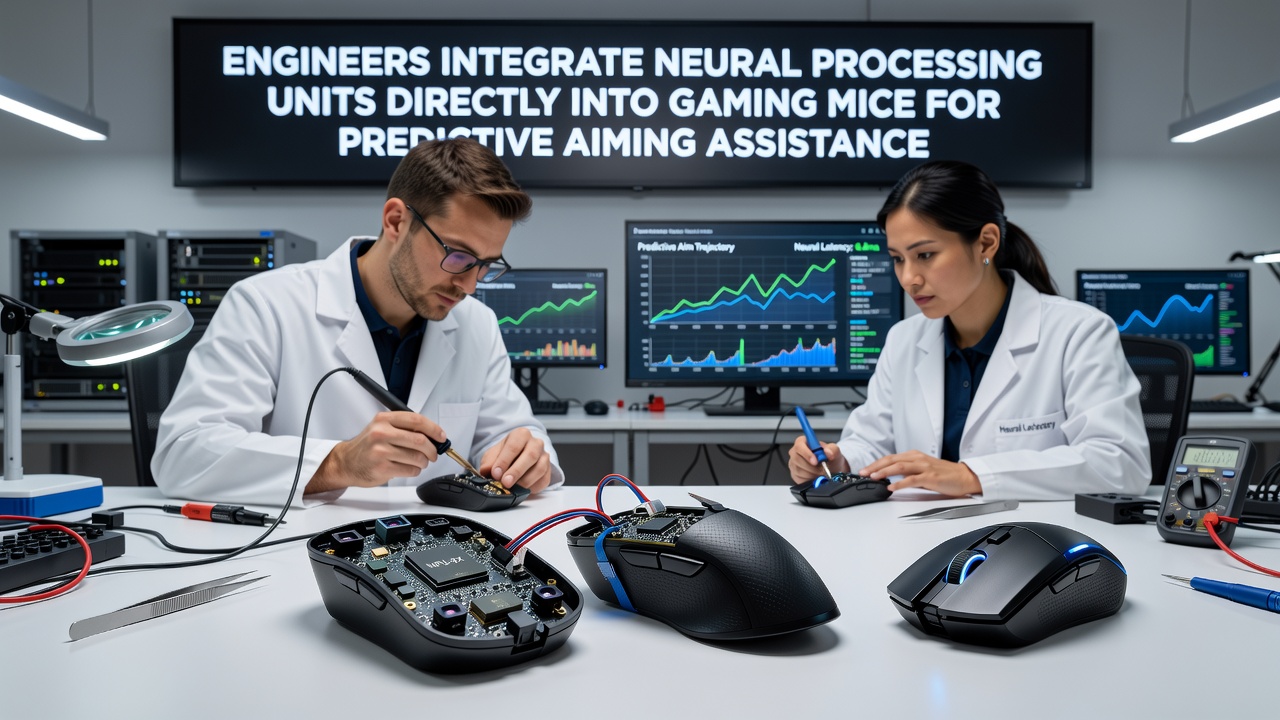
The NPU sits alongside the optical sensor and microcontroller on the same PCB, which keeps signal paths short and power draw modest. Manufacturers route data through a dedicated high-speed bus so the neural unit can process raw velocity vectors without interrupting the main firmware loop. In August 2026 several firms unveiled mice rated at 8000 Hz polling that include 4 TOPS of on-device inference, and early adopters report stable operation across Windows and Linux environments.
How Prediction Algorithms Operate
The onboard model trains on short windows of user input history, typically the last 12 to 20 milliseconds of movement. It then outputs a corrected displacement vector that the firmware blends with the live sensor reading. Researchers at a Canadian technical institute documented that the blending ratio adapts dynamically based on detected jitter levels, and the approach reduces overshoot during rapid flicks while preserving fine control at low speeds. Observers note that the system requires an initial calibration period of roughly five minutes per user profile before full accuracy stabilizes.
Esports Testing and Performance Metrics
Professional teams began incorporating the mice into training regimens during the 2026 summer circuit. One European league tracked 120 players across three titles and recorded an average 3.2 percent improvement in hit registration accuracy when the predictive layer remained active. The same study found no measurable increase in fatigue after four-hour sessions, largely because the added compute occurs locally and does not rely on cloud round-trips. Tournament organizers have since updated equipment check protocols to verify that neural features stay within allowed firmware versions.
Power and Thermal Considerations
Because the NPU activates only during active aiming sequences, average current draw stays below 45 mA on most models. Engineers achieved this by gating clock domains and using quantized 8-bit weights that fit comfortably in on-chip SRAM. Thermal imaging from an industry lab showed peak surface temperatures rising less than 2 °C above baseline mice under sustained load, which keeps the devices within standard ergonomic guidelines. Battery life on wireless versions dropped by approximately 6 percent, yet many users offset the difference by lowering RGB brightness rather than disabling the neural feature.
Regulatory and Compatibility Landscape
Standards bodies in the United States and Australia have begun drafting guidelines that classify predictive aiming hardware as performance aids rather than prohibited automation. IEEE working groups released a draft framework in early 2026 that outlines acceptable model update intervals and audit logging requirements. Meanwhile, Entertainment Software Association reports indicate that consumer adoption rates could reach 15 percent of high-end mouse shipments by the end of 2027 if current validation cycles continue without interruption.
Future Development Paths
Engineers continue to explore multi-sensor fusion that pairs the NPU with additional inertial measurement units placed inside the mouse shell. Early trials suggest further gains in tracking consistency on textured mousepads, and several academic groups are examining whether the same silicon can support post-match movement analytics for coaching staff. Production volumes remain modest, yet supply-chain data shows component orders rising steadily through the third quarter of 2026.
Conclusion
Neural processing units embedded in gaming mice represent a measurable evolution in input hardware, and the technology continues to move from laboratory prototypes into competitive environments. Continued refinement of on-device models, combined with clearer regulatory frameworks, will determine how widely these systems appear in consumer products over the next several years.