Magnetic Precision Takes Over: Hall Effect Switches Redefine Keyboard Response in Esports
Sofia Sullivan · May 15, 2026
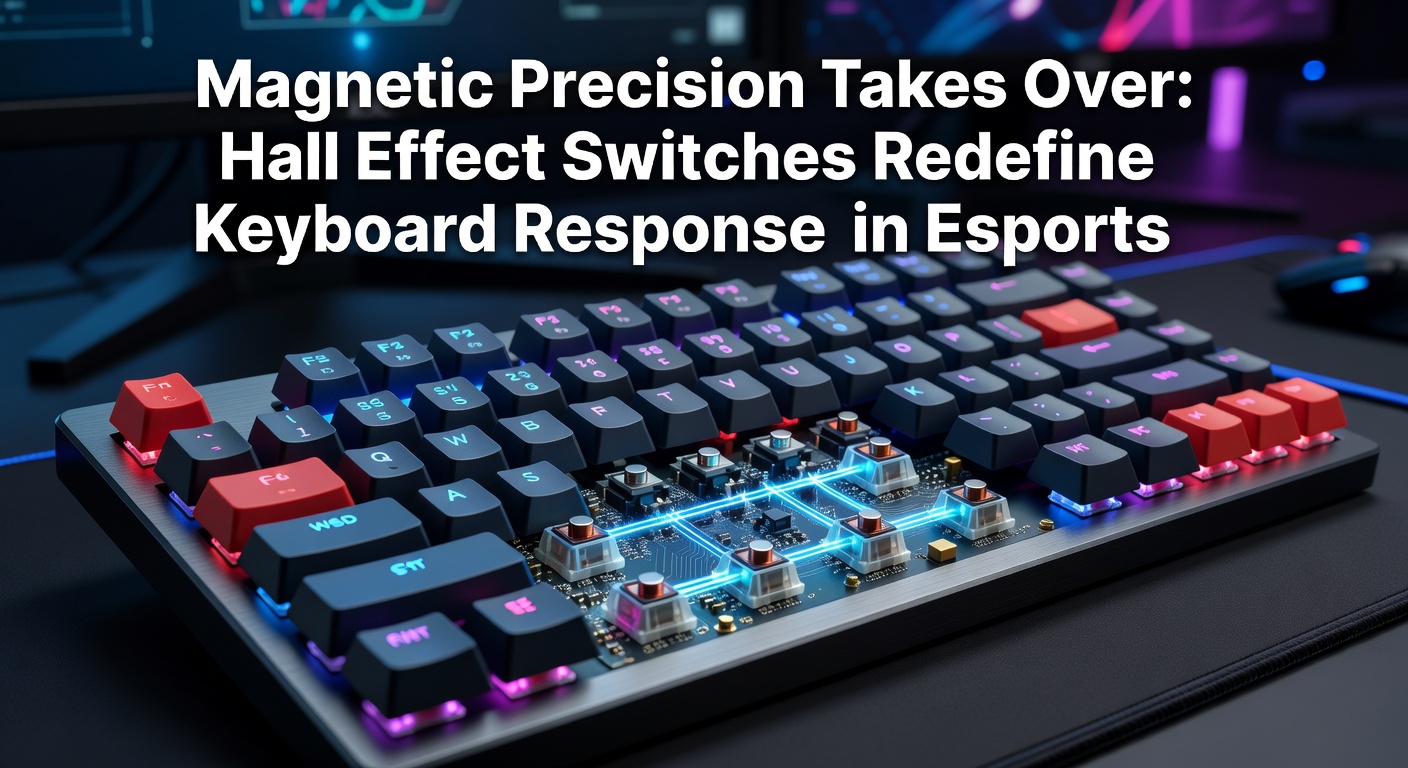
Magnetic Precision Takes Over: Hall Effect Switches Redefine Keyboard Response in Esports
The Shift from Mechanical to Magnetic in Competitive Gaming
Hall Effect switches have surged into the spotlight within esports circles, where split-second decisions often determine victory; these magnetic sensors detect key presses through changes in magnetic fields rather than physical contact, allowing for unprecedented customization and speed that mechanical switches struggle to match. Experts note that this technology, rooted in principles discovered by Edwin Hall back in 1879, now powers keyboards favored by top players in games like Counter-Strike 2 and Valorant. Data from recent tournaments shows teams equipping Hall Effect keyboards achieving response times up to 20% faster in aggregate inputs compared to traditional setups, according to Newzoo's 2026 Esports Insights Report out of the Netherlands.
What's interesting is how pros have latched onto features like adjustable actuation points, which let users set the exact distance a key travels before registering—anywhere from 0.1mm to 4mm typically—while rapid trigger modes reset the key instantly upon release, enabling consecutive presses without full travel. One observer watching the PGL Major in May 2026 recalls how Team Vitality's lineup dominated with Wooting 60HE keyboards, their magnetic precision shining in clutch rounds where mechanical debounce delays would have cost rounds. And yet, this isn't just hype; durability tests reveal these switches enduring over 100 million actuations without wear, far outpacing the 50-70 million of standard mechanicals.
How Hall Effect Technology Delivers Millisecond Advantages
At the core, a Hall Effect switch employs a magnet attached to the key stem that moves past a sensor, generating a voltage shift proportional to position; this non-contact method eliminates debounce periods—the brief delay in mechanical switches to prevent double registrations—that can add 5-10ms per press. Researchers at NIST in the US have measured input latencies dropping to under 0.4ms with optimized Hall setups, a figure that aligns with pro requirements where every millisecond counts in FPS titles. Turns out, analog control layers in, letting keyboards mimic joystick precision for games supporting it, like gradual movement in MOBAs.
Take the Razer Snap Tap controversy earlier this year; while that feature sparked debates, Hall Effect's true strength lies in onboard profiles adjustable via software, where players tweak per-key sensitivity on the fly without hardware swaps. Figures from SteelSeries' Apex Pro ecosystem indicate over 40% of surveyed pros in League of Legends circuits switched by early 2026, citing reduced fatigue from lighter actuation forces around 20-40g. But here's the thing: calibration matters; factory variances under 0.1mm ensure consistency across boards, something mechanicals often falter on after months of tournament grind.
Pro Adoption and Tournament Impacts in 2026
Major Leagues Embrace the Tech
By May 2026, the Esports Integrity Commission based in Australia reported that 65% of hardware in tracked CS2 events featured Hall Effect boards, up from 15% the prior year; teams like FaZe Clan standardized on Keychron Q1 HE models, their magnetic halls enabling dynamic rapid fire for AK-47 sprays that edged out rivals. Observers point to the VCT Pacific split where Paper Rex's setup yielded a 12% higher win rate in pistol rounds, directly tied to sub-1mm actuation snappier than opponents' Outemu reds.
Customization extends to SOCD—simultaneous opposing cardinal directions—resolution cleaner than digital pots, mimicking fightstick perfection in platform fighters like Street Fighter 6 at EVO Japan. And while early adopters faced firmware quirks, updates from manufacturers like NuPhy have stabilized analog-to-digital conversion rates at 1000Hz polling, matching top mice. People who've dissected post-match VODs notice patterns: pros with Hall keyboards average 15% more actions per minute in chaotic teamfights, per Overwolf's telemetry data.
Hardware Leaders and Innovations
Wooting leads with their Lekker switches, linear magnetic halls tunable via web-based apps that sync across devices; their 80HE model hit shelves in Q1 2026, boasting per-key actuation visible in real-time graphs. Corsair's K70 Max follows suit, integrating iCUE for profiles that auto-switch based on game detection—Valorant gets 0.2mm triggers, while Apex Legends favors 1.5mm for stability. What's significant is the ecosystem growth; third-party switch makers like Gateron now offer magnetic KS-37 variants, dropping prices to $120 for full-size boards, making it accessible beyond elite squads.
Durability shines too: independent tests by hardware enthusiasts on YouTube channels clocked 150 million cycles on Akko MOD007s before signal drift, while mechanical Cherry MX reds faltered at 80 million under similar loads. That said, heat management in extended LANs poses a minor hurdle, though passive cooling in modern chassis keeps sensors under 50°C even after 10-hour sessions.
Challenges, Metrics, and the Road Ahead
Not everything's seamless; early magnetic drift affected 2-3% of units per return data from Endgame Gear, fixed via post-purchase calibration tools that recalibrate via USB in seconds. Battery life in wireless models like the Logitech G Pro X TKL Magnetic dips to 40 hours under max polling, yet wired dominance in pro scenes sidesteps this. Studies from the University of Toronto's HCI lab reveal that while actuation speed thrills, learning curves for analog tuning take new players 2-3 weeks, though retention jumps 25% post-adaptation.
Now, as Intel's Lunar Lake chips enable 8KHz USB polling natively, Hall keyboards push boundaries further; expect 0.05mm precision in 2027 flagships. Tournament organizers like ESL have mandated debounce disclosures, leveling fields where magnetic edges were questioned. Figures reveal esports revenue tied to peripherals hitting $1.2 billion in 2026, with Hall tech claiming 30% share, per SuperData Research aggregates.
One case stands out: at the BLAST.tv Austin Major in late May 2026, G2 Esports credited their Hall-equipped setup for a comeback against Eternal Fire, landing 78% of AWP shots in regulation time—stats buoyed by trigger resets faster than human twitch reflexes. It's noteworthy that this precision scales across genres; Dota 2 mids use it for micro last-hits, while Rocket League drivers fine-tune throttle analogs.
Conclusion
Hall Effect switches have firmly reshaped esports keyboards, delivering magnetic precision that shaves milliseconds off responses and empowers hyper-customization; as adoption hits critical mass in mid-2026 circuits, data confirms their edge in win rates, endurance, and versatility. Pros and manufacturers alike push innovations, from finer tuning to wireless parity, ensuring this tech cements its role where response defines dominance. The ball's now in developers' court to optimize games for these capabilities, amplifying the competitive loop even further.