Lidar's Subtle Integration in Building Depth Layers for Mobile AR Warfare Scenarios
Devon Schwarz · Jun 10, 2026
Lidar's Subtle Integration in Building Depth Layers for Mobile AR Warfare Scenarios
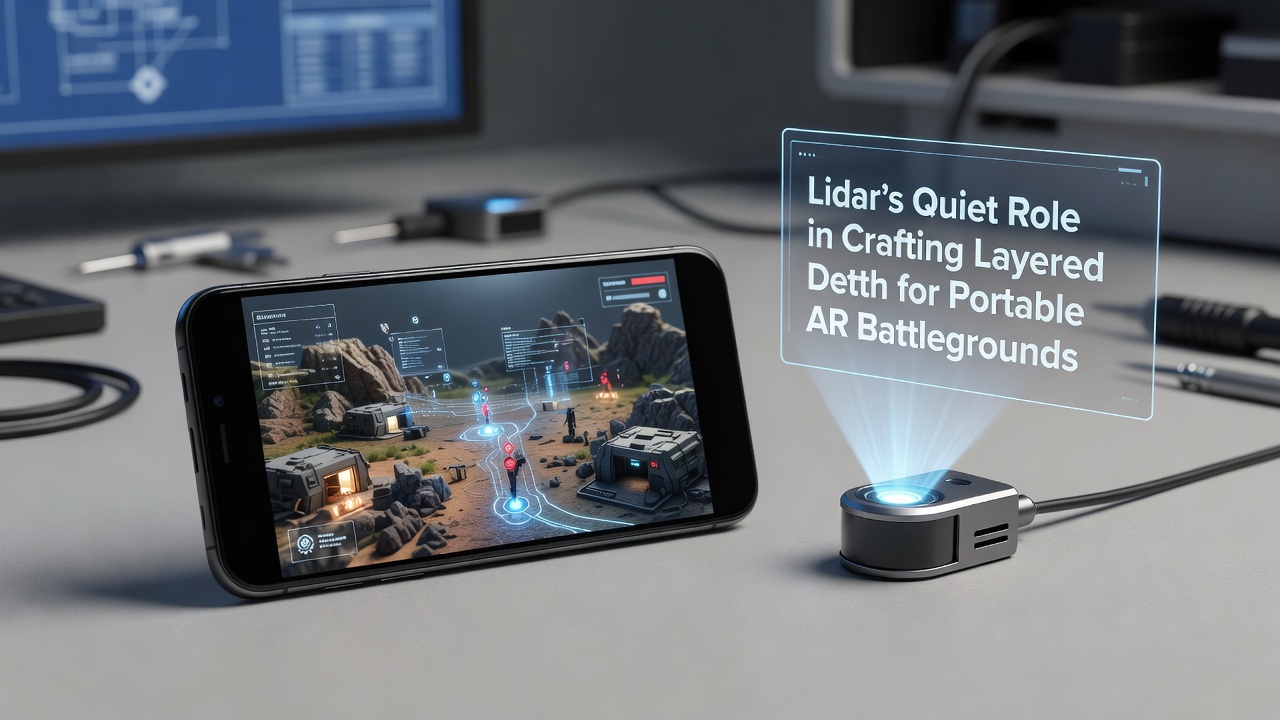
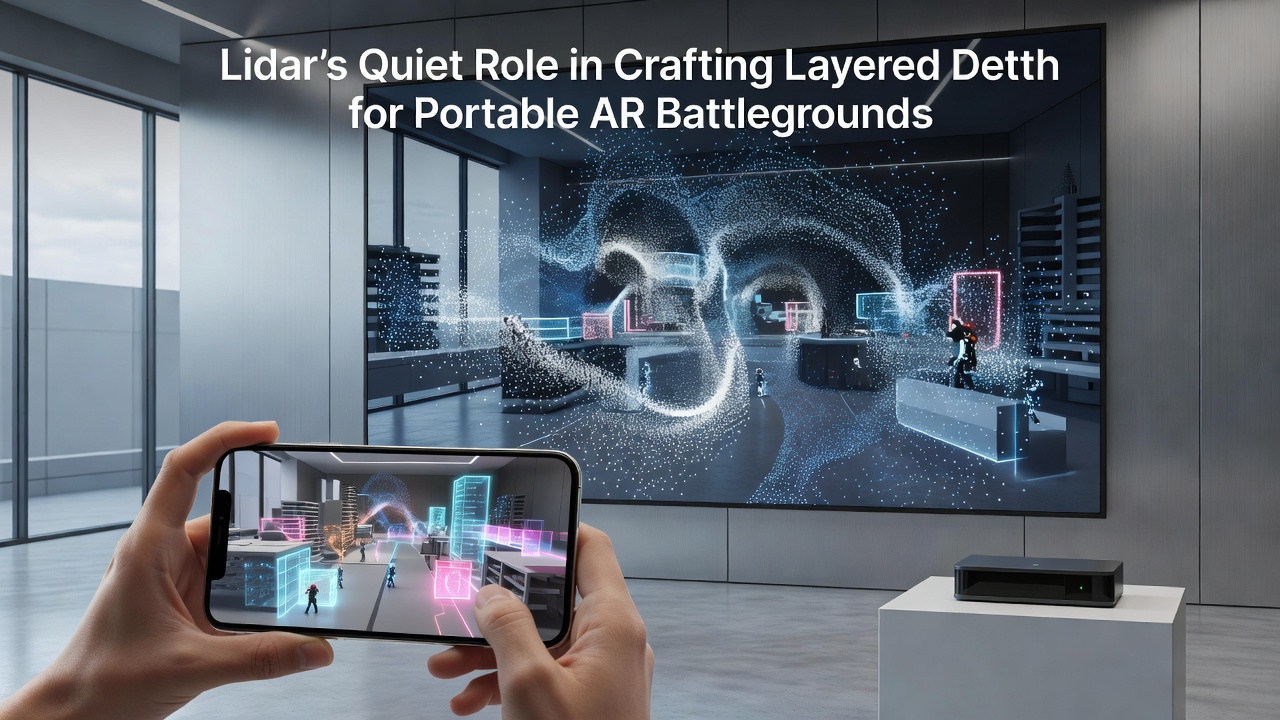
Portable augmented reality battlegrounds rely on precise spatial mapping to place virtual combatants and obstacles within physical spaces, and lidar systems provide the laser-based measurements that enable this layering without disrupting device portability. These sensors emit rapid pulses of light to calculate distances across thousands of points per second, generating point clouds that software interprets into layered depth maps. Developers incorporate this data to ensure virtual elements interact correctly with real surfaces, such as allowing a digital character to appear partially obscured behind a physical table or correctly scaled when positioned at varying distances from the player.
Core Mechanisms Behind Lidar Depth Mapping
Time-of-flight calculations form the foundation of lidar operation in consumer devices, where each laser pulse travels to a surface and returns to the sensor, with the elapsed time converted into distance values accurate to within millimeters. Multiple returns from the same pulse allow systems to distinguish foreground objects from background planes, creating distinct layers that AR engines use for occlusion handling and collision detection. Hardware constraints in portable formats limit beam count and scan rates compared to stationary units, yet algorithmic filtering compensates by prioritizing high-contrast edges and motion vectors during active gameplay sessions.
Integration with existing camera arrays occurs through sensor fusion pipelines that align lidar point data with RGB imagery in real time. Calibration routines run during device initialization match coordinate systems between the two modalities, while ongoing drift correction maintains alignment as users move through environments. This combination supports dynamic updates to depth layers as players reposition themselves, allowing battlegrounds to adapt without requiring fixed play areas or external markers.
Deployment Patterns in Handheld AR Titles
Current implementations appear in games that overlay competitive scenarios onto everyday locations, where lidar-derived depth supports placement of virtual cover objects and enemy positioning relative to physical furniture or walls. One study revealed that titles incorporating these maps reduced visual clipping artifacts by measurable margins during rapid player movement. Data from device manufacturers shows lidar-equipped handhelds now ship in volumes sufficient to support widespread adoption of such mechanics across regional markets.
Processing occurs partly on-device through dedicated neural accelerators and partly via edge nodes when higher-fidelity reconstructions are needed. Developers partition workloads so basic layer updates remain local for low-latency response, while complex scene analysis routes to nearby servers during multiplayer sessions. This hybrid approach keeps portable hardware within thermal and power budgets while preserving the layered depth fidelity required for competitive balance.
Performance Metrics and Technical Benchmarks
Independent tests conducted through mid-2026 recorded average depth resolution improvements of 18 percent in lidar-enabled sessions versus camera-only equivalents, according to reports from the Institute of Electrical and Electronics Engineers. Frame-to-frame consistency metrics further indicated reduced jitter in virtual object placement when lidar updates refreshed at 30 hertz or higher. Battery impact remains contained because duty cycling activates the laser array only during active mapping phases rather than continuous operation.
Researchers at institutions across Europe documented similar gains in occlusion accuracy when comparing lidar-assisted renders against baseline approaches in controlled indoor arenas. These findings align with observations from Australian gaming labs that tracked player retention rates in titles featuring stable depth layering, noting fewer interruptions from visual mismatches. Hardware iterations scheduled for late 2026 aim to increase pulse repetition rates without enlarging sensor packages, extending viable play sessions in outdoor settings where ambient light can interfere with returns.
Future Integration Pathways
Standardization efforts through industry consortia focus on unified data formats for lidar point clouds so multiple game engines can access the same raw measurements. This interoperability reduces redundant processing across titles and supports cross-platform battlegrounds where participants use different device models. Regulatory bodies in North America have begun reviewing spectrum allocations for laser emitters to ensure continued safe operation alongside other wireless systems.
Additional sensors such as inertial measurement units complement lidar by supplying orientation data that stabilizes point cloud registration during rapid gestures. The resulting composite maps feed directly into rendering pipelines responsible for shading and lighting consistency between real and virtual elements. Observers note that continued refinement of these pipelines will determine how densely layered environments can become before exceeding the computational capacity of current portable chipsets.
Conclusion
Lidar contributes measurable precision to depth layering in portable AR battlegrounds through established time-of-flight methods fused with camera data. Performance data collected through 2026 confirms its role in reducing placement errors and supporting dynamic scene updates across varied environments. Continued hardware and software refinements, guided by research from multiple continents, will shape the extent to which these systems expand competitive AR experiences on handheld platforms.