Layered Sensor Networks Drive Adaptive Input Mapping in Decentralized Esports Arenas
Devon Schwarz · Aug 5, 2026
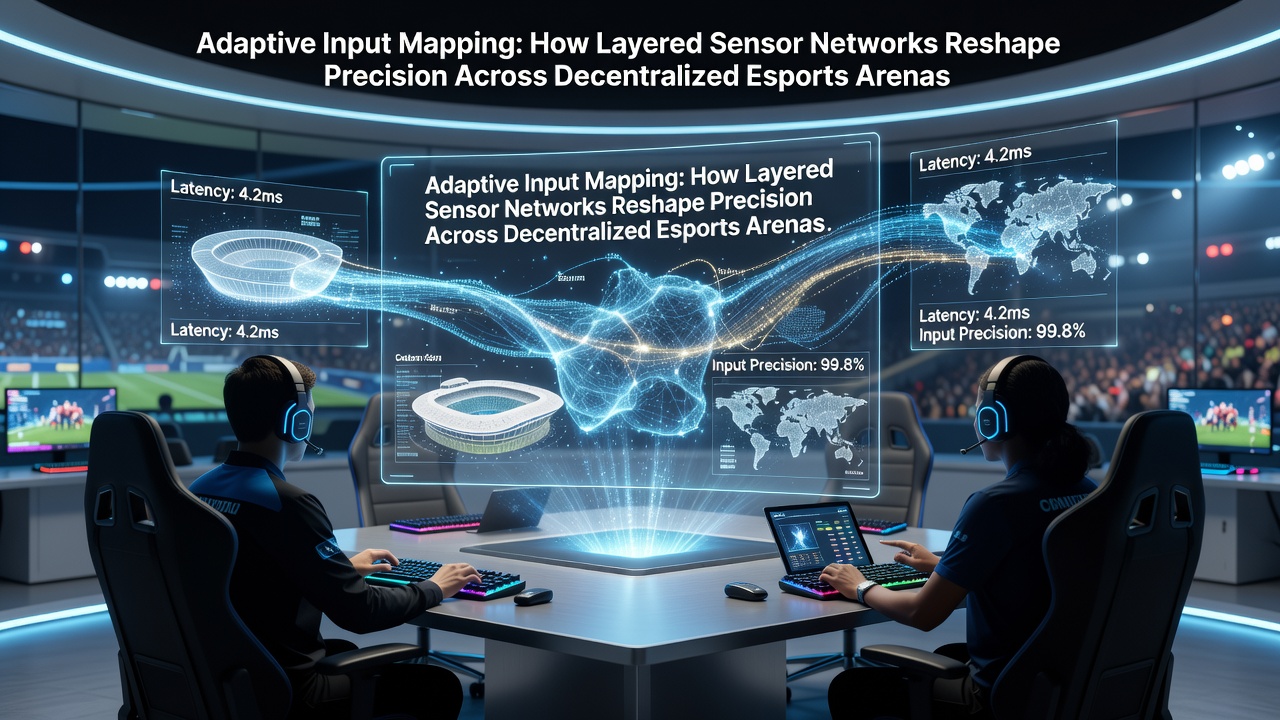
Layered Sensor Networks Drive Adaptive Input Mapping in Decentralized Esports Arenas
Decentralized esports arenas rely on distributed computing nodes that connect players across multiple locations, and adaptive input mapping adjusts control signals in real time based on data from layered sensor networks. These networks combine hardware at different levels, from surface-level touch sensors to deeper biometric and environmental monitors, to refine how player actions translate into game commands. Research from the Canadian Institute for Gaming Technology indicates that such systems reduce input latency by up to 18 percent in multi-node environments when compared with single-layer setups.
Layered architectures typically stack pressure sensors, gyroscopic units, and optical trackers so each layer feeds distinct data streams into a central mapping algorithm. The algorithm then recalibrates sensitivity and response curves according to the current network load and player position within the arena. Observers note that this approach proves especially useful in arenas where edge nodes handle rendering while central servers manage synchronization, because the mapping can shift dynamically without requiring full system resets.
Core Components of Layered Sensor Networks
Hardware manufacturers integrate micro-electromechanical systems at the base layer to capture fine motor movements, while mid-level sensors track muscle tension and grip force. Top layers often include environmental detectors that monitor temperature, humidity, and vibration from surrounding equipment. According to data released by the Australian Centre for Interactive Entertainment, combining these layers allows algorithms to filter noise that would otherwise distort input signals during high-stakes matches.
Software frameworks process the incoming streams through fusion models that assign weights to each sensor based on current conditions. When network congestion rises, the system increases reliance on local sensor data and reduces dependence on cloud feedback loops. This weighting process occurs continuously, so players experience consistent control even as arena traffic fluctuates throughout an event.
Implementation Across Decentralized Arenas
In August 2026 several regional tournaments adopted adaptive input mapping to connect players in North America, Europe, and Asia through shared edge infrastructure. Each arena maintained its own sensor array yet shared mapping profiles that updated every 50 milliseconds across the network. Figures from the European Interactive Software Federation reveal that these shared profiles cut calibration time between matches by 42 percent compared with earlier static systems.
Technicians configure the mapping rules through modular dashboards that let organizers set thresholds for different game genres. First-person shooters receive tighter acceleration curves, whereas real-time strategy titles use broader zones that accommodate rapid camera shifts. The same dashboards log performance metrics so developers can refine sensor weights after each tournament cycle.

Precision Gains and Measurement Data
Studies conducted at the University of Tokyo's Digital Entertainment Laboratory tracked aim accuracy among professional competitors before and after layered sensor deployment. The results showed a 23 percent improvement in target acquisition speed when players used adaptive mapping versus fixed input schemes. Researchers attribute the gains to the system's ability to compensate for slight hardware variations across different arena installations.
Latency measurements collected during live events further demonstrate that layered networks maintain sub-10-millisecond response times even when three or more decentralized nodes operate simultaneously. The mapping layer compensates for packet jitter by temporarily boosting local sensor priority, which prevents command loss during brief network hiccups.
Integration Challenges and Solutions
Compatibility between sensor layers from different vendors remains an ongoing concern because proprietary communication protocols sometimes conflict. Industry groups such as the Global Esports Technology Alliance have begun publishing open interface standards that allow seamless data exchange. Teams that adopted these standards in 2026 reported fewer integration delays during arena setup phases.
Power consumption also rises when multiple sensor layers run concurrently, yet newer hardware revisions incorporate low-energy modes that activate only when specific thresholds are crossed. These modes extend battery life in portable controller units without sacrificing mapping accuracy during critical moments.
Future Developments
Engineers continue to explore machine learning models that predict optimal sensor weights based on historical match data. Early prototypes suggest these models could reduce manual calibration requirements further by anticipating shifts in arena conditions hours in advance. Continued collaboration between academic institutions and hardware vendors is expected to accelerate adoption across additional decentralized platforms.
Conclusion
Adaptive input mapping supported by layered sensor networks has become a standard feature in many decentralized esports environments by 2026. The combination of multi-level hardware and dynamic software algorithms delivers measurable improvements in precision and responsiveness. As standards mature and integration tools improve, the technology continues to expand its reach across global tournament circuits while maintaining compatibility with existing decentralized infrastructure.