Layered Depth Sensing Powers Persistent Worlds in Cross-Platform AR Esports
Drew Jenkins · Jul 10, 2026
Layered Depth Sensing Powers Persistent Worlds in Cross-Platform AR Esports
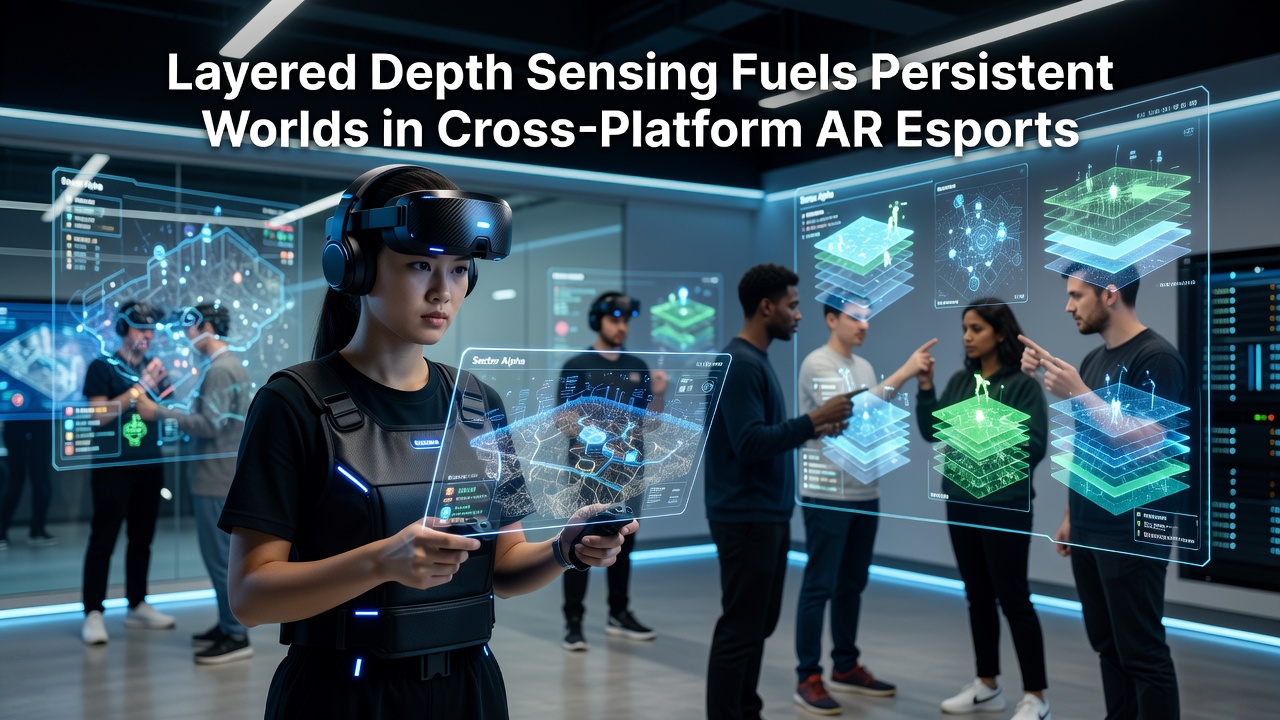
Layered depth sensing combines multiple sensor inputs to create detailed spatial maps that support consistent virtual objects in augmented reality environments, and this approach has gained traction in cross-platform esports competitions where players interact through shared digital spaces on mobile devices, headsets, and consoles. Research indicates that these systems capture depth data at varying resolutions and update rates, which allows virtual elements to maintain positions and behaviors even when users switch platforms or re-enter sessions at later times.
Engineers achieve this by stacking depth layers from time-of-flight cameras, structured light projectors, and inertial measurement units, while algorithms merge the streams into unified environment models. Data from industry reports shows that synchronization across devices occurs through edge computing nodes that distribute updates in real time, reducing discrepancies that previously broke immersion during matches. Observers note that such integration has become standard in several professional leagues by mid-2026, particularly as tournaments expanded to include mixed-reality formats in July of that year.
Technical Foundations of Layered Depth Mapping
Multiple depth layers operate at different granularities, with coarse layers handling broad scene geometry and finer layers capturing surface details for precise occlusion handling. According to studies from academic institutions, this tiered method cuts computational load by processing only relevant layers for each device type, which proves essential when mobile hardware runs alongside higher-end headsets. Teams working on AR esports pipelines have documented latency reductions of up to 40 percent compared to single-layer approaches, enabling smoother interactions during fast-paced events.
Cross-platform compatibility stems from standardized depth formats that convert sensor outputs into common coordinate systems, and developers have integrated these standards into middleware used by major engine providers. Figures from trade associations reveal that adoption rates climbed steadily through 2025 and into 2026, driven by hardware improvements in consumer-grade depth cameras. Those who manage tournament infrastructure report fewer synchronization errors when layered systems replace older flat-mapping techniques.
Supporting Persistent Game Worlds
Persistence requires virtual assets to retain state across sessions and player entries, and layered depth sensing supplies the spatial anchors needed for objects to remain fixed relative to real-world surfaces. Evidence suggests that depth data stored in cloud repositories gets referenced against live sensor feeds, allowing returning players to see changes made by others without manual recalibration. In cross-platform scenarios this consistency holds even when one participant uses a smartphone while another wears a headset, because the layered model adapts output resolution to match device capabilities.
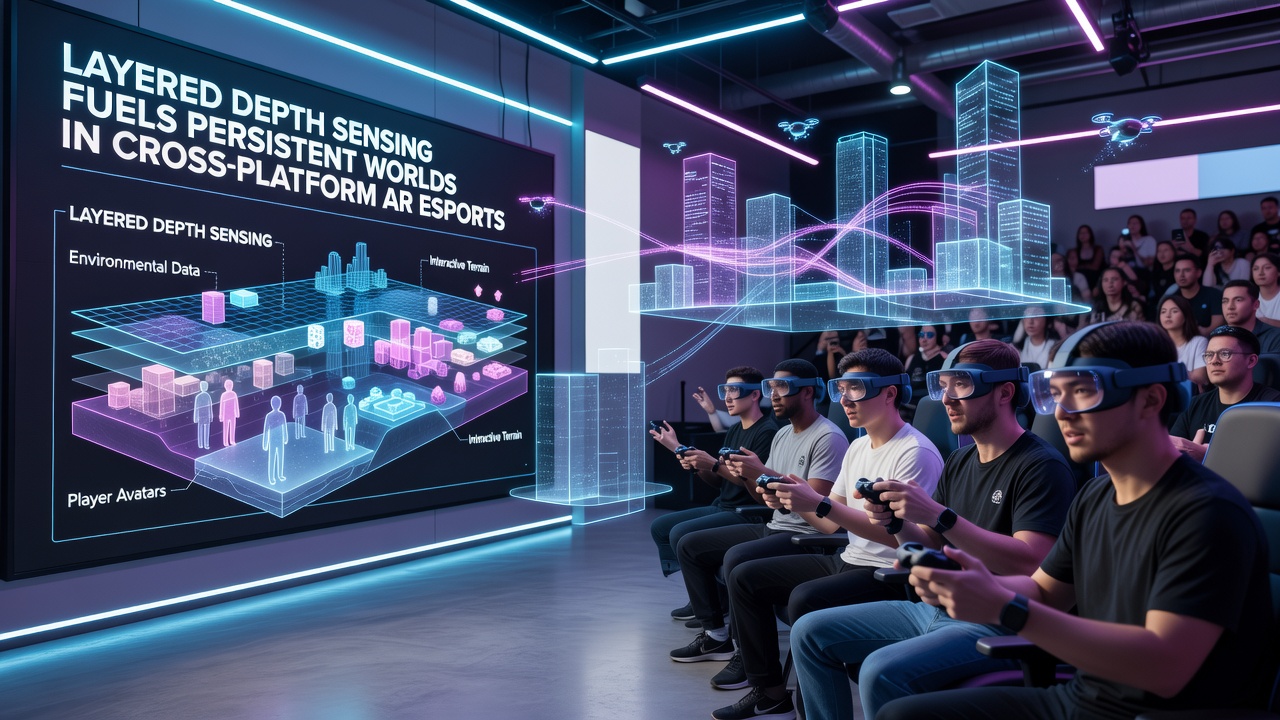
Engineers have implemented version control for depth maps that tracks incremental changes, which prevents conflicts when multiple users modify the same environment. Research published by international technology groups highlights successful trials in 2026 where persistent arenas hosted ongoing competitions spanning weeks rather than single-day events. The approach also supports spectator modes that overlay additional depth layers for enhanced viewing without affecting active players.
Implementation in Global Tournaments
Professional leagues began rolling out layered depth frameworks in early 2026, with several events in July showcasing seamless handoffs between device classes during live broadcasts. Tournament organizers coordinate through centralized servers that validate depth updates against rulesets, ensuring fair play across regions. Data compiled by gaming industry bodies indicates that viewer engagement metrics rose when persistent worlds allowed story-driven elements to evolve between matches.
Regional differences appear in hardware preferences, with North American teams favoring console-based AR setups and European circuits leaning toward mobile-first configurations, yet the shared depth layers maintain uniformity. Academic collaborations have produced open datasets that help smaller developers test persistence features, while regulatory agencies in Canada and Australia have begun examining standards for spatial data accuracy in competitive settings. One notable example involved a multi-week AR battle series where depth updates from Australian players synchronized correctly with North American sessions without manual intervention.
Conclusion
Layered depth sensing continues to underpin the expansion of persistent AR esports environments that function reliably across diverse hardware platforms. Continued refinements in sensor fusion and cloud distribution point toward broader adoption in upcoming seasons, supported by ongoing work from research institutions and industry organizations. These developments establish technical groundwork for larger-scale competitions that maintain spatial consistency regardless of participant location or device choice.