Inside Labs: Biometric Streams Forge New Endurance Standards for Pro Gamers
Logan Schulz · Jun 28, 2026
Inside Labs: Biometric Streams Forge New Endurance Standards for Pro Gamers
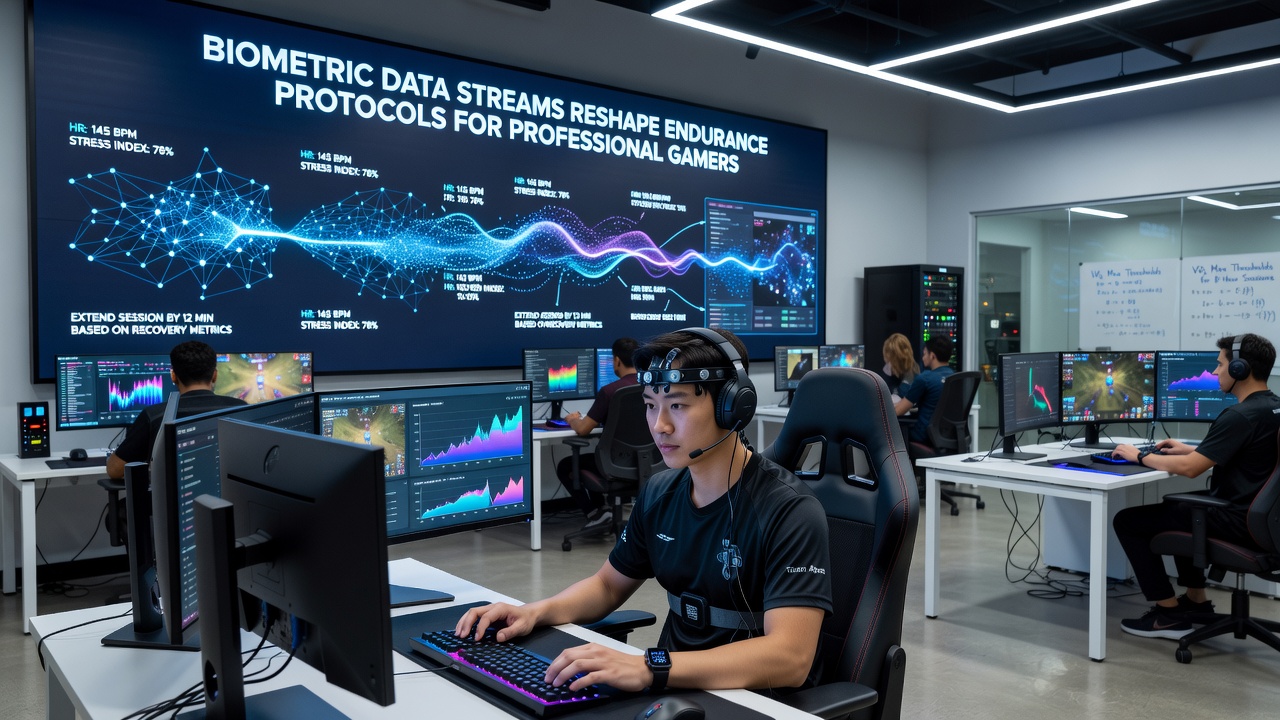
Professional gaming has evolved into a domain where physical stamina intersects directly with cognitive performance, and labs across multiple regions now channel continuous biometric data streams into customized endurance protocols that adjust training loads in real time. These facilities collect inputs from heart rate variability monitors, electroencephalography headsets, skin conductance sensors, and muscle oxygen saturation devices, then route the resulting datasets through adaptive algorithms that modify session durations, rest intervals, and cognitive drills for individual athletes. Researchers at several North American and European centers have documented how such integration reduces reported fatigue incidents during extended tournaments that stretch beyond eight hours.
Data Collection Methods in Controlled Environments
Technicians position players in simulated competition rigs equipped with multi-channel recording arrays while they engage in high-intensity matches that mirror tournament conditions, and the systems log fluctuations every second to build individualized baselines that evolve over weeks of observation. One study coordinated through Canadian university partnerships tracked a cohort of 45 professional players and noted that heart rate variability thresholds could predict performance drops up to 22 minutes before players themselves reported strain, allowing coaches to insert micro-breaks or switch to lower-stakes drills. European labs affiliated with the Interactive Software Federation have cross-referenced similar datasets with national health guidelines to ensure protocols align with occupational safety standards for screen-based work.
Protocol Adjustments Driven by Live Streams
Algorithms process incoming streams to trigger automated changes such as extending cool-down periods when skin conductance spikes indicate elevated stress or shortening reaction-time drills when EEG patterns show sustained alpha wave dominance that signals mental fatigue. Teams in Australian esports training hubs reported in mid-2026 that players following these adjusted schedules maintained consistent accuracy metrics across three-day league events, whereas control groups without biometric oversight experienced measurable declines after the second day. Observers note that the approach treats endurance not as a fixed trait but as a dynamic variable that responds to minute-by-minute physiological feedback.
Case Examples from Active Facilities
Take one facility in Seoul that integrates muscle oxygen readings with eye-tracking data to detect when peripheral vision narrows under prolonged load, prompting the system to rotate players into vision-restoration exercises before accuracy metrics slip. Another site in Germany combines galvanic skin response with breathing rate to flag over-arousal states, then cues guided respiratory sequences delivered through in-ear audio that players can follow without removing headsets. Data from these environments, shared through industry consortia, shows consistent patterns where early intervention based on biometric thresholds correlates with fewer mid-tournament substitutions.
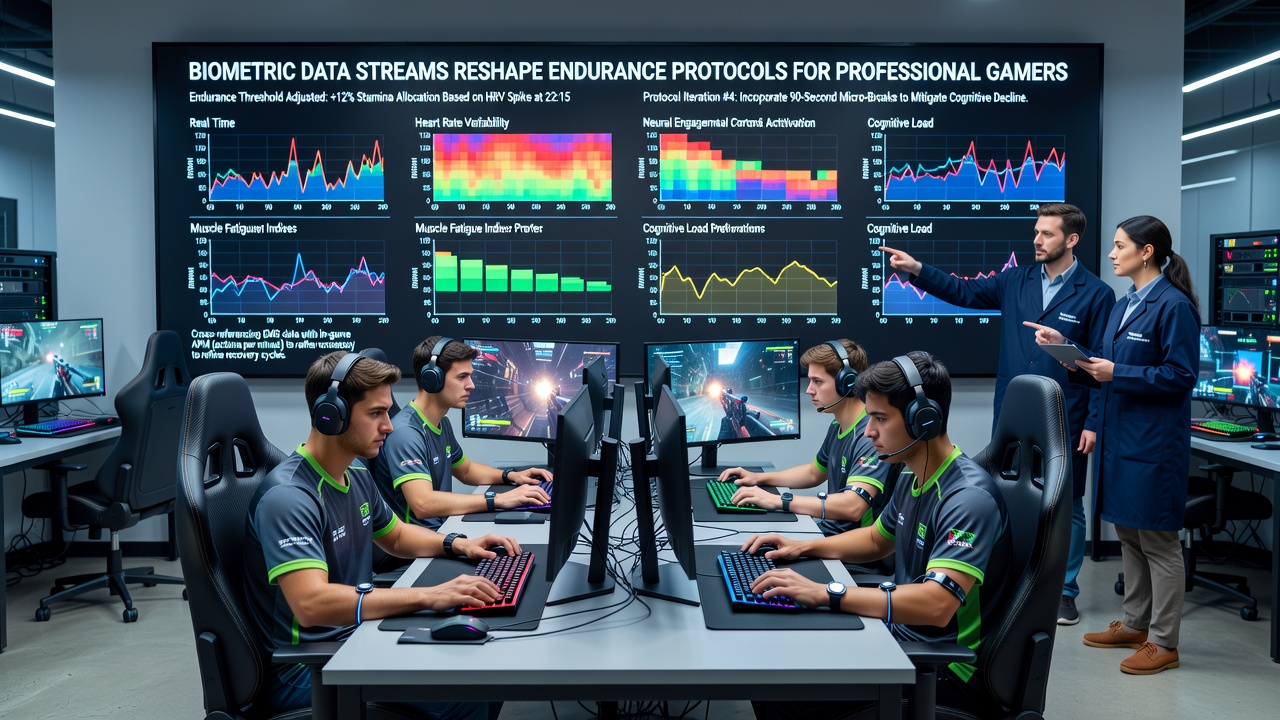
By June 2026 several labs had begun piloting decentralized data architectures that allow remote coaches to receive anonymized summaries while the raw streams remain on local servers, addressing both latency concerns and privacy regulations that differ across jurisdictions. Players wear compact sensor arrays that transmit via low-power Bluetooth to edge processors, which then push aggregated insights into cloud dashboards accessible only to authorized staff. This setup has enabled cross-border training programs where athletes in one country follow protocols refined from data collected in another.
Integration with Existing Training Ecosystems
Endurance protocols now feed directly into broader periodization plans that balance scrimmage hours with recovery blocks, and the biometric layer supplies objective markers that replace subjective self-reports which often lag behind actual physiological states. Research coordinated through academic networks in the United States has highlighted how combining these streams with sleep-tracking wearables produces more accurate load-management recommendations, particularly during qualification cycles that compress multiple high-stakes events into short windows. Facilities maintain strict data-handling procedures that separate performance metrics from personal health records to comply with regional privacy frameworks.
Future Directions in Stream Processing
Engineers continue refining models that predict endurance limits hours ahead by analyzing cumulative load curves rather than isolated spikes, and early deployments indicate these forecasts help teams schedule travel and media obligations around projected recovery needs. Partnerships between hardware manufacturers and esports organizations have accelerated sensor miniaturization, allowing less obtrusive monitoring that players accept during both practice and live events. The resulting datasets are expanding the evidence base for what constitutes sustainable competitive longevity in an industry that once treated extended sessions as standard practice.
Conclusion
Biometric data streams have moved from experimental add-ons to core components of endurance management across professional gaming environments, with labs supplying the infrastructure that turns raw physiological signals into actionable training adjustments. Continued refinement of these systems, supported by international research collaborations, points toward increasingly precise protocols that scale with the demands of expanding tournament calendars.