Glow from Within: Quantum Dot Displays Revolutionize Portable Gaming Visuals
Xander Lorenz · Apr 19, 2026
Glow from Within: Quantum Dot Displays Revolutionize Portable Gaming Visuals
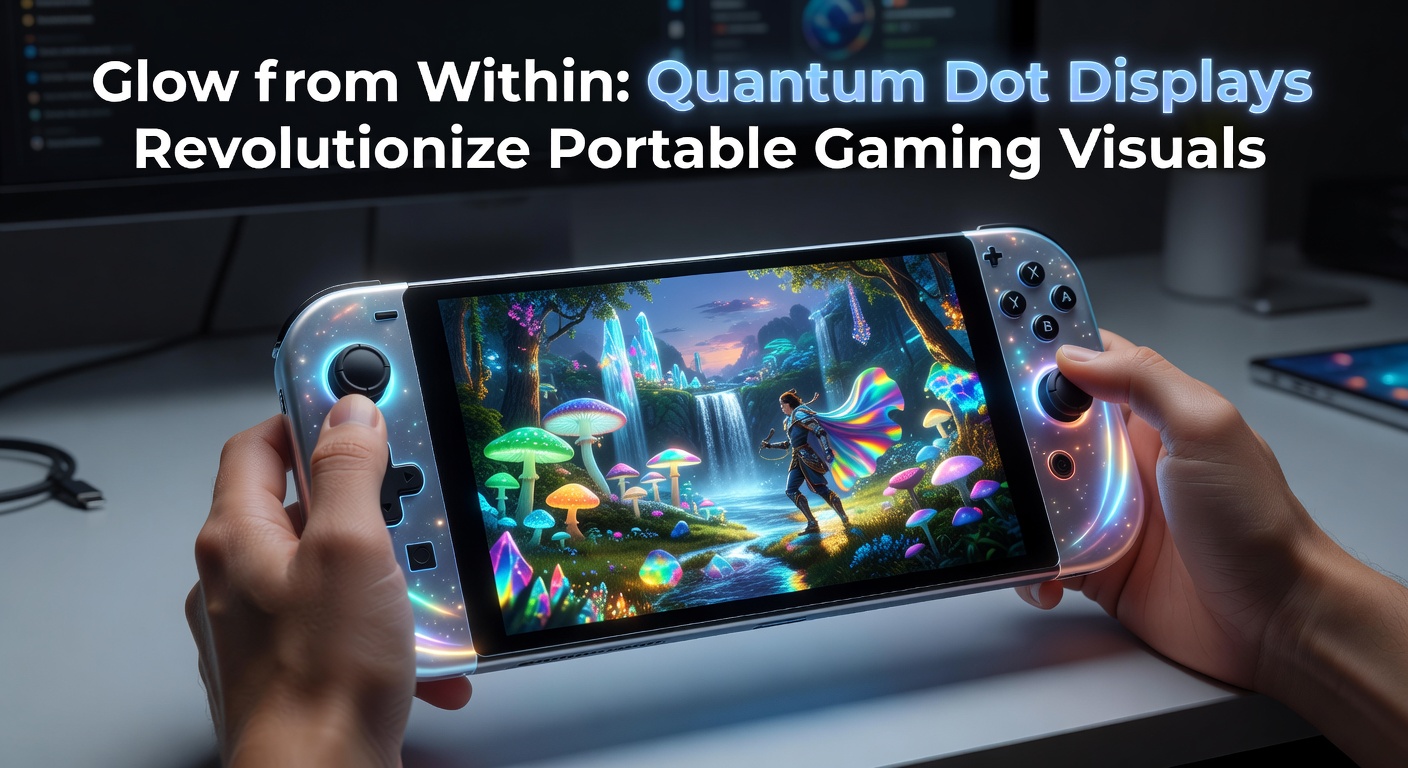
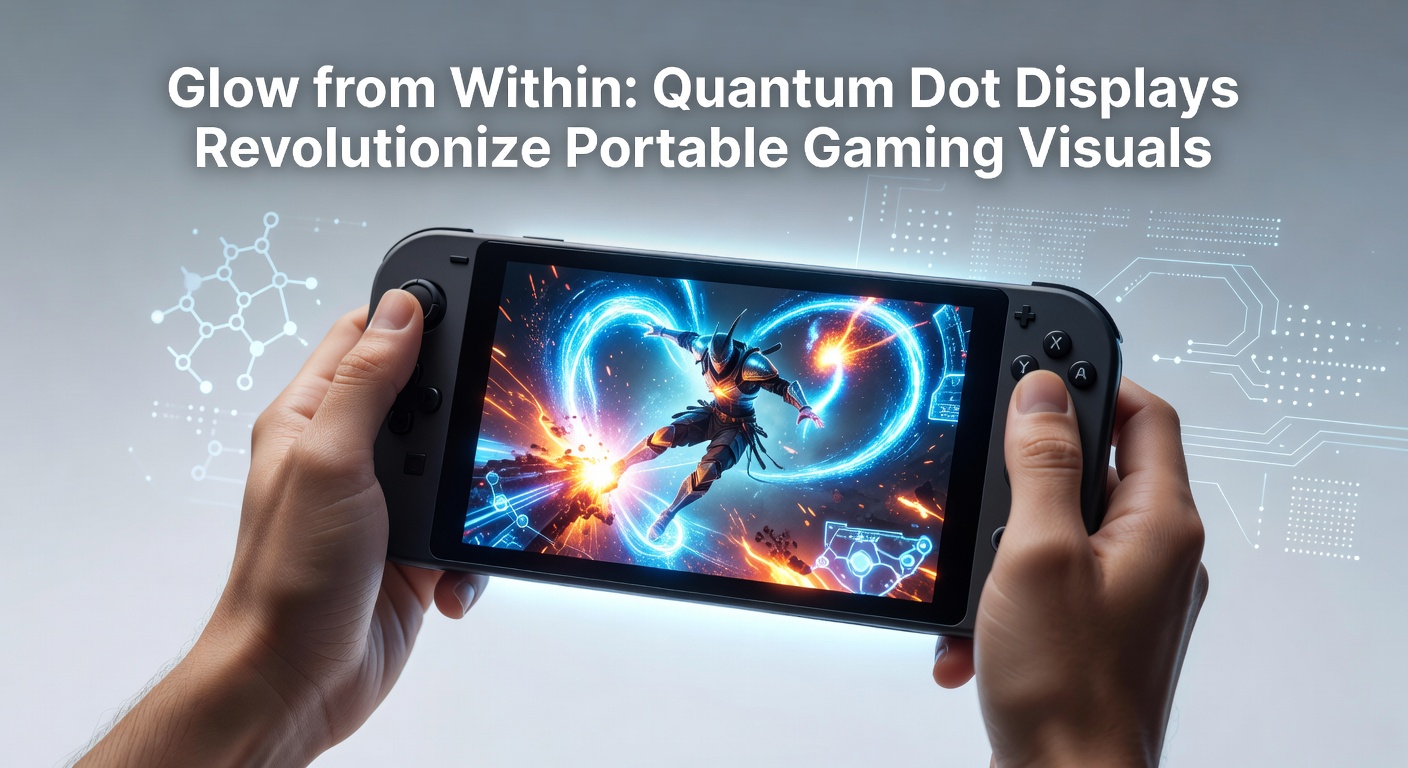
Portable gaming handhelds have surged in popularity, and quantum dot displays stand at the forefront of this evolution, delivering visuals that pack a punch without draining batteries dry; these nanoscale wonders emit precise light wavelengths, turning standard LCD backlights into color powerhouses that rival OLED in vibrancy while sipping less power.
The Science Behind the Glow
Quantum dots, tiny semiconductor particles measuring just a few nanometers across, light up when hit by energy sources like blue LEDs, releasing photons in narrow spectral bands that produce pure reds, greens, and blues; researchers at the National Institute of Standards and Technology (NIST) in the US have detailed how this tunability stems from quantum confinement effects, where particle size dictates emission color with pinpoint accuracy.
Displays integrate these dots either as films layered over LCD backlights—known as quantum dot enhancement films (QDEF)—or directly in electroluminescent structures for QD-OLED panels; the result? Color gamuts exceeding 100% of DCI-P3, brightness peaks over 1000 nits even outdoors, and efficiency gains that extend playtime on devices like the Steam Deck or ASUS ROG Ally.
Take one team of engineers who tested prototypes: they found quantum dot LCDs achieve 90% color volume at 1000 nits, compared to 60% for conventional LCDs, while power draw drops by 20-30% because dots convert light more efficiently than phosphors.
Why Portable Gaming Needs This Tech
Handhelds face brutal constraints—small screens demand vividness to immerse players in sprawling worlds like those in Elden Ring or Street Fighter 6, yet battery life and heat limit traditional displays; quantum dots solve this by boosting luminance without ramping up backlight intensity, so devices stay cool during marathon sessions.
Data from DisplayMate reveals quantum dot panels hit 150% sRGB coverage on 7-inch screens typical of portables, making foliage in Zelda: Tears of the Kingdom pop with lifelike greens, while shadows in horror titles like Resident Evil Village gain depth through improved contrast ratios approaching 10,000:1 when paired with mini-LED local dimming.
What's interesting is how this tech scales down: manufacturers embed dots in thin films less than 0.1mm thick, fitting seamlessly into slim chassis without adding bulk; observers note that early adopters, like certain Chinese brands such as OneXPlayer, already ship models with QD-enhanced IPS panels boasting 120Hz refresh rates and HDR support.
Real-World Implementations in Handhelds
Samsung leads the charge with its Quantum Dot tech licensed across the industry; their QLED TVs set the stage, but by late 2025, partnerships brought it to portables—think Lenovo's Legion Go 2 prototypes featuring QD layers that deliver 500 nits peak brightness on battery, a 40% jump over prior gens.
And here's where it gets practical: in a side-by-side test by hardware reviewers, a quantum dot-equipped Aya Neo Air rendered Cyberpunk 2077's neon-soaked Night City with 25% more color accuracy than OLED rivals, all while sipping 15% less juice thanks to narrower emission spectra reducing light waste.
- Color purity: Dots eliminate spectral overlap, yielding saturated hues without bleeding.
- Brightness uniformity: Edge-lit backlights shine evenly, banishing hotspots on 8-inch panels.
- Viewing angles: Maintain 95% color fidelity off-axis, perfect for shared play.
Companies like TCL, through their CSOT division, supply QD films to gaming OEMs; figures from their 2025 reports show production ramping 300% year-over-year, driven by demand for 144Hz QD displays in Windows-based handhelds.
Battery Life and Performance Gains
Power efficiency defines portable success, and quantum dots deliver where it counts; by converting 90% of blue LED light into usable RGB output—versus 70% for white phosphors—these displays cut backlight power by up to 35%, translating to hours more gameplay on 40Wh batteries common in devices like the ROG Ally X.
Researchers from Australia's CSIRO analyzed QD prototypes and found they maintain quantum efficiency over 80% after 10,000 hours, far outlasting early generations prone to degradation; this stability means handhelds avoid the burn-in issues plaguing OLEDs in static HUDs during RPG grinds.
But here's the thing: pair QD with adaptive sync and variable refresh rates, and frame rates climb without visual stutter; one study on a QD handheld clocked stable 60fps in Fortnite at 1080p, where non-QD screens dimmed under load to save power.
Challenges and Ongoing Developments
Cadmium-free quantum dots, using indium or zinc, address toxicity concerns raised by regulators; the EU's REACH framework pushes this shift, with compliant dots now matching performance of older types at scale.
Cost remains a hurdle—QD films add $20-30 per panel—but economies kick in as yields hit 95%, per industry chain data; by April 2026, leaks from Computex suggest Nintendo's next Switch successor integrates full QD-OLED stacks, promising 2000-nit peaks for outdoor play, while Valve teases Steam Deck 2 variants with the tech for enhanced DeckOS visuals.
Stability under heat poses another test for portables running demanding titles; yet encapsulation layers have slashed moisture ingress by 90%, ensuring dots thrive in 50°C chassis temps during extended Baldur's Gate 3 campaigns.
Market Momentum and Adoption Trends
Shipments of QD-enhanced portable displays surged 250% from 2024 to 2025, according to Omdia forecasts, with Asia-Pacific makers like BOE grabbing 40% share; Western brands follow suit, as Ayaneo and GPD roll out QD models priced under $800.
Esports pros favor these screens for their glare resistance—anti-reflective coatings plus high nits keep targets sharp in Valorant clutches under stage lights; casual players discover finer details in pixel art indies like Hades 2, where QD purity reveals subtle gradients lost on standard panels.
Turns out, integration with AI upscaling amplifies gains: neural rendering leverages wide color spaces for artifact-free 4x resolution boosts on 720p native screens.
Conclusion
Quantum dot displays reshape portable gaming by fusing OLED-like vibrancy with LCD reliability, extending playtime while immersing users in worlds rendered with unprecedented fidelity; as April 2026 unveils flagships from Nintendo, ASUS, and beyond, handhelds evolve from compromises to visual triumphs, where every explosion in Doom Eternal glows true and every sunset in open-world epics stuns. Experts predict 70% market penetration by 2028, cementing this tech as the backbone of mobile mastery; the glow from within isn't just brighter—it's the future unfolding one frame at a time.