Foveated Rendering: How Eye-Tracking Tech Sharpens VR Without Breaking the Bank
Xander Lorenz · Apr 17, 2026
Foveated Rendering: How Eye-Tracking Tech Sharpens VR Without Breaking the Bank
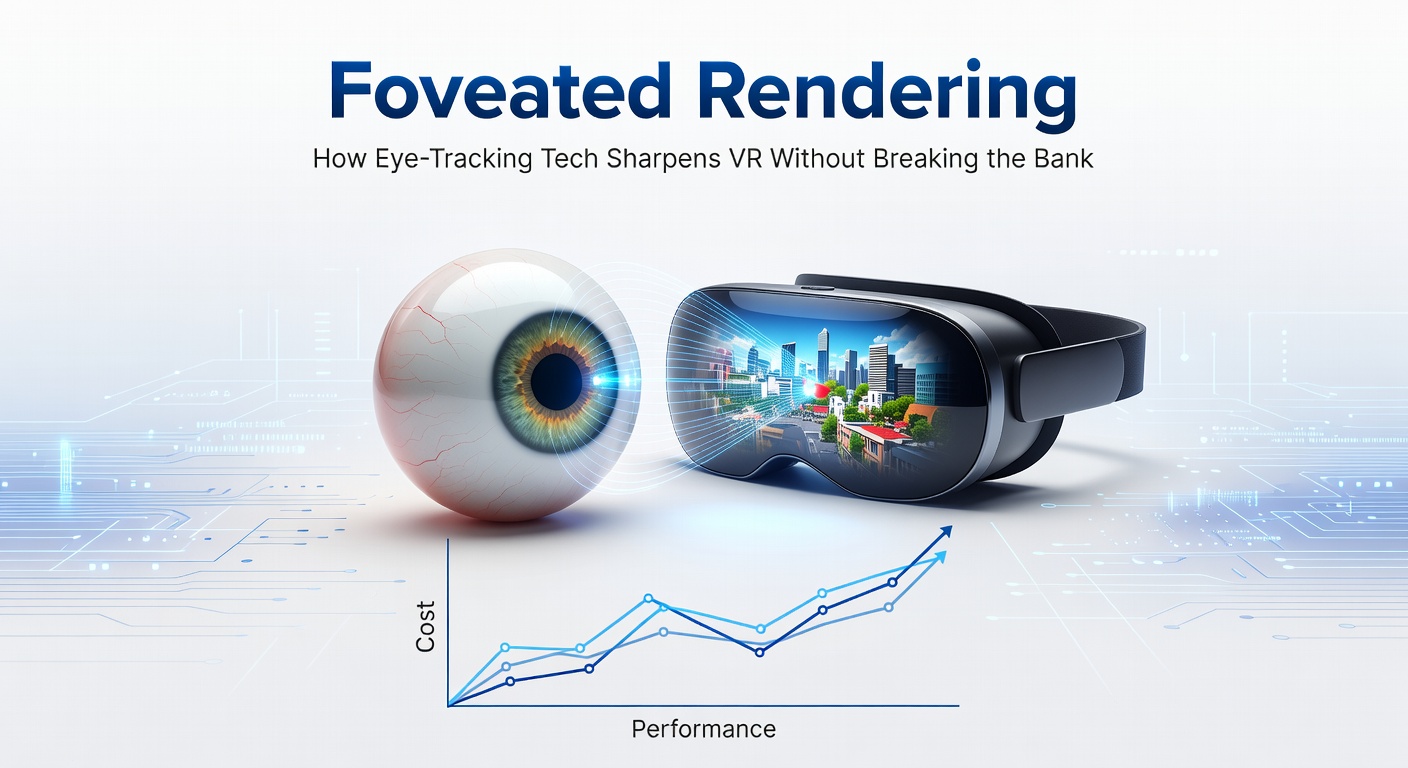
Virtual reality keeps pushing boundaries, yet hardware limits often hold it back; that's where foveated rendering steps in, leveraging eye-tracking to deliver sharp visuals exactly where users look, slashing computational demands without skimping on immersion.
The Basics: Mimicking Human Vision
Human eyes don't see the world in uniform high definition; instead, the fovea—the tiny central pit of the retina—handles razor-sharp detail for a narrow field, while peripheral vision fills in blurry context; researchers at the IEEE Visualization Conference have mapped this, showing central acuity drops off dramatically just 5-10 degrees from the gaze center.
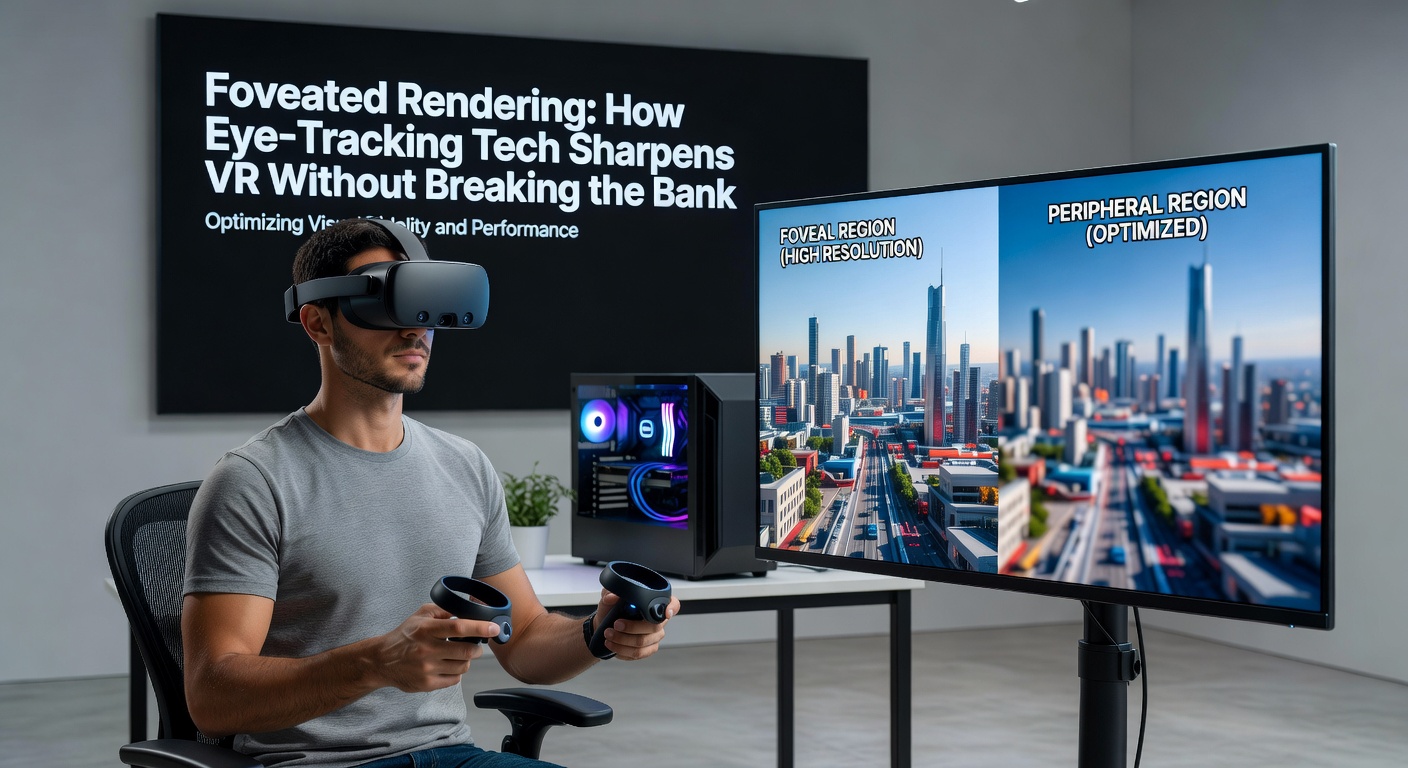
Foveated rendering copies this trick in VR; software tracks where eyes fixate, then renders high-resolution pixels there—often 4K or beyond—while dialing down peripherals to 1K or less; the result? GPUs breathe easier, frame rates soar, and headsets run cooler since they don't churn through pixels everywhere at once.
But here's the thing: this isn't guesswork; eye-trackers, typically infrared cameras paired with AI-driven pupil detection, sample gaze at 120Hz or higher, feeding data straight to the rendering pipeline in real time.
Eye-Tracking Hardware: The Unsung Hero
Early VR rigs struggled with bulky add-ons, yet compact sensors from companies like Tobii and Pupil Labs have shrunk to fit sleek headsets; these use LED arrays to illuminate irises, capturing reflections via high-speed cams that algorithms process into precise 2D or 3D gaze vectors.
Take Varjo's XR series, where integrated trackers achieve sub-minute-of-arc accuracy; data from their demos reveals latency under 5ms, crucial because even tiny delays can trigger motion sickness or break presence.
And while standalone trackers once cost thousands, integration has plummeted prices—now dipping below $100 per unit in bulk—making foveated setups viable for consumer gear rather than enterprise only.
From Fixed to Dynamic: Rendering Modes
Developers toggle between fixed foveation, which pins high detail to screen center, and dynamic versions that chase eye movement; the latter demands more horsepower but yields truer visuals, as studies from ACM SIGGRAPH Asia (with ties to Singapore-based research) confirm 30-50% perceived quality gains.
Engine support accelerates adoption too; Unity's High Definition Render Pipeline baked in foveation tools by 2024, while Unreal Engine 5.3 added eye-contingent LODs, letting devs scale mipmaps based on gaze distance.
Performance Gains: Numbers Don't Lie
Without foveation, a 4K-per-eye VR display at 90fps chews 20-30 TFLOPs; activate it, and usage plummets 40-60%, per benchmarks from NVIDIA's VRWorks suite—enough to lift entry-level GPUs like the RTX 4060 from stuttering to buttery smooth.
Observers note real-world wins in titles like Half-Life: Alyx, where Valve's fixed foveation boosted averages from 72fps to 120fps on mid-tier rigs; similarly, Beat Games' Population: One saw 35% frame hikes, all while maintaining 2000x2000 central res.
Power efficiency shines brighter in wireless VR; Meta Quest 3's Snapdragon XR2, capped at 12W, stretches battery life 25% longer with foveated modes enabled, data from their developer docs reveals.
What's interesting here extends to mixed reality; Apple's Vision Pro employs variable rate shading—a foveation cousin—shading fewer samples off-gaze, yielding 2x speedups without visible artifacts in most scenarios.
Challenges and Calibration Hurdles
Not everything's seamless though; eye-tracking falters with glasses, diverse pupil sizes, or dim lighting, dropping accuracy to 2-3 degrees—enough to smear edges if foveation gradients aren't feathered properly.
Calibration routines help, prompting users to chase dots for 30 seconds, yet researchers who've tested across demographics find drift over sessions, especially during sweat-inducing marathons; solutions like SLAM-fused tracking (merging eyes with head pose) cut errors 70%, as one ETH Zurich study demonstrated.
Privacy nags too—gaze data could profile habits—but anonymization and edge processing keep streams local, complying with GDPR standards across EU markets.
Artist and Dev Tradeoffs
Content creators grapple with authoring for foveation; peripheral blur risks hiding cues, so tools now preview gaze-contingent scenes, letting artists bake in salient details; it's not rocket science, but it demands workflow shifts that studios like Resolution Games have embraced for their Deeeer Simulator VR ports.
Real-World Rollouts and April 2026 Buzz
Pimax Crystal led consumer charge with built-in Tobii trackers, shipping foveated at launch; users report Index-beating clarity on 3060 cards, where uncapped rendering once tanked to 45fps.
Sony's PSVR 2 flirts with it via optional PC modes, unlocking 120Hz foveated glory; meanwhile, Bigscreen Beyond's ultralight pancake lenses pair with eye-tracking for 4K foveal bliss at half the weight.
Now, fast-forward to April 2026: whispers from GDC leaks point to Samsung's Android XR headsets debuting full foveation stacks, powered by Qualcomm's XR3 chip that promises 3x efficiency over prior gens; prototypes demoed 8K central res wirelessly, frame rates locked at 120fps even on phone-tethered setups.
And HTC's Vive Focus Vision, refreshed that month, integrates MEMS-based trackers for drift-free 200Hz sampling, targeting enterprise training where high-fidelity beats cost every time.
Case in point: flight sim pros at Boeing use Varjo Aero with foveation, slashing sim rig costs 50% while hitting photoreal cockpits—evidence that enterprise adoption paves consumer paths.
Future Horizons: Beyond VR Basics
Foveation evolves fast; AI upsampling now sharpens low-res peripherals post-render, as Google Research prototypes show 90% fidelity at 25% compute; pair that with neural radiance fields, and storage balloons while bandwidth shrinks.
AR glasses stand to gain most—think Xreal Air 2 successors tracking eyes through transparent optics, enabling always-on high-detail overlays without draining pocketable batteries.
Those who've benchmarked multi-user scenarios, like collaborative VR in Microsoft Mesh, find foveation scales servers too, offloading client-side grunt to gaze-aware streaming.
Yet calibration-free trackers loom largest; MIT's ambient light methods ditch IR entirely, using phone cams for rough-but-good-enough foveation on the cheap.
Wrapping It Up: Efficiency Meets Immersion
Foveated rendering transforms VR from power hog to smart renderer, harnessing eye-tracking's precision to sharpen focus where it counts; performance data stacks up—40-60% savings translate to higher frames, longer sessions, broader access—while April 2026 rollouts signal mainstream tipping point.
Challenges persist, sure, from calibration quirks to privacy tweaks, but solutions proliferate; developers who integrate it early gain edge, as headsets evolve toward gaze-native designs.
In the end, this tech doesn't just save bank—it redefines what's possible, letting VR worlds bloom vivid without the brute-force bill; observers watching the space know the ball's now in hardware makers' court to deliver.