Embedded AI Chips in Esports Gear Unlock Dynamic Physics Updates in Cloud Mobile Competitions
Sofia Sullivan · Jun 21, 2026
Embedded AI Chips in Esports Gear Unlock Dynamic Physics Updates in Cloud Mobile Competitions
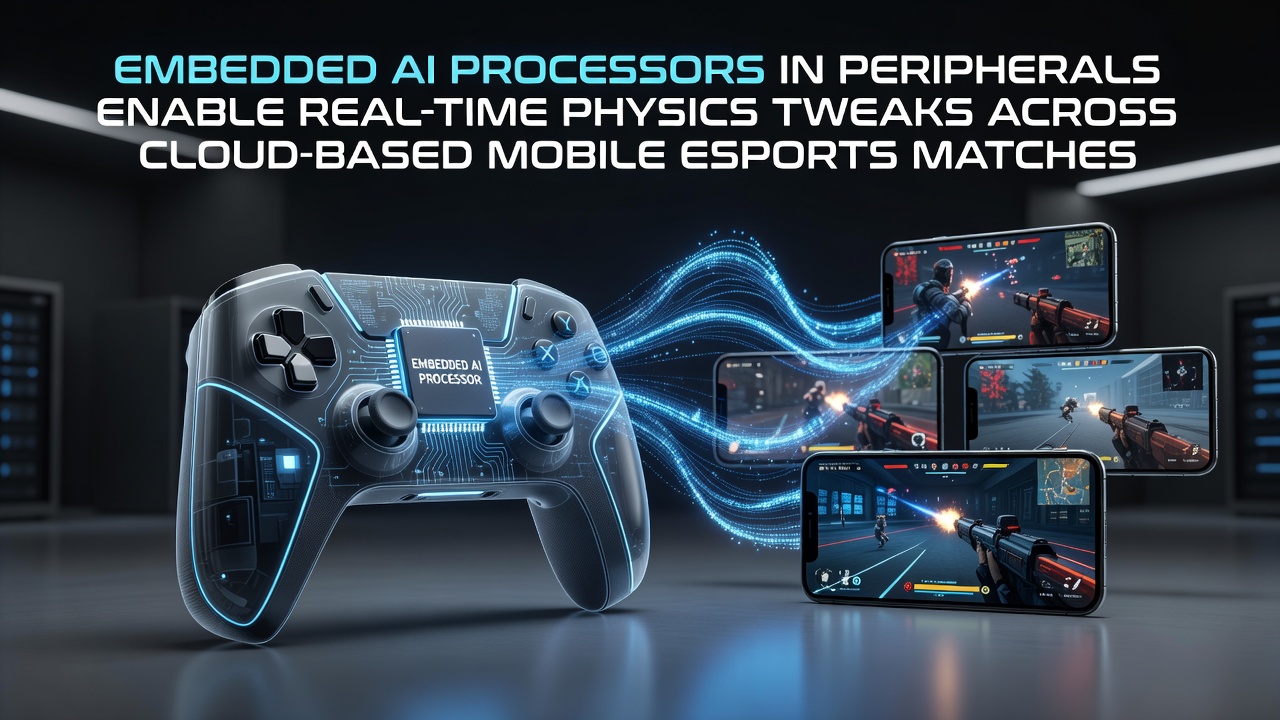
Embedded AI processors now sit inside gaming peripherals such as controllers and mobile adapters, and they handle localized calculations that adjust physics parameters during live cloud esports events. These chips process sensor data from player inputs while coordinating with remote servers to modify variables like object trajectories, collision responses, and environmental forces in real time. Mobile esports matches streamed through cloud platforms rely on this setup because latency remains a constant challenge when devices connect over variable networks.
Research indicates that the integration began gaining traction after hardware manufacturers started embedding dedicated neural processing units directly into peripheral designs. Data from industry reports shows adoption rates climbed steadily through 2025, with tournament organizers incorporating the technology into mobile-focused events by early 2026. In June 2026 several major cloud esports leagues demonstrated synchronized physics tweaks across devices located on different continents, highlighting how on-device AI reduces the need for constant server round-trips.
Mechanics Behind Localized Physics Processing
Peripherals equipped with embedded AI chips receive raw input streams from accelerometers, gyroscopes, and touch sensors, then run lightweight inference models that predict and correct physics outcomes before packets travel upstream. This approach allows adjustments to parameters such as gravity scaling or friction coefficients within milliseconds, while the cloud server maintains the authoritative game state. Observers note that the division of labor prevents desynchronization issues that often arise when all calculations occur exclusively in centralized data centers.
Engineers achieve these results through hybrid pipelines where the peripheral handles micro-adjustments and teh cloud manages macro-level consistency checks. Studies conducted at institutions across the Asia-Pacific region confirm that such architectures cut average input-to-render latency by measurable margins during high-player-count mobile matches. The technique proves especially useful in fast-paced genres where small physics deviations can alter competitive outcomes.
Cloud Infrastructure and Synchronization Protocols
Cloud platforms supporting mobile esports now include dedicated edge nodes that interface with AI-enabled peripherals through optimized protocols. These nodes receive compressed adjustment packets from devices and reconcile them against the global simulation, ensuring all participants experience consistent physics behavior. Figures from network performance analyses reveal that this method maintains frame stability even when players connect from regions with differing bandwidth profiles.
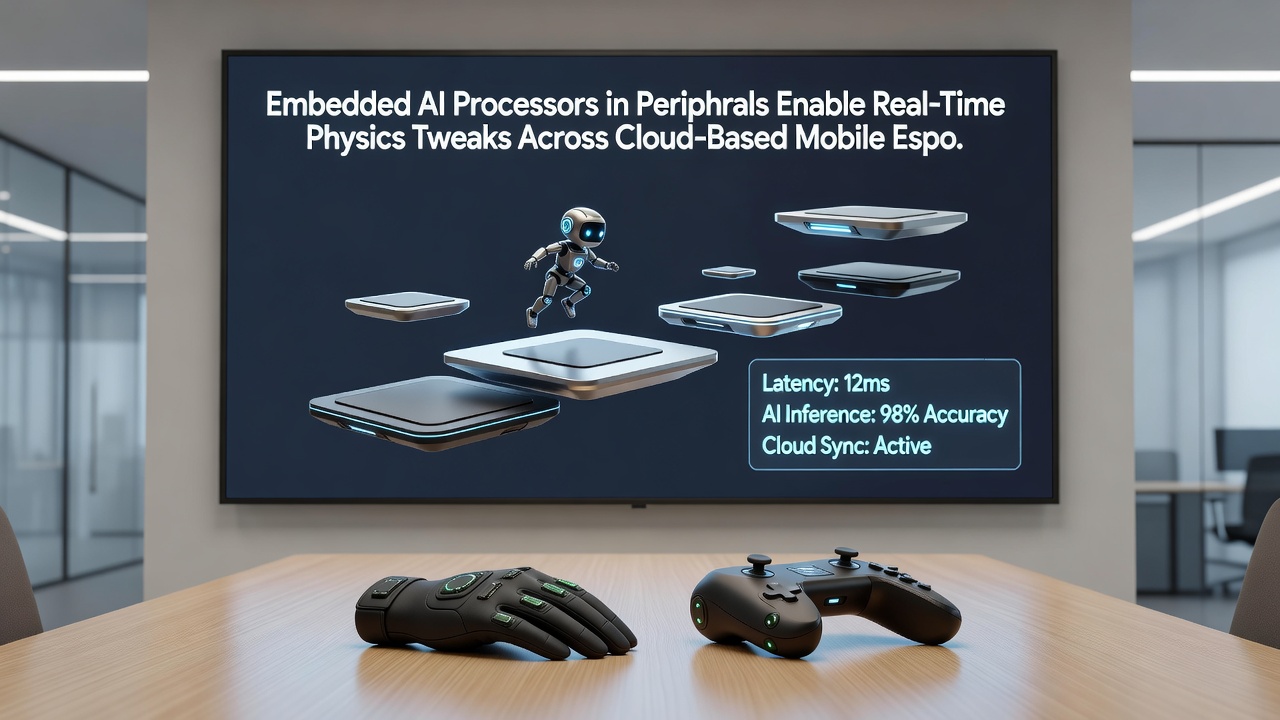
Cooperation between hardware vendors and cloud providers has produced standardized APIs that expose limited physics control surfaces to peripheral processors. Tournament operators in Europe and North America began requiring compliance with these APIs for sanctioned events starting in spring 2026, which standardized how real-time tweaks propagate across matches. The result is a system where peripheral AI can propose changes that the cloud either accepts or overrides based on fairness rules.
Applications in Live Tournament Settings
During competitive mobile esports sessions the embedded processors monitor player actions continuously and apply targeted physics modifications to maintain balance. For instance, when network jitter spikes, the local chip can temporarily soften collision forces or adjust projectile arcs until connectivity stabilizes. Data collected from professional circuits shows fewer interruptions and more consistent match pacing after these features rolled out.
Multiple leagues have documented cases where physics tweaks executed on peripherals prevented cascading desync events that previously required match restarts. Researchers at universities in Canada and Australia have published preliminary findings indicating improved player retention metrics in titles that adopted the technology, though broader longitudinal studies remain ongoing. The approach also supports spectator features by allowing viewers to observe the same adjusted physics sequences that competitors experience.
Hardware and Software Ecosystem Developments
Manufacturers now design peripherals with modular AI accelerators that support firmware updates tailored to specific game titles. These updates arrive through secure channels managed by both the peripheral maker and the cloud service provider, ensuring compatibility during live events. Trade associations tracking the gaming hardware sector report increased collaboration between chip designers and esports organizers to refine power efficiency and thermal profiles for extended mobile sessions.
Software layers running on the devices use quantized models that fit within strict memory and compute budgets while still delivering accurate physics predictions. This balance allows battery-powered mobile setups to sustain high-frame-rate performance without draining resources faster than conventional peripherals. Observers tracking the June 2026 tournament season noted that several teams credited the technology with enabling more aggressive playstyles that rely on precise timing adjustments.
Conclusion
Embedded AI processors in peripherals have become integral components in the infrastructure supporting cloud-based mobile esports. They enable localized, rapid physics modifications that complement centralized cloud simulations while addressing latency and synchronization challenges. As adoption expands and standardization efforts continue, the technology supports increasingly complex competitive environments where real-time adjustments maintain fairness across distributed player bases. Continued data collection from events and academic partnerships will clarify long-term effects on gameplay dynamics and infrastructure requirements.