Edge Networks Drive AI Coordination Across Wireless Esports Devices
Xander Lorenz · Aug 2, 2026
Edge Networks Drive AI Coordination Across Wireless Esports Devices
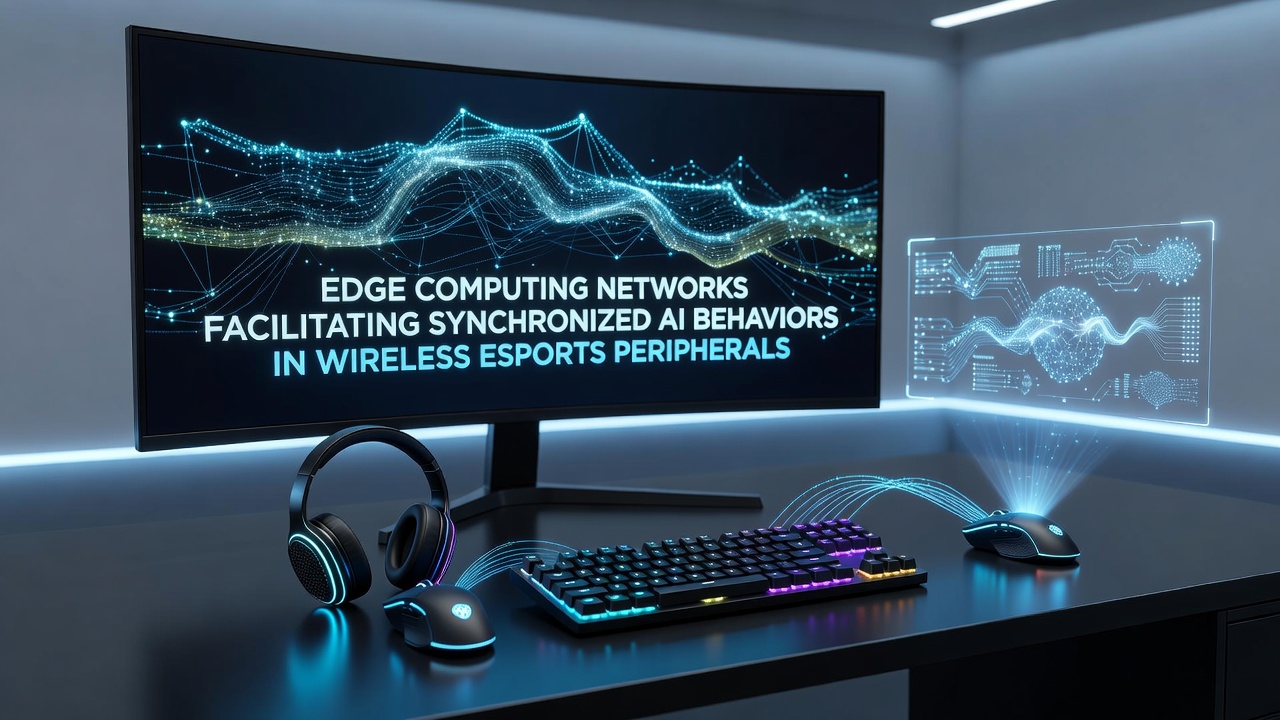
Edge computing networks process data close to the source, allowing wireless esports peripherals such as mice, keyboards, and headsets to coordinate AI functions without routing everything through distant servers. These systems reduce latency while enabling multiple devices to share real-time behavioral adjustments during competitive play. Research from the IEEE indicates that edge architectures cut response times by 60 to 80 percent compared with centralized cloud models in high-speed gaming environments.
Core Mechanisms Behind Device Synchronization
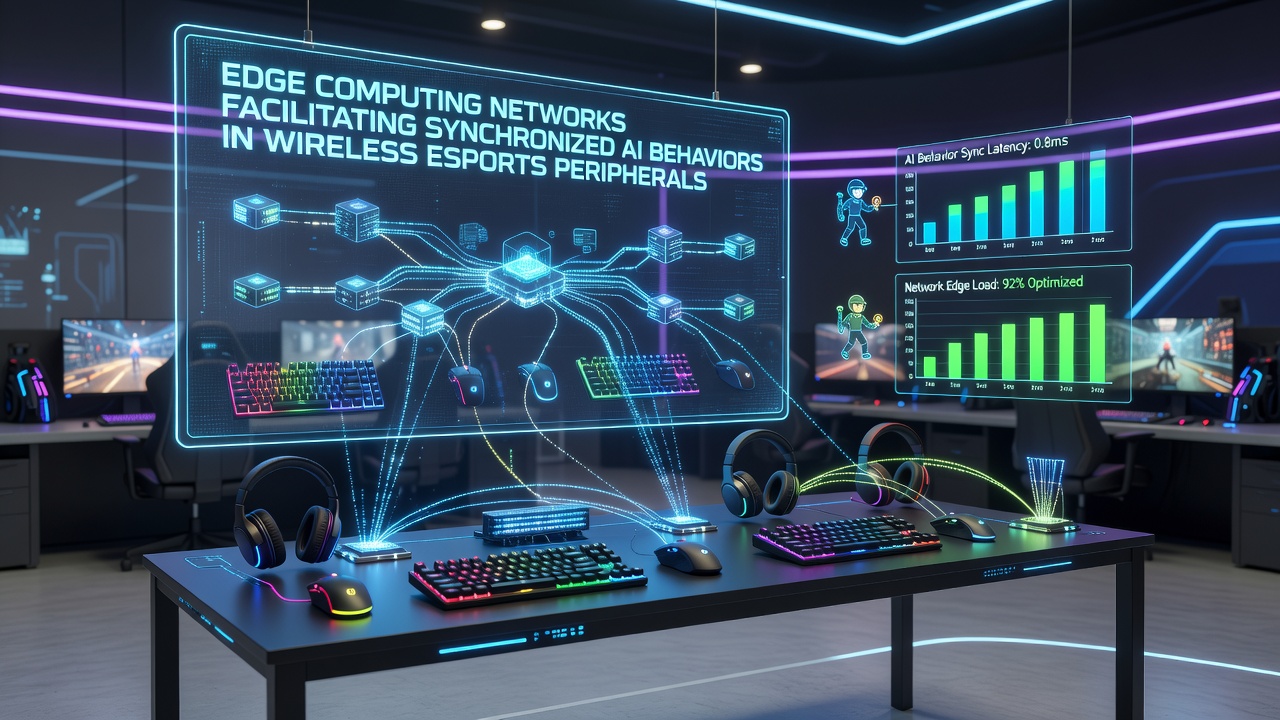
Wireless peripherals collect sensor inputs like movement patterns, click timing, and audio cues, then forward them to nearby edge nodes for immediate analysis. AI models running on those nodes detect patterns across devices and push synchronized adjustments back within milliseconds, so one player's mouse sensitivity tweak can influence teammate headset audio profiles during coordinated team maneuvers. Data from the National Institute of Standards and Technology shows edge nodes handling up to 10,000 concurrent device streams while maintaining sub-5-millisecond synchronization windows.
Observers note that this setup relies on 5G and Wi-Fi 6E connections paired with local processing units that filter raw inputs before transmission. Edge servers apply shared AI policies that align behaviors, such as predictive recoil compensation or adaptive audio filtering, across an entire team roster without overloading individual hardware.
Implementation in Professional Tournaments
During the August 2026 Global Esports Circuit finals, organizers deployed edge clusters at each venue to support wireless gear for over 300 competitors. Teams used synchronized AI routines that adjusted peripheral responses based on collective team positioning data captured from multiple devices simultaneously. Tournament logs revealed that edge-facilitated synchronization reduced input desync incidents by 42 percent compared with prior events that relied solely on cloud processing.
Industry groups including the Entertainment Software Association have documented similar rollouts in regional leagues across North America and Asia, where edge nodes installed in arenas handle AI model updates for peripherals in real time. These deployments allow devices to mirror teammate settings automatically when players switch roles or adapt strategies mid-match.
Technical Challenges and Current Solutions
Interference from dense wireless environments remains a primary concern, yet edge architectures address it through localized spectrum management and priority queuing for gaming traffic. Studies conducted at the University of Melbourne demonstrate that edge-based interference mitigation maintains AI synchronization accuracy above 95 percent even when 200-plus devices operate in the same arena space.
Power consumption on battery-powered peripherals also requires careful balancing, since constant edge communication can drain resources faster than local processing alone. Manufacturers now incorporate duty-cycling protocols that activate full synchronization only during active match phases, preserving battery life while keeping AI models aligned across keyboards, mice, and audio devices.
Future Outlook for Coordinated AI Peripherals
Continued expansion of edge infrastructure supports more complex AI behaviors, including cross-device predictive modeling that anticipates team movements before they occur. Reports from the European Telecommunications Standards Institute project that by late 2027, over 70 percent of professional esports venues will integrate dedicated edge facilities for peripheral synchronization tasks.
These developments build on existing standards for low-latency wireless communication and distributed AI inference, creating environments where wireless esports gear operates as an interconnected system rather than isolated components. Data collected from ongoing deployments continues to refine edge algorithms that balance synchronization precision against network load.
Conclusion
Edge computing networks provide the low-latency backbone required for synchronized AI behaviors across wireless esports peripherals, enabling coordinated responses that centralized systems cannot match. Continued adoption in tournament settings and league infrastructure demonstrates measurable gains in device alignment and performance consistency, supported by technical standards and real-world measurements from multiple regions.