Decentralized Rendering Clusters Reshape Persistent Asset Ownership in Mobile Esports
Sofia Sullivan · Jun 24, 2026
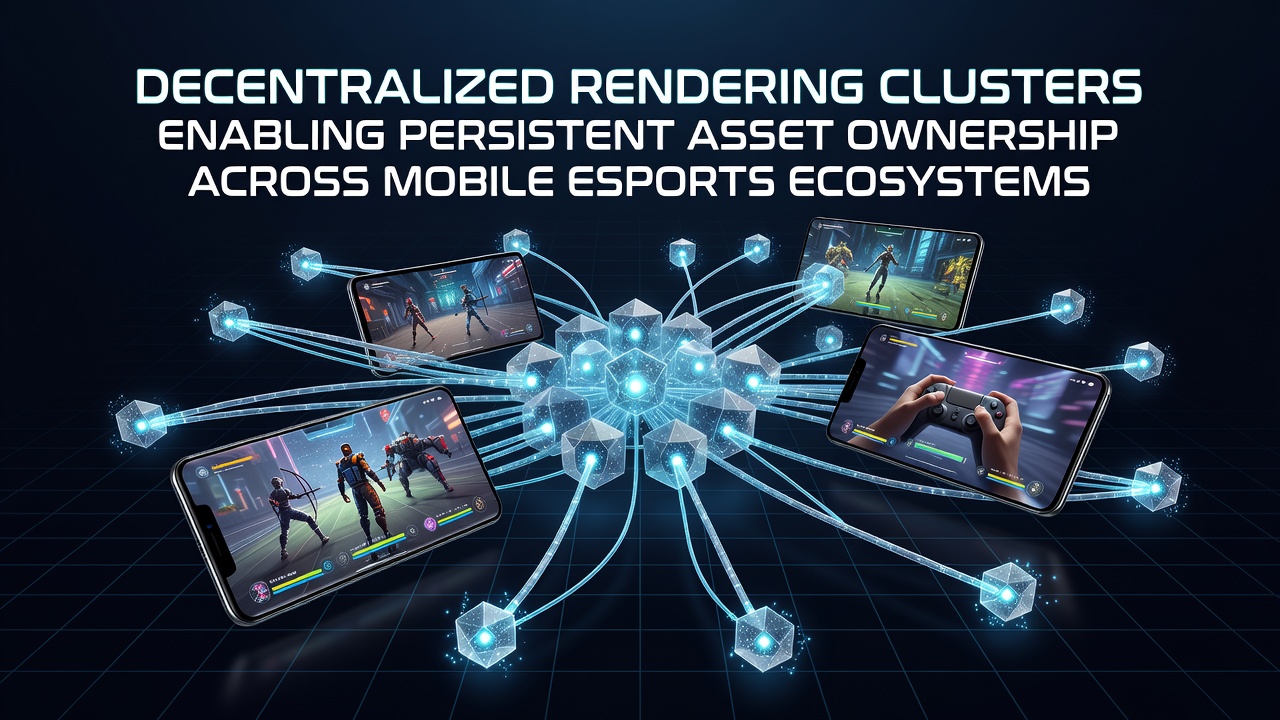
Decentralized Rendering Clusters Reshape Persistent Asset Ownership in Mobile Esports
Mobile esports platforms now rely on decentralized rendering clusters to maintain asset continuity across sessions and devices, while players retain verifiable ownership records through distributed ledgers. These clusters distribute rendering workloads among multiple edge nodes rather than central servers, and this setup supports real-time asset updates that persist even when users switch between different mobile networks or hardware configurations. Observers note that the architecture separates rendering tasks from asset storage, which allows each cluster node to handle specific visual computations while ownership data remains anchored in a shared protocol layer. Research indicates this division reduces latency spikes common in centralized cloud systems, since nodes closer to the player perform the bulk of frame generation.Core Architecture and Data Flow
Engineers design these clusters with modular compute units that communicate through peer-to-peer protocols, and each unit processes geometry, textures, and lighting independently before synchronizing final outputs. Asset ownership metadata travels alongside rendered frames via lightweight tokens, ensuring that any change in an item’s state registers instantly across the network without requiring a central authority to validate the transaction.
Studies from academic institutions show that synchronization occurs in sub-50-millisecond intervals under typical 5G conditions, which keeps mobile esports matches responsive. Nodes cache frequently used assets locally, yet they pull updated ownership proofs from the distributed ledger when a player logs in from a new device.
Asset Persistence Across Ecosystems
Persistent ownership emerges because the ledger records every modification to an asset’s properties, including custom skins, performance modifiers, and tournament rewards. When a rendering cluster processes a match, it references the current ownership state before generating visuals, so players see only those items they actually control.
Industry reports from the Entertainment Software Association highlight that this approach eliminates duplication issues that plagued earlier cloud gaming setups, where assets could desync between servers. In June 2026 several mobile esports leagues adopted standardized token formats, allowing assets earned in one title to appear correctly in another without manual migration steps.
Implementation in Mobile Tournaments
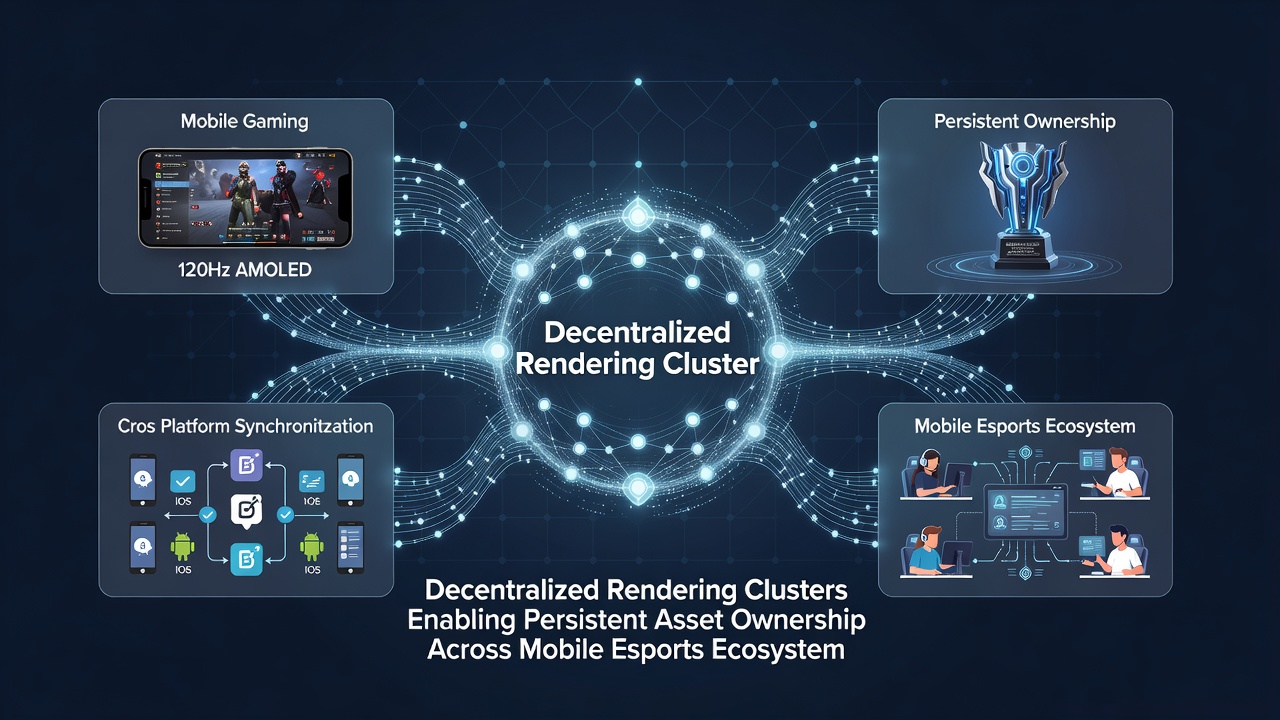
Professional circuits now integrate cluster nodes into venue networks and carrier edge facilities, and this placement keeps rendering close to competitors while the ownership ledger operates globally. Data from tournament organizers reveals that match replays remain accurate because every rendered frame carries cryptographic references to the asset states active at that moment.
Regional leagues in North America and the Asia-Pacific have tested hybrid models where some nodes run on stadium hardware and others draw from carrier infrastructure, yet the ledger ensures consistent ownership records regardless of which nodes handled the actual rendering. This geographic spread supports cross-border events without forcing players to transfer assets between separate platforms.
Security and Verification Mechanisms
Verification relies on zero-knowledge proofs that confirm ownership without exposing full asset histories, and cluster nodes check these proofs before committing render resources. When discrepancies appear, the system rolls back to the last validated state rather than halting the entire session.
Research papers published by university labs in Canada describe how these proofs scale efficiently on mobile processors, adding minimal overhead while blocking unauthorized asset claims. The same mechanisms also log usage statistics that teams later analyze for balance adjustments in ongoing esports seasons.
Integration with Existing Mobile Infrastructure
Developers link cluster protocols to current mobile operating systems through lightweight SDKs, and these libraries handle node discovery plus ledger queries without requiring players to install additional software. Carrier partnerships supply the necessary bandwidth guarantees during peak tournament hours, while fallback routing directs traffic to the nearest available nodes when primary paths congest.
Figures released by the International Game Developers Association indicate that adoption rates among mid-sized studios rose sharply after the June 2026 protocol updates standardized communication formats across different rendering engines.
Conclusion
Decentralized rendering clusters combined with distributed ownership ledgers now form a functional backbone for mobile esports ecosystems, and ongoing refinements continue to tighten synchronization times while expanding the range of supported asset types. The architecture supports the scale required for global competitions without concentrating control in any single operator, which aligns with the operational needs observed across multiple leagues and regions.