Decentralized Player Nodes Drive Persistent Worlds in Open Multiplayer Games
Devon Schwarz · Aug 23, 2026
Decentralized Player Nodes Drive Persistent Worlds in Open Multiplayer Games
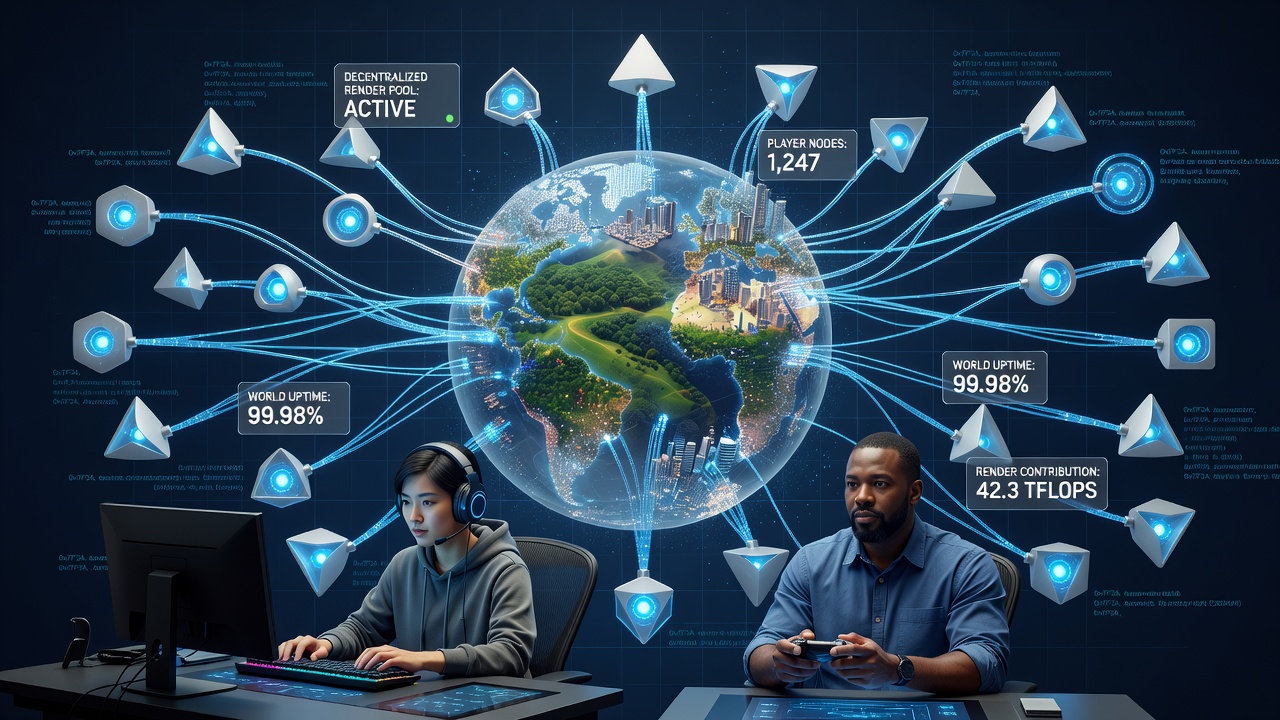
Decentralized compute pools allow players to contribute rendering nodes that help sustain large-scale persistent worlds in open multiplayer titles, distributing the computational load across participant hardware instead of relying solely on centralized servers. This approach connects individual machines into networks where rendering tasks for environments, characters, and effects get shared dynamically, supporting continuous world states that evolve even when not all participants remain online. Studies from institutions like the University of Melbourne have examined how such systems maintain consistency through peer-to-peer protocols that synchronize data across nodes.
Mechanics of Player-Contributed Rendering
Player nodes handle portions of the rendering pipeline, processing geometry, textures, and lighting calculations locally before sharing results with the broader network. Data from each node feeds into a consensus mechanism that verifies outputs and prevents discrepancies, often incorporating cryptographic checks to ensure integrity. In titles supporting this model, software clients automatically allocate unused GPU and CPU cycles when users opt in, creating a pool that scales with participation levels rather than fixed infrastructure investments. Observers note that this setup reduces latency for nearby players by prioritizing local node assignments for relevant world sections.
What's interesting is how these pools adapt to varying hardware capabilities, assigning lighter tasks like basic shadow calculations to lower-end devices while routing complex volumetric effects to more powerful ones. Research indicates that synchronization layers built on established distributed computing frameworks keep world persistence intact during player churn, with fallback mechanisms that shift workloads when nodes disconnect. Figures from industry reports show participation rates climbing in regions with widespread high-speed broadband access.
Implementation Across Game Titles
Several open multiplayer projects have integrated player-contributed nodes to expand world scale beyond traditional server limits. These implementations divide rendering responsibilities across thousands of devices, enabling seamless transitions between populated areas and expansive empty zones that still require background processing. According to data from the Interactive Software Federation of Europe, such networks have supported simultaneous player counts exceeding previous centralized benchmarks in select test environments.
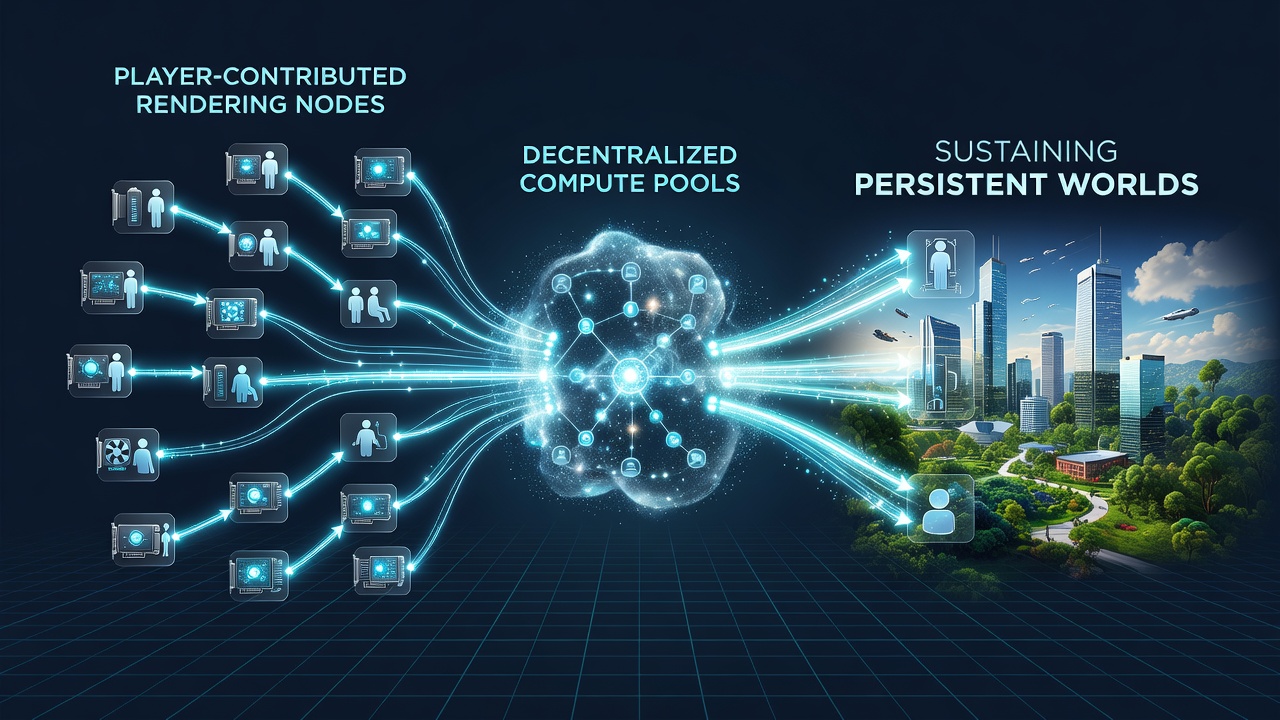
Take one developer group that deployed these pools in a battle royale variant where environmental changes persist across sessions. Nodes render distant terrain features and weather systems while the core server manages only critical gameplay events, cutting overall bandwidth demands. In August 2026 updates rolled out to multiple titles, enhanced node discovery protocols improved connection stability, allowing faster integration of new contributors during peak hours. This development aligned with broader adoption of edge computing standards that prioritize regional data routing.
Technical and Operational Considerations
Security protocols form a core element, with encrypted channels protecting rendered data streams and reputation systems tracking node reliability to minimize disruptions. Those who've studied these architectures point out that incentive structures, such as in-game rewards or token allocations, encourage consistent participation without mandating hardware upgrades. Network overhead gets managed through compression techniques and selective rendering, where only visible or interactive elements receive full processing priority.
Challenges arise during uneven participation spikes, yet load-balancing algorithms redistribute tasks in real time to maintain world coherence. Evidence from academic papers published through Canadian research networks demonstrates measurable improvements in frame consistency when node density reaches critical thresholds in simulated environments. Developers continue refining these systems to handle edge cases like mobile node integration alongside desktop contributions.
Future Trajectories in Multiplayer Design
Persistent worlds sustained by decentralized pools open pathways for larger narrative scopes and player-driven modifications that persist independently of official maintenance cycles. Industry organizations track how these models intersect with emerging standards for cross-platform compatibility, ensuring nodes from varied operating systems communicate effectively. Reports compiled by the Entertainment Software Association highlight growing interest among studios exploring hybrid centralized-decentralized architectures for upcoming releases.
Conclusion
Decentralized compute pools represent a shift toward distributed responsibility in maintaining persistent multiplayer worlds, relying on player hardware to handle rendering demands that once required dedicated facilities. As participation grows and protocols mature, these networks continue to demonstrate viability across diverse game genres and scales. Continued observation of deployments through 2026 and beyond will clarify long-term sustainability patterns.