Decentralized AR Tournaments Rely on Sensor Arrays for Instant Physics Updates
Drew Jenkins · Aug 19, 2026
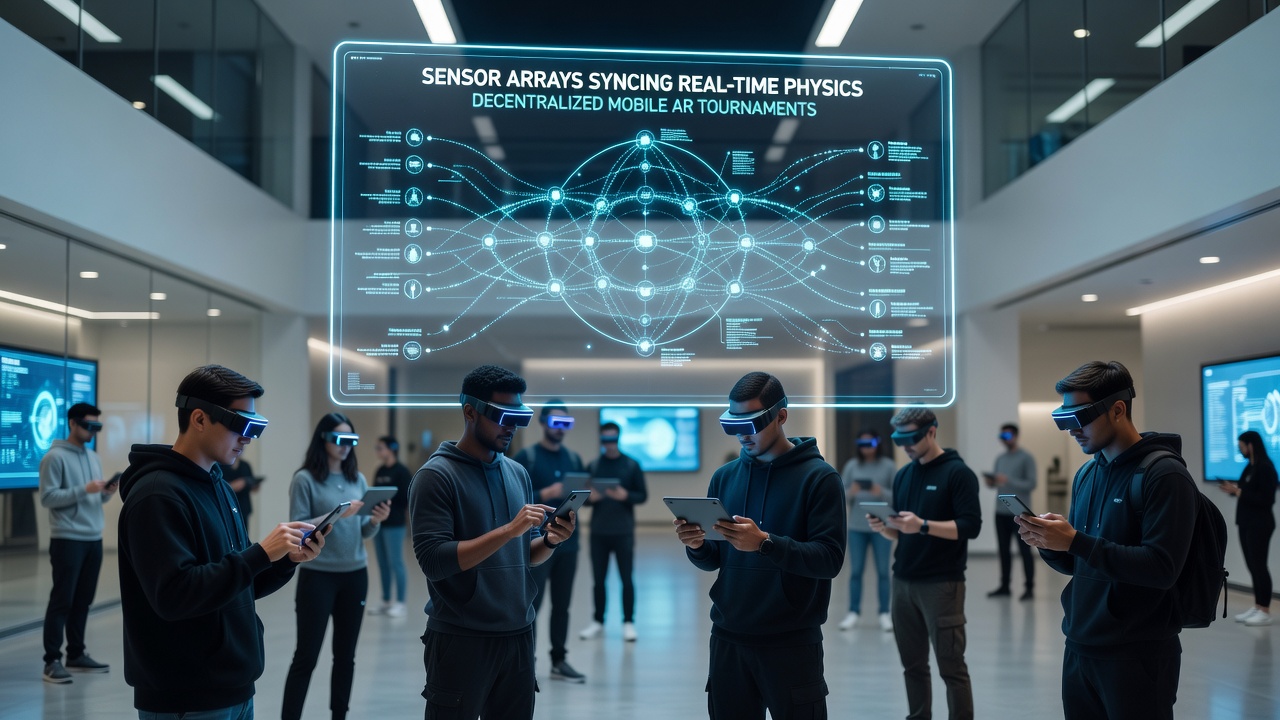
Decentralized AR Tournaments Rely on Sensor Arrays for Instant Physics Updates
Decentralized mobile augmented reality tournaments have expanded rapidly since early network trials, and sensor arrays now handle the core task of aligning physical simulations across scattered player devices. These arrays combine accelerometers, gyroscopes, magnetometers, and depth cameras to capture environmental data at high frequency while feeding updates into shared physics engines that run on edge nodes rather than central servers.
Core Components of Sensor Arrays in AR Esports
Modern arrays integrate multiple sensing modalities into compact modules that fit inside consumer handsets, and manufacturers have standardized calibration routines that maintain accuracy across temperature shifts and device orientations. Data from each sensor streams into fusion algorithms that correct drift and produce a unified spatial map for the tournament instance. Researchers at the University of Toronto documented how these fused outputs reduce positional error to under two millimeters during rapid movement sequences typical of competitive play.
Physics synchronization occurs when every participating device broadcasts its local state vector every 16 milliseconds, and receiving nodes reconcile differences through predictive reconciliation layers. This process keeps virtual objects such as projectiles, destructible terrain, and character interactions consistent even when players stand hundreds of meters apart in the physical world. August 2026 saw the first large-scale test of this protocol during a multi-city event spanning Tokyo, Berlin, and São Paulo where latency spikes above 40 milliseconds triggered automatic rollback adjustments without noticeable disruption to competitors.
Decentralized Network Architecture
Instead of routing all traffic through a single cloud region, tournament organizers distribute physics authority across regional edge clusters that communicate through a gossip protocol adapted from blockchain consensus methods. Each cluster maintains a subset of active players and exchanges delta updates only when discrepancies exceed predefined thresholds. Industry reports from the IEEE Standards Association note that this approach cuts bandwidth requirements by 60 percent compared with traditional client-server models while preserving deterministic outcomes for scoring systems.
Security layers wrap sensor data with cryptographic signatures before transmission, preventing spoofing attacks that could alter physics states mid-match. Observers have recorded instances where compromised devices attempted to inject false velocity vectors yet were isolated within three update cycles by neighboring nodes that cross-checked against multiple independent sensor streams.
Real-Time Physics Reconciliation Techniques
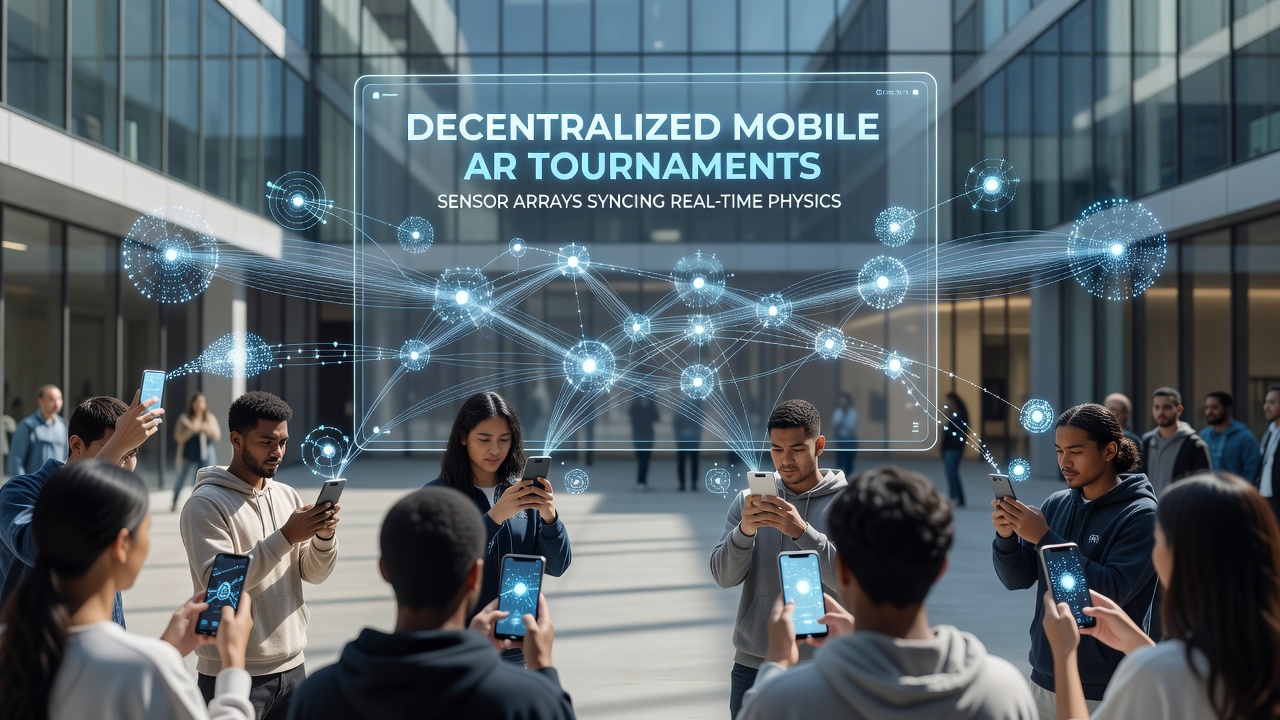
Reconciliation relies on a hybrid of deterministic lockstep and optimistic execution. Devices execute predicted trajectories locally while simultaneously validating incoming corrections from the nearest edge node. When two objects collide in one player's view but not another's, the system selects the outcome that satisfies conservation laws across the largest number of validated sensor readings. Australian Centre for Robotic Vision studies demonstrated that such majority-vote mechanisms maintain simulation stability even when up to 15 percent of participating devices experience temporary packet loss.
Lighting and occlusion data from depth cameras further refine physics calculations because virtual projectiles must respect real-world surfaces detected in each environment. This integration allows an AR grenade thrown in a Singapore apartment to bounce accurately off furniture captured by a Tokyo player's camera feed once the spatial maps merge through the shared coordinate frame.
Hardware Standardization Efforts
Device manufacturers have aligned on common sensor sampling rates and timestamp formats to simplify cross-device compatibility. The Global Mobile AR Alliance published interoperability guidelines in 2025 that require all certified handsets to expose raw inertial data alongside fused poses, enabling tournament software to operate without custom drivers. Adoption of these guidelines reached 78 percent among flagship models released after March 2025 according to supply-chain figures released by the alliance.
Battery impact remains a measurable concern, yet firmware optimizations introduced in mid-2026 reduced average power draw during tournament sessions by 22 percent through duty-cycling of depth cameras when motion remains below threshold values. Teams competing in the August 2026 circuit reported session durations exceeding four hours on single charges when using devices with the latest sensor firmware.
Future Development Pathways
Engineers continue to refine machine-learning models that predict sensor noise patterns specific to each handset model, allowing proactive correction before data enters the physics pipeline. European research consortia have begun testing quantum-resistant encryption wrappers around these sensor streams to prepare for longer-term security requirements. As participation numbers grow, the same array infrastructure supports larger player counts by dynamically partitioning the game world across additional edge nodes without altering client code.
Conclusion
Sensor arrays have become the backbone that keeps decentralized mobile AR tournaments coherent, delivering synchronized physics across global player bases through distributed edge processing and high-frequency data fusion. Continued hardware standardization and protocol refinements point toward further scaling of these events while preserving deterministic fairness essential to competitive integrity.