Crafting Auditory Depth: Propagation Algorithms Building Believable Virtual Sound Environments
Xander Lorenz · Aug 23, 2026
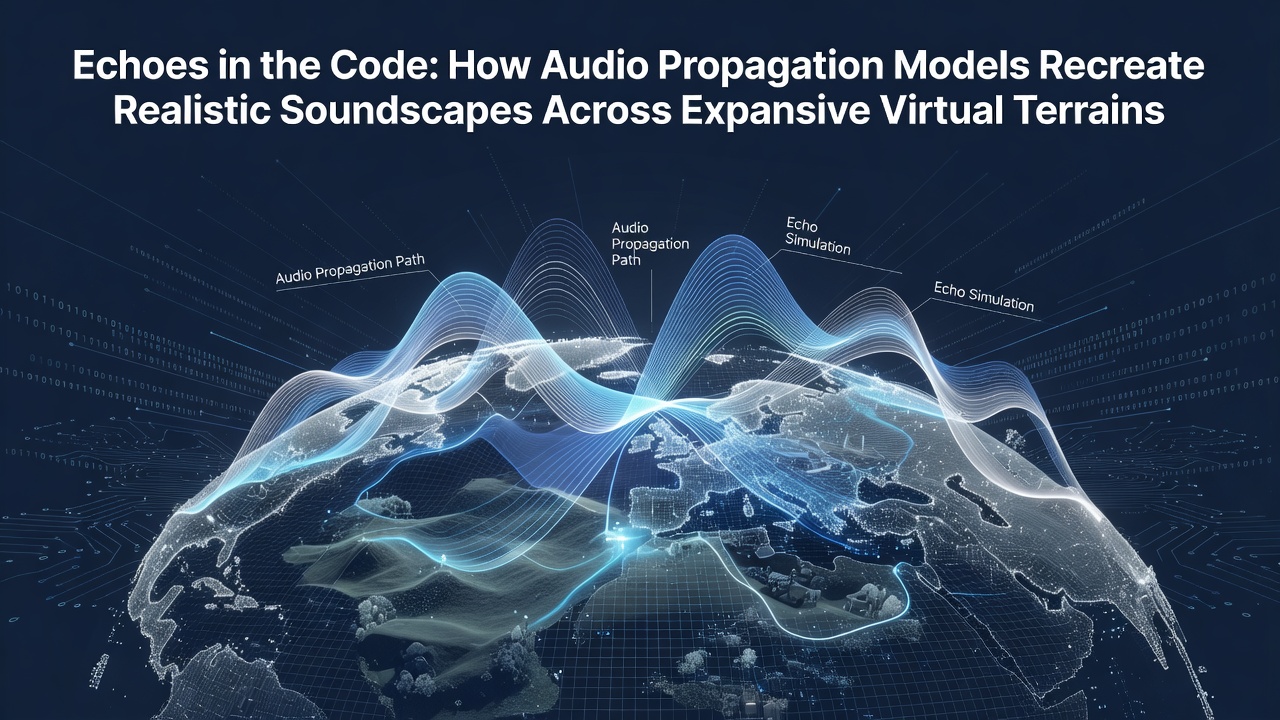
Crafting Auditory Depth: Propagation Algorithms Building Believable Virtual Sound Environments
Audio propagation models simulate how sound travels through virtual spaces by accounting for reflections, diffractions, and absorptions that occur when waves encounter terrain features, obstacles, and atmospheric conditions, and developers integrate these calculations into game engines to generate dynamic soundscapes that shift as players move across expansive digital worlds. Researchers apply geometric acoustics techniques alongside wave-based simulations to approximate real-world physics, while hybrid approaches combine both methods to balance computational efficiency with accuracy in large-scale environments.
Core Principles Behind Sound Modeling
Engineers calculate direct sound paths first, then trace secondary reflections off surfaces using ray casting or beam tracing algorithms that trace multiple bounces before the energy dissipates below audible thresholds, and data from studies at institutions like the Technical University of Denmark show how these paths create accurate echoes in mountainous regions or dense forests. Absorption coefficients assigned to materials such as rock, water, and foliage determine how much energy remains after each interaction, which allows the system to produce muffled sounds behind thick barriers while preserving clarity in open fields.
Diffraction handling becomes essential when sound bends around corners or over ridges, and modern implementations employ edge diffraction models derived from the uniform theory of diffraction to predict how low-frequency components travel farther than high ones. Observers note that without these calculations, virtual audio would feel flat and disconnected from the visual landscape, yet integrating them requires optimized data structures that partition the terrain into acoustic zones for faster queries during runtime.
Scaling Techniques for Expansive Terrains
Virtual worlds spanning hundreds of square kilometers demand hierarchical spatial partitioning that groups geometry into clusters, and developers use voxel-based representations or signed distance fields to accelerate propagation queries without loading every polygon into memory at once. In August 2026, presentations at the International Conference on Auditory Display highlighted new compression schemes that store precomputed impulse responses for static areas while updating dynamic elements like moving water or destructible objects on the fly.
Those who have examined performance metrics from large multiplayer titles report that asynchronous processing on dedicated audio threads prevents frame drops, and GPU-accelerated ray tracing extensions now handle thousands of paths per frame when paired with temporal accumulation techniques that reuse data from previous updates. This approach maintains continuity as characters traverse from valleys into high plateaus where wind effects and altitude changes further modulate propagation characteristics.
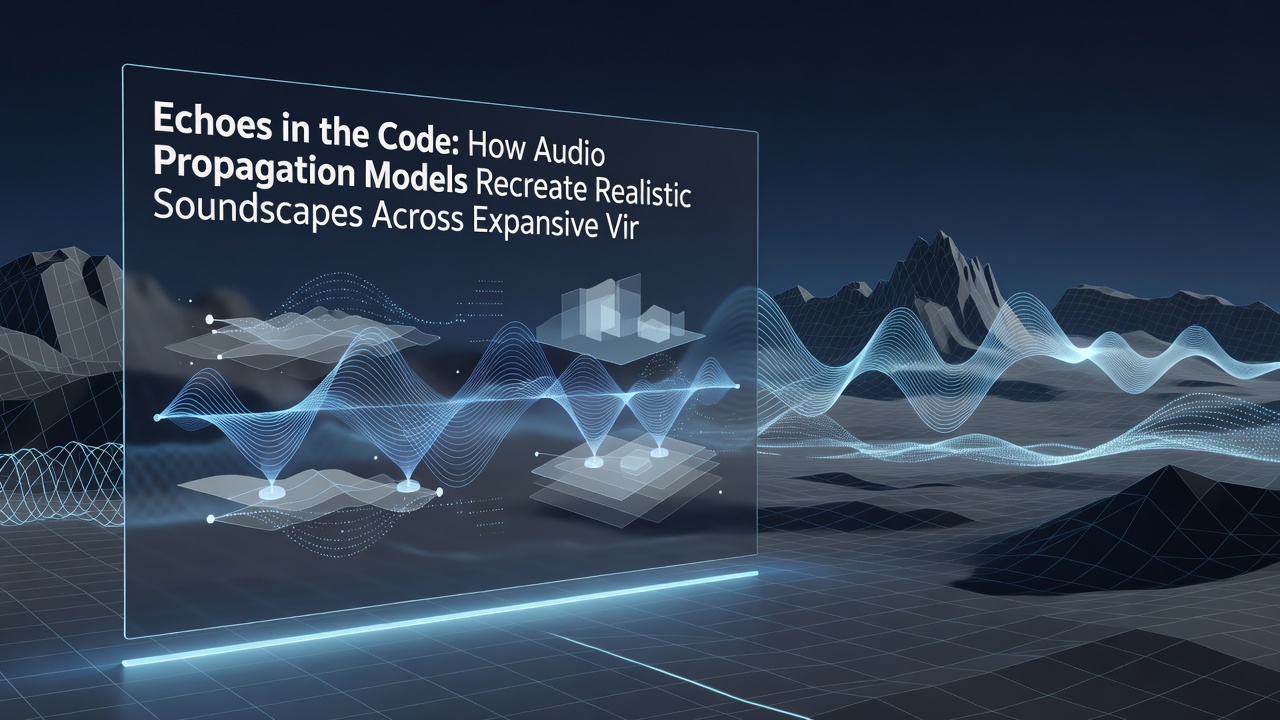
What's interesting is how machine learning assists in predicting acoustic responses for unseen geometry combinations, and training datasets drawn from both real-world measurements and high-fidelity offline simulations allow neural networks to approximate complex scattering behavior that traditional geometric methods struggle to capture efficiently.
Integration With Game Systems and Hardware
Audio middleware such as FMOD and Wwise expose APIs that accept propagation data and apply it to source signals before final mixing occurs, and engine-level plugins handle the conversion of raw path information into parameters that affect reverb, occlusion, and directional filtering. Hardware advances including spatial audio renderers on next-generation consoles leverage head-related transfer functions to position these processed sounds accurately around the listener, which creates the impression of three-dimensional audio fields that respond instantly to head movements.
Industry reports from the Audio Engineering Society indicate growing adoption of standardized interchange formats that let different studios share acoustic material libraries, and this interoperability reduces duplication when multiple teams contribute assets to shared open-world projects. Real-time environmental audio also influences gameplay mechanics when sound cues reveal enemy positions or hidden pathways through accurate modeling of how noise travels across varied topography.
Future Directions and Research Trends
Academic groups continue refining full-wave solvers for smaller regions while relying on geometric approximations elsewhere, and hybrid pipelines that switch between methods based on frequency content and distance from the listener show promise for maintaining perceptual quality without excessive compute costs. Partnerships between universities in Australia and Canada have produced open datasets of measured outdoor impulse responses that serve as benchmarks for validating new algorithms against physical reality.
Those working on cloud-based rendering pipelines explore offloading propagation calculations to remote servers that stream updated audio parameters back to client devices, and early tests suggest this distribution model supports even larger terrain scales when combined with predictive caching that anticipates player movement. The result is a continuous evolution toward soundscapes that feel as detailed and responsive as the visuals they accompany.
Conclusion
Audio propagation models transform static virtual spaces into living acoustic environments by simulating the physical behavior of sound across terrain and materials, and ongoing refinements in algorithms, hardware support, and data management continue to expand the scale and fidelity achievable in modern titles. As these techniques mature, players encounter increasingly convincing auditory experiences that deepen immersion without drawing attention to the underlying computations driving them.