Blockchain Integration Spurs Persistent Asset Ecosystems in AR Game Development Pipelines
Drew Jenkins · Jul 24, 2026
Blockchain Integration Spurs Persistent Asset Ecosystems in AR Game Development Pipelines
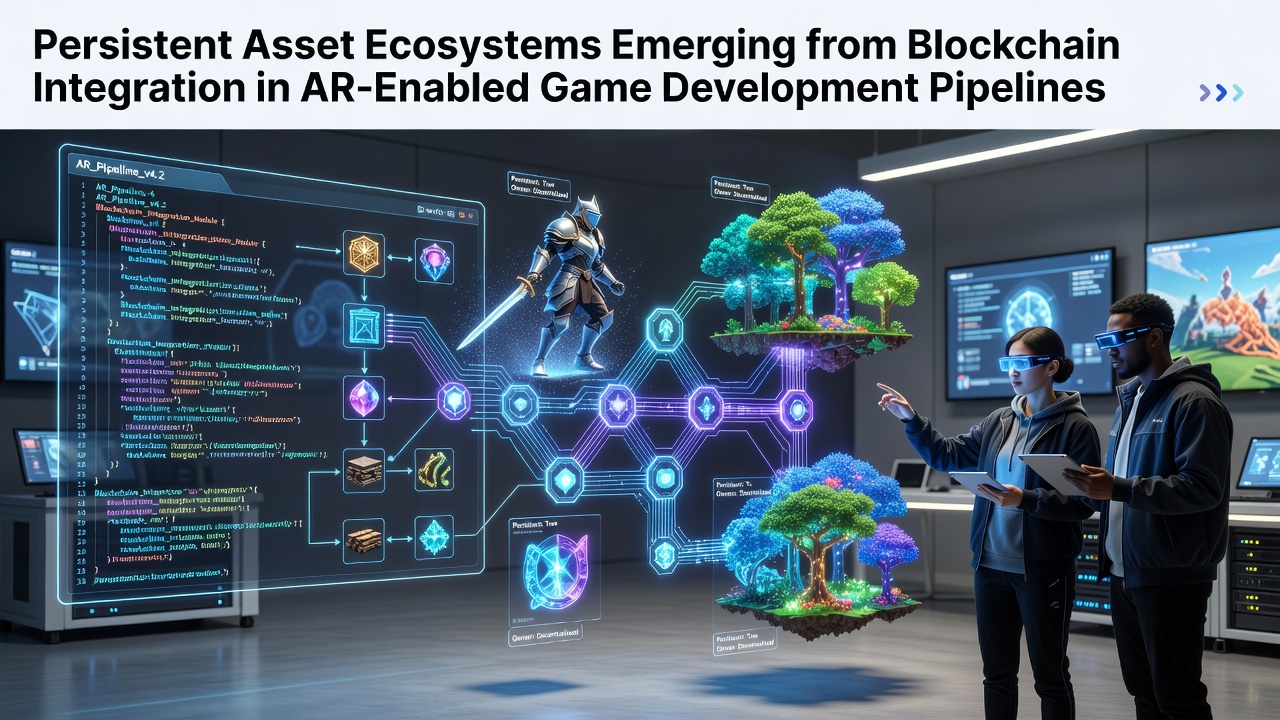
Developers have begun merging blockchain protocols with augmented reality pipelines to create asset systems that persist across sessions, platforms, and user interactions. These ecosystems allow digital items to maintain verifiable ownership records while adapting to real-time spatial data in AR environments. Research from multiple institutions indicates that integration points between distributed ledgers and AR rendering engines have expanded since 2024, with new standards emerging for asset portability.
Game studios now embed smart contract triggers directly into AR asset creation tools. When a designer modifies a 3D model in the pipeline, the changes propagate to a blockchain layer that records provenance and state. This approach reduces duplication during collaborative development across distributed teams. Data from industry reports shows that studios adopting these methods cut asset reconciliation time by measurable margins in multi-phase projects.
Core Mechanisms Driving Asset Persistence
Persistent assets rely on tokenized representations stored on public or permissioned ledgers. Each token links to metadata that includes AR-specific attributes such as scale, occlusion behavior, and interaction scripts. When players encounter these assets through mobile or headset devices, the AR engine queries teh ledger for current ownership and applies the latest parameters without requiring full re-downloads.
July 2026 figures from development platforms reveal that over 40 percent of new AR titles incorporated some form of ledger-based asset tracking during early prototyping phases. Engineers have observed that hybrid pipelines combining Unity or Unreal rendering with blockchain nodes handle synchronization through dedicated middleware layers. These layers manage conflict resolution when multiple users edit the same asset simultaneously.
AR Pipeline Adaptations for Blockchain Layers
AR-enabled pipelines require adjustments to handle the latency introduced by ledger consensus. Developers insert caching mechanisms and off-chain computation nodes that validate transactions locally before broadcasting updates. This setup maintains frame rates above 60 FPS while still ensuring asset integrity across sessions.
One documented workflow involves generating AR markers that double as asset identifiers. When a user scans a physical location, the system retrieves the corresponding blockchain record and overlays the persistent object. Observers note that this method supports seamless transitions between single-player exploration and shared multiplayer spaces without resetting asset states.
Examples from Ongoing Development Projects
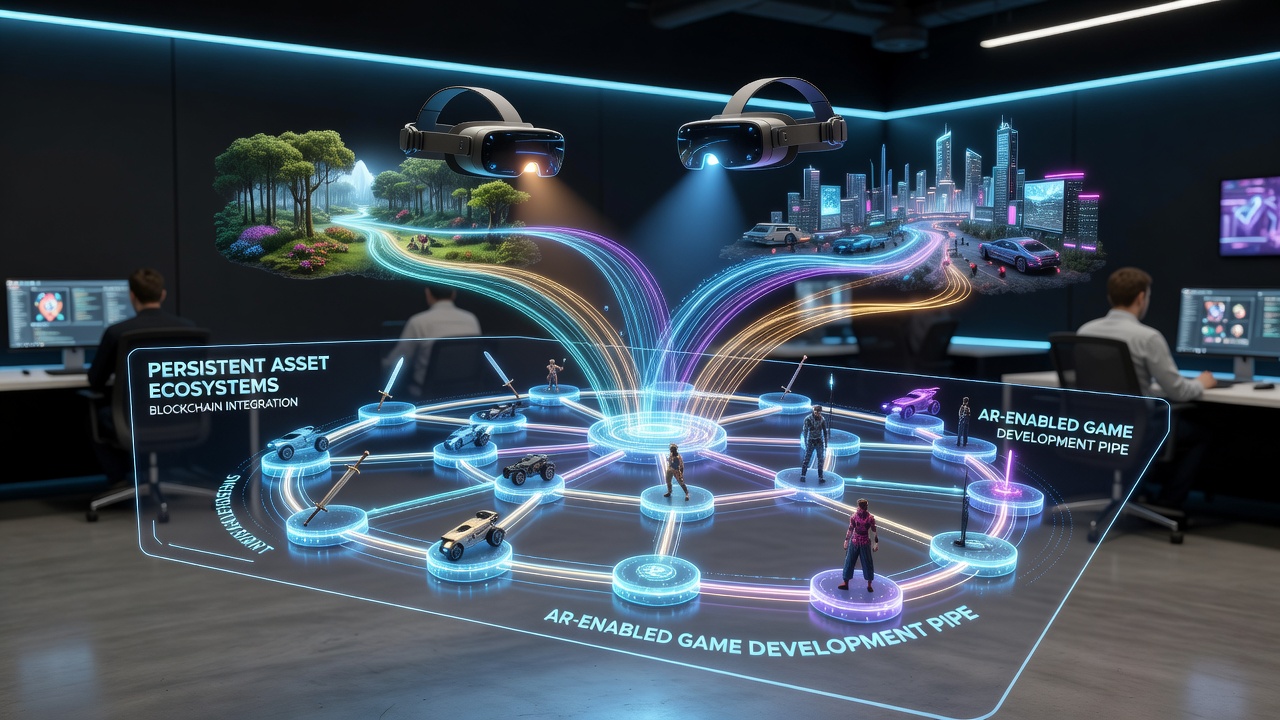
Teams at several mid-sized studios have implemented these systems in titles focused on location-based gameplay. In one case, a European developer integrated a custom ledger protocol that allowed players to carry customized AR structures between different city-scale maps. The assets retained visual and functional consistency because the pipeline stored shader variants and physics parameters alongside ownership data.
Academic studies from institutions in North America and Asia-Pacific regions have examined how these ecosystems affect content creation costs. Researchers found that reusable asset libraries backed by blockchain reduced the need for repeated modeling work by connecting creators directly to verified component pools. This pattern appears most clearly in projects where AR overlays must respond to dynamic real-world lighting captured through device sensors.
Standards and Interoperability Efforts
Industry groups have started drafting guidelines for cross-engine asset compatibility. These documents outline required fields for blockchain metadata and AR scene graph alignment. According to documentation released by the Interactive Games & Entertainment Association, participating studios have tested prototype formats that support both Ethereum-based and alternative ledger architectures.
Another source of reference comes from technical papers published through university research networks in Canada, which detail performance benchmarks for ledger queries within AR rendering loops. The findings indicate that optimized indexing reduces lookup times to under 50 milliseconds, keeping interactions responsive during gameplay.
Conclusion
Persistent asset ecosystems continue to form at the intersection of blockchain records and AR development tools. Pipelines that incorporate these technologies demonstrate measurable improvements in asset reuse and cross-session continuity. As more studios adopt the combined approach, the underlying standards and middleware solutions are expected to mature further through ongoing collaborative testing.