Biometric Data Streams Transform AI Companion Responses in Decentralized Mobile Esports Networks
Logan Schulz · Jul 8, 2026
Biometric Data Streams Transform AI Companion Responses in Decentralized Mobile Esports Networks
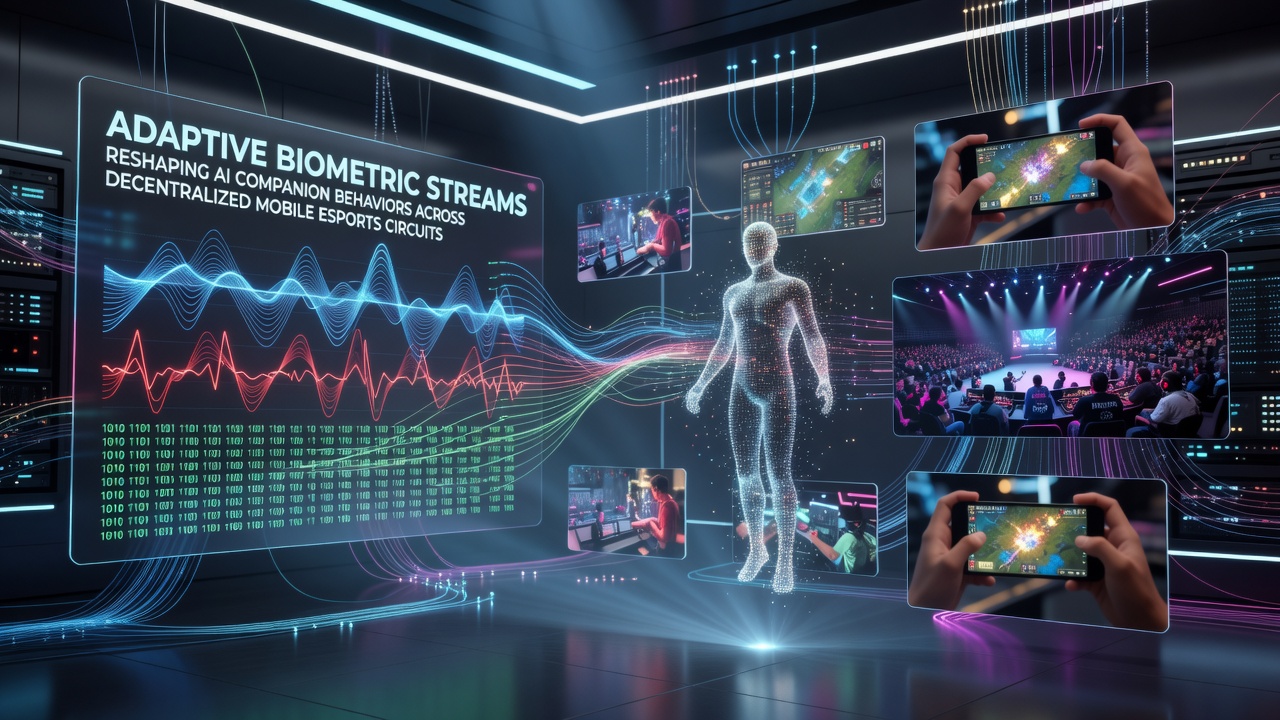
Adaptive biometric streams collect real-time physiological signals from players and feed those inputs directly into AI companion systems that operate across decentralized mobile esports circuits, and this integration allows companions to adjust dialogue, support timing, and tactical suggestions based on heart rate variability, skin conductance, and eye movement patterns detected through mobile sensors. Research from the University of Melbourne indicates that these streams process data at intervals as short as 200 milliseconds, enabling companions to shift from aggressive encouragement to calm pacing when elevated stress markers appear during tournament rounds.
Decentralized architectures distribute both the biometric processing and companion logic across peer nodes rather than central servers, and this setup reduces latency for mobile participants while maintaining consistent companion behavior even when individual nodes drop out of the network. Observers note that circuits built on distributed ledger protocols record player biometric baselines at the start of each session, then update companion parameters through consensus mechanisms that prevent any single point from overriding the adaptive rules.
Core Mechanisms of Biometric Adaptation
Heart rate monitors embedded in mobile controllers transmit continuous streams that AI models interpret as indicators of player focus or fatigue, and companions respond by altering voice tone or offering simplified commands when the data shows sustained elevation above a player's established resting range. Skin conductance sensors capture micro-changes associated with decision pressure, allowing the system to trigger companion interventions such as highlighting safe retreat options instead of push-forward tactics during high-arousal moments. Eye-tracking data gathered through front-facing cameras further refines these adjustments by revealing attention shifts away from critical screen areas, prompting companions to redirect player focus with contextual cues.
Decentralized Circuit Architecture
Mobile esports circuits operate without fixed server infrastructure, relying instead on player devices and regional edge nodes to synchronize biometric streams and companion states, and this model supports global tournaments where participants connect through ad-hoc mesh networks. Data synchronization occurs through encrypted packets that update companion behavior trees across nodes, ensuring that an AI companion assisting one player maintains coherence even when that player switches between different regional circuits mid-season.
Figures from the Korea Esports Federation reveal that decentralized circuits handled over 1.2 million concurrent mobile sessions in the first half of 2026, with biometric adaptation layers active in approximately 68 percent of those matches. The same data shows average companion response times dropping to 340 milliseconds when biometric streams route through distributed nodes rather than centralized cloud instances.
Behavioral Shifts in AI Companions
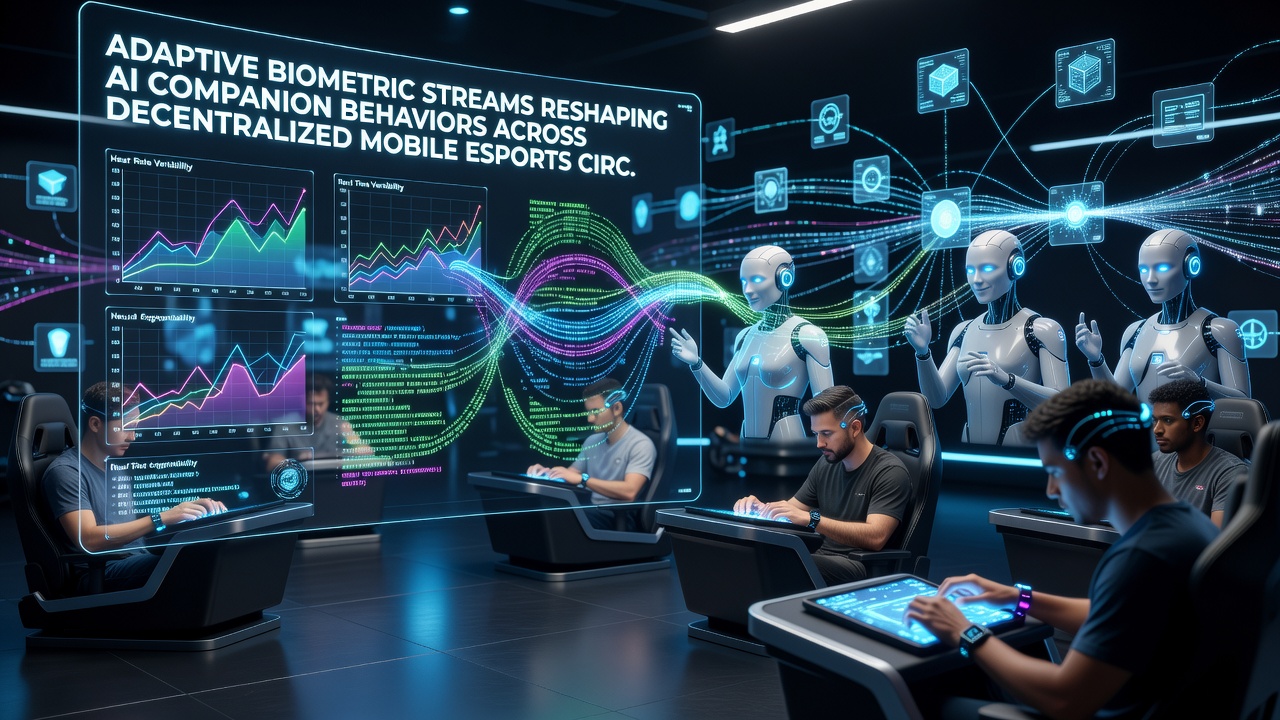
AI companions trained on biometric patterns begin to develop individualized response profiles for each player, and these profiles evolve across multiple sessions as the system records how specific physiological signatures correlate with performance outcomes. During July 2026 qualifier events, several circuits reported companions that learned to delay strategic prompts until detected heart rate variability returned below threshold levels, resulting in measurable improvements in team coordination metrics tracked by tournament organizers.
Companion dialogue systems incorporate biometric context to modulate phrasing and urgency, whereas earlier static models delivered uniform messages regardless of player state. Researchers at the University of Melbourne documented cases where companions shifted from directive language to collaborative phrasing when skin conductance readings indicated rising tension, and this change correlated with reduced player error rates in subsequent decision windows.
Integration Challenges and Current Solutions
Privacy protocols within decentralized circuits require explicit consent layers before biometric streams reach companion models, and these protocols use zero-knowledge proofs to verify data authenticity without exposing raw physiological readings to other participants. Bandwidth constraints on mobile networks have prompted the development of compressed feature vectors that transmit only relevant biometric deltas rather than full signal streams, preserving adaptation accuracy while lowering data overhead.
Edge nodes perform local preprocessing of incoming biometric signals before broadcasting updates to companion instances, and this approach maintains responsiveness even when players move between different network conditions during extended tournament days. Observers tracking circuit performance note that companion consistency across nodes has improved steadily since the introduction of standardized biometric encoding schemas in early 2025.
Conclusion
Adaptive biometric streams continue to reshape how AI companions operate within decentralized mobile esports circuits by supplying continuous physiological context that drives real-time behavioral adjustments, and the distributed nature of these circuits ensures that such adaptations remain available across global player bases without reliance on single infrastructure points. Data collected through these systems provides circuit operators with aggregated insights into player engagement patterns while preserving individual privacy through established consent frameworks.