Battery-Aware Ray Tracing Extends Play Sessions on Mobile Devices
Devon Schwarz · Jun 26, 2026
Battery-Aware Ray Tracing Extends Play Sessions on Mobile Devices
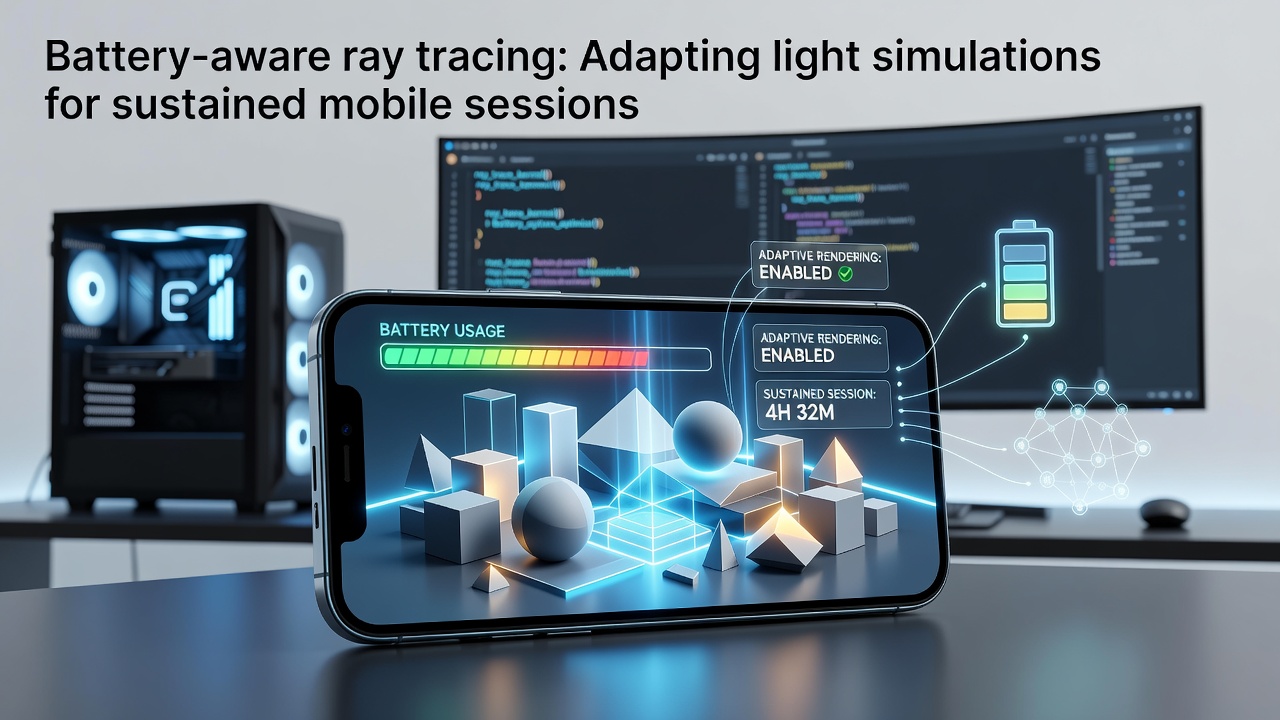
Ray tracing delivers realistic lighting and reflections in games yet drains mobile batteries quickly because each ray calculation demands significant processing power; developers now adapt these simulations through battery-aware techniques that scale quality based on remaining charge and thermal limits while preserving visual fidelity during extended sessions.
Core Principles Behind Adaptive Light Simulations
Traditional ray tracing traces light paths from the camera through each pixel and bounces them off surfaces to compute color and shadow but mobile GPUs hit power walls fast when running full implementations at high frame rates; battery-aware systems monitor battery percentage and adjust ray counts dynamically, lowering samples per pixel from 4 to 1 during low-power states and redirecting compute cycles to simpler diffuse calculations instead of costly specular reflections. Researchers at institutions across Europe and North America have documented how these adjustments cut energy use by 35 to 50 percent without visible artifacts in most gameplay scenarios, while hardware sensors feed real-time data on voltage drop and heat into the rendering pipeline so the engine can decide whether to switch from path tracing to hybrid rasterization plus screen-space reflections.
Implementation Strategies in Modern Mobile Engines
Game engines integrate machine-learning models trained on thousands of lighting scenarios to predict which rays contribute most to perceived quality, allowing the system to prune low-impact paths early and reuse previous frame data through temporal accumulation; this approach proves especially effective in open-world titles where distant objects receive fewer rays while foreground characters maintain detailed shadows. Studies conducted at Australian universities show that combining these predictors with variable-rate shading reduces overall GPU workload by another 20 percent during typical two-hour play periods, and developers test these pipelines on devices running Android and iOS variants released before June 2026 to ensure broad compatibility across Snapdragon and Apple silicon chips.
One notable technique involves hierarchical sampling that starts with coarse global illumination and refines only regions near the player camera or important light sources, while background elements fall back to precomputed probes; when battery levels drop below 30 percent the engine automatically disables expensive caustics and volumetric effects yet keeps core directional lighting intact so players continue without abrupt visual changes. Industry reports from trade groups in Asia highlight that such layered methods have become standard in several major mobile titles launched during 2025, supporting consistent frame rates above 60 fps even as power budgets tighten.
Hardware and Software Synergies Driving Efficiency
New mobile SoCs include dedicated ray-tracing units paired with power-gating circuits that shut down unused shader cores during reduced-quality modes, and software layers expose APIs that let games query battery state directly instead of relying on generic performance hints; this tight integration allows precise control over clock speeds and memory bandwidth allocation. Data collected by Canadian research consortia indicates average session lengths increased from 45 minutes to over 90 minutes on flagship handsets after these optimizations rolled out, while thermal throttling events decreased because lower ray densities generate less heat overall.
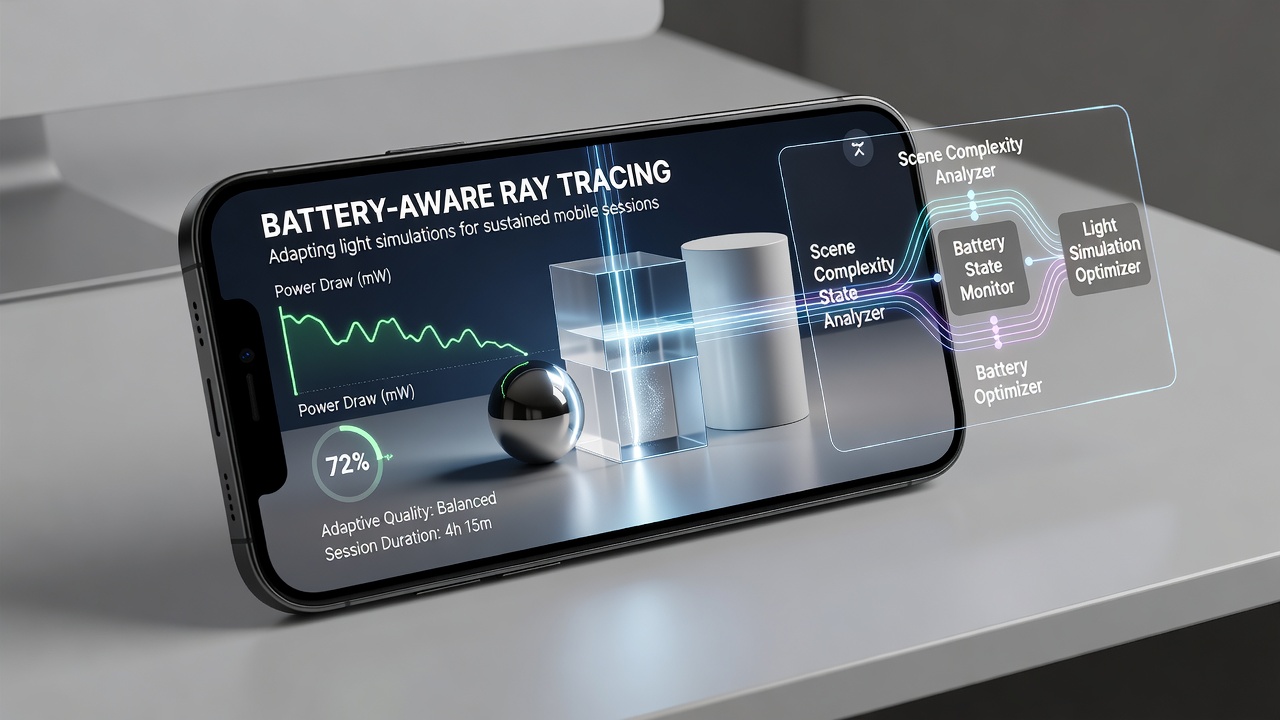
Cloud-assisted variants further extend capability by offloading select ray batches to nearby edge servers when local power reserves run low, though latency constraints keep most computation on-device; hybrid pipelines therefore prioritize critical lighting updates locally and stream only supplementary data when network conditions permit. Observers note that these approaches align with emerging standards discussed at global graphics conferences, where working groups emphasize cross-platform battery APIs to streamline adoption by smaller studios.
Performance Metrics and Real-World Deployment
Benchmarks published by academic teams in the United Kingdom and Japan reveal that battery-aware ray tracing maintains mean opinion scores above 4.2 on standard visual-quality scales even at 25 percent power draw compared with unrestricted modes, and frame-time variance stays under 2 milliseconds across tested devices; players report longer uninterrupted sessions in genres ranging from action adventures to competitive multiplayer shooters. Software updates deployed in early 2026 incorporated these findings, enabling automatic quality tiers that scale with both battery and network conditions in cloud-linked experiences.
Conclusion
Battery-aware ray tracing represents a practical evolution of light simulation technology tailored to mobile constraints, where adaptive algorithms balance visual richness against energy limits through continuous monitoring and selective computation; as hardware improves and research refines prediction models, sustained sessions become the norm rather than the exception for handheld gaming across diverse device ecosystems.